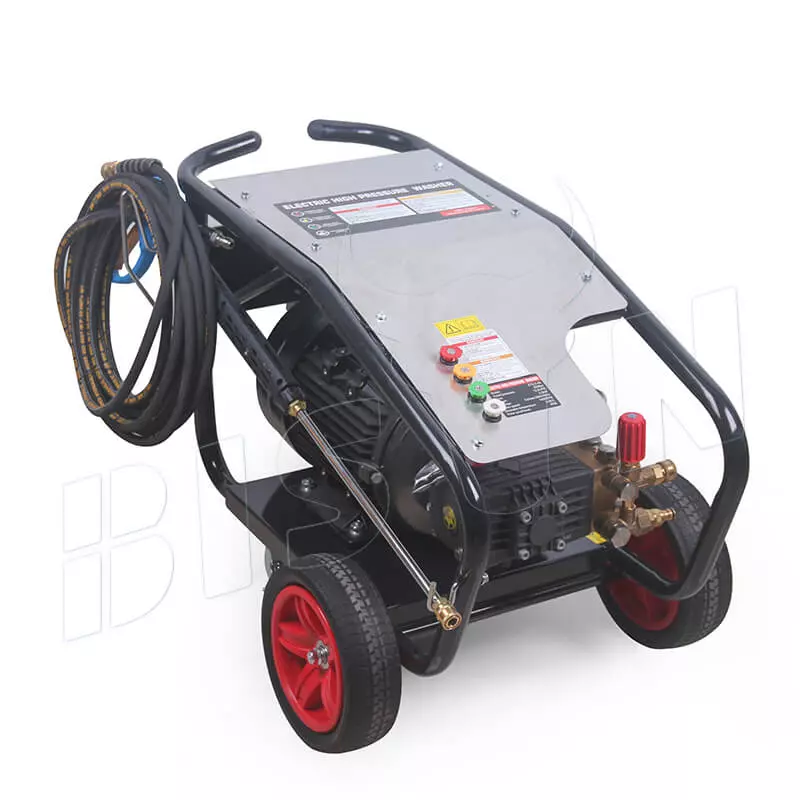
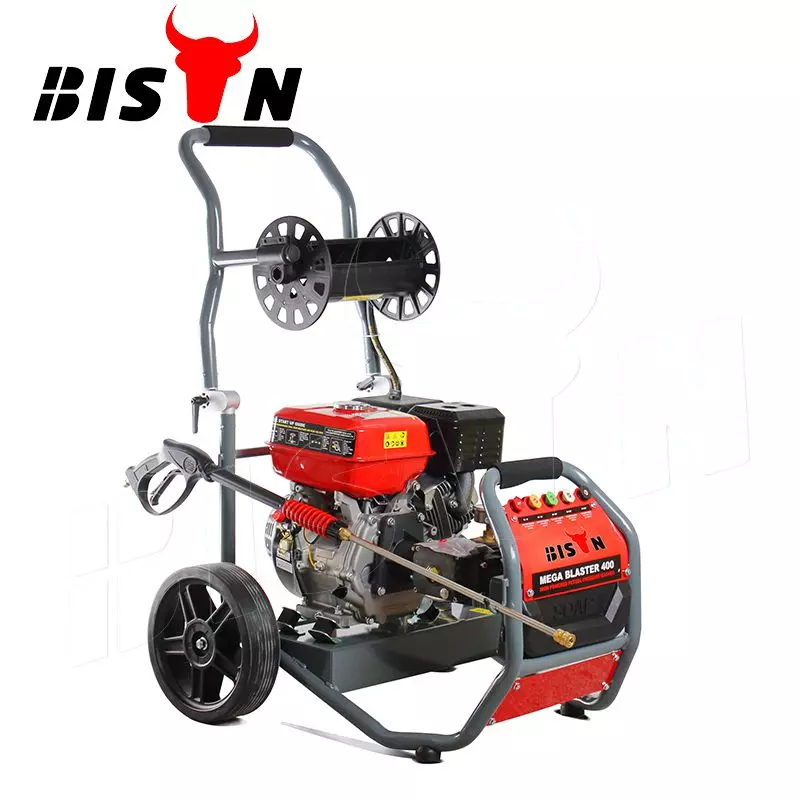
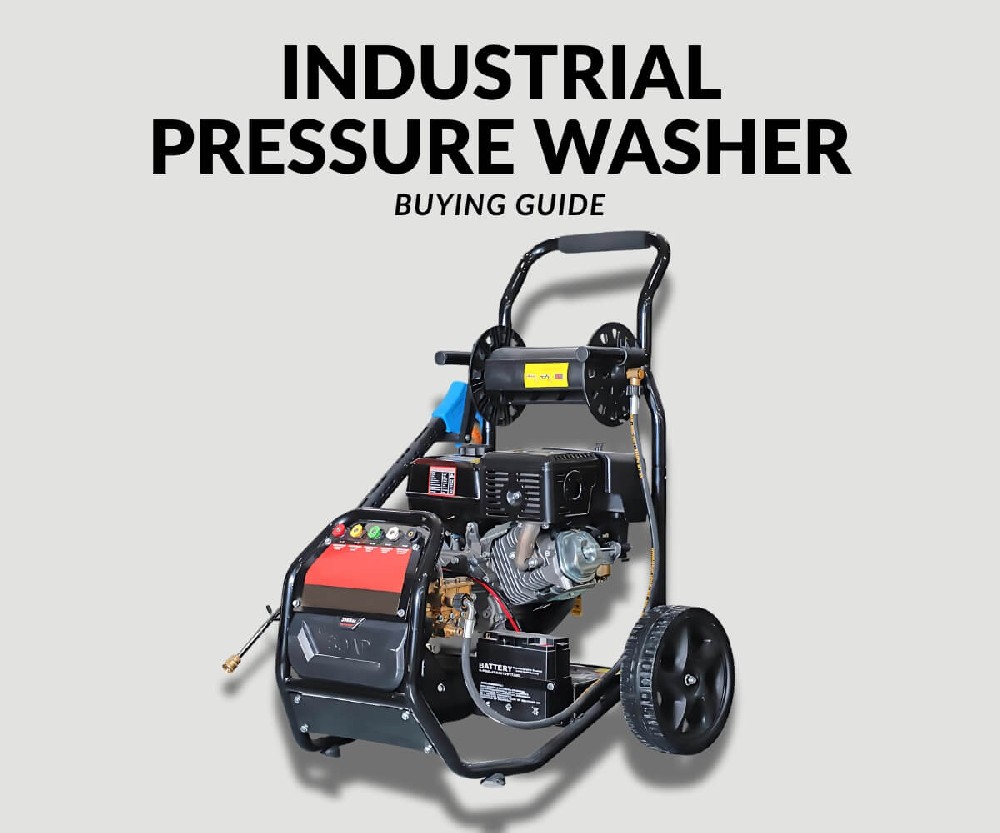
Industrial pressure washers are powerful machines built to remove tough dirt, grease, and grime in demanding environments. Unlike consumer-grade models used for light household tasks, industrial-grade washers are designed for continuous operation, delivering superior power, durability, and efficiency for heavy-duty cleaning in factories, warehouses, construction sites, and other high-traffic areas.
This guide explains the key factors to consider—from machine types and performance specifications to essential features—so you can select the best solution for your specific cleaning needs.
For facility managers, contractors, and cleaning professionals, choosing the right industrial pressure washer can greatly improve productivity and long-term value.
Cleaning requirements
Start by identifying what you’ll be cleaning—machinery, vehicles, building exteriors, factory floors, or food processing equipment. Heavier contaminants like grease, paint, or oil require higher psi and hot water, while lighter dirt and dust can be handled with moderate pressure and cold water. Consider how often you’ll use the machine: occasional cleaning may suit a lighter-duty unit, while daily or continuous use requires a heavy-duty, industrial-grade washer. Surface type also matters—delicate materials need lower pressure and wider nozzles, while concrete or metal surfaces can withstand higher pressure and heat.
Types of industrial pressure washers
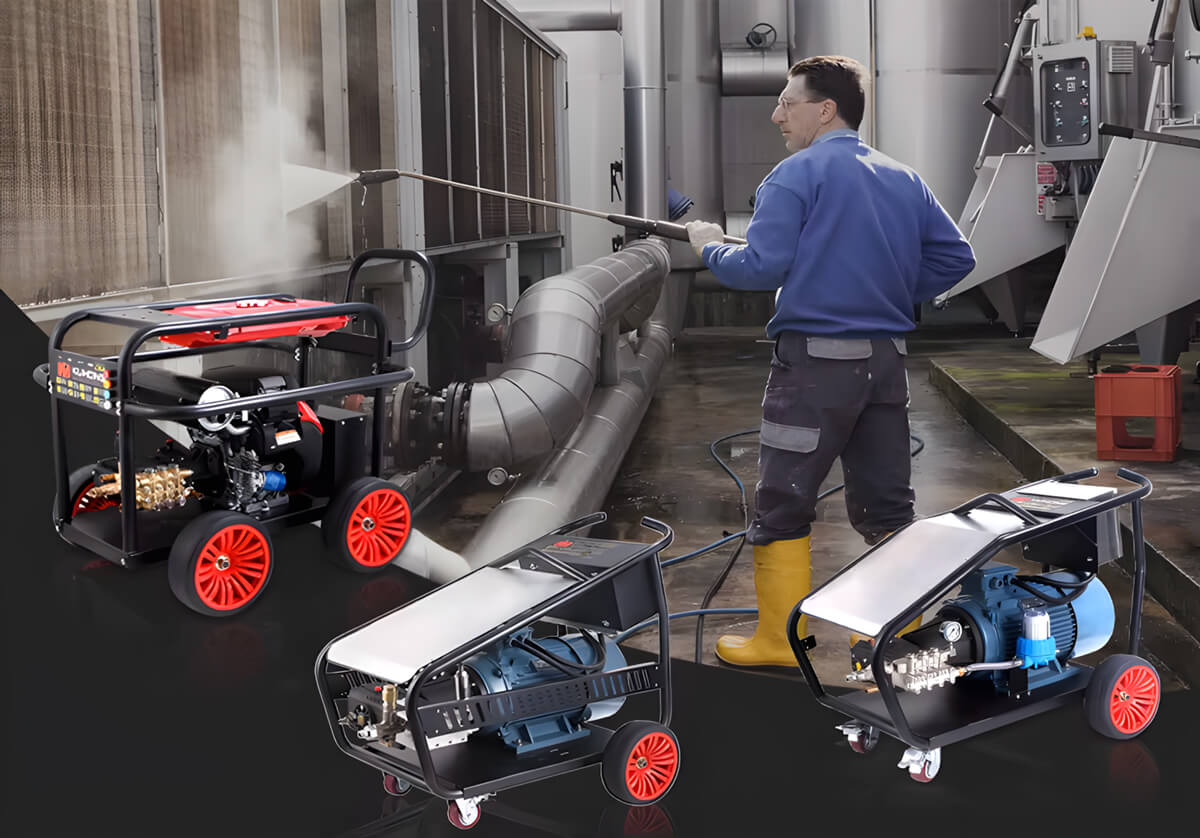
Industrial pressure washers come in several types, each suited to specific cleaning needs and environments. Understanding these options helps you select the best machine for your tasks. Depending on where and how you’ll use them, industrial washers are available as portable, stationary, skid-mounted, or trailer-mounted units—ranging from fixed installations to mobile operations.
Cold water pressure washers: Cold water models are the most common and cost-effective option. They efficiently remove dirt, mud, and loose debris from vehicles, sidewalks, and equipment. Lightweight and easy to maintain, they’re ideal for general cleaning tasks. However, they are less effective against grease, oil, or heavy grime, making them unsuitable for demanding industrial jobs.
Hot water pressure washers: Hot water units are perfect for cutting through grease, oil, and stubborn residues. By heating the water, they clean faster and more effectively than cold water models, saving both time and effort. Commonly used in workshops, factories, and food-processing plants, they come in oil-fired or electric-heated versions—oil-fired for outdoor or large-scale cleaning and electric-heated for indoor environments with emission restrictions. While they cost more initially, their cleaning efficiency makes them a smart long-term investment for heavy-duty use.
Steam pressure washers: Steam pressure washers are ideal for sanitizing and deep cleaning. They use high temperatures to kill bacteria, melt grease, and lift tough stains—perfect for industries that demand strict hygiene, such as food production and healthcare. Although they clean slower and are more expensive than other types, their sanitizing power makes them indispensable for specialized applications.
Stationary pressure washers: Stationary units are permanently installed systems designed for sites needing regular, high-volume cleaning—such as factories, workshops, or car washes. They deliver continuous power and can be customized for complex cleaning setups. While they save setup time and improve workflow, their fixed position limits mobility, making them impractical for multiple locations.
Trailer-mounted pressure washers: Trailer-mounted units combine power and mobility. Equipped with onboard water tanks and engines, they’re perfect for cleaning large areas without a direct water supply, such as municipal spaces, farms, or parking lots. These self-contained systems allow operators to perform heavy-duty cleaning wherever needed, providing ultimate flexibility for off-site operations.
water temperature: cold, hot, and steam options
By matching your cleaning requirements and water temperature preferences, you can select an industrial pressure washer that delivers maximum cleaning power, efficiency, and long-term value.
Cold water – the most affordable and practical for everyday cleaning tasks like removing dirt, dust, or mud. These units are low-maintenance and suitable for general-purpose cleaning.
Hot water – heats water up to 200°f or more, effectively cutting through grease, oil, and stubborn grime. Ideal for automotive, industrial, and food service cleaning, hot water also helps disinfect surfaces while reducing chemical use.
Steam – delivers the highest level of sanitization by using very high temperatures to kill bacteria and break down tough residues. Though more expensive, steam washers are essential in industries requiring strict hygiene, such as healthcare and food processing.
Psi and gpm ratings
When selecting an industrial pressure washer, understanding its specifications is essential to ensure you get the right machine for your cleaning tasks. The two most important performance indicators are psi (pounds per square inch) and gpm (gallons per minute).
psi – water pressure strength
Psi measures how much force the water exerts when it leaves the nozzle. The higher the psi, the more powerful the spray and the better it can remove tough dirt, grease, and grime.
1,500–2,500 psi: suitable for light-duty cleaning such as vehicles, decks, and small tools.
2,500–4,000 psi: ideal for medium to heavy-duty cleaning like warehouse floors, construction equipment, and surfaces with moderate buildup.
4,000+ psi: designed for industrial-grade cleaning—perfect for large machinery, concrete, and heavily soiled areas.
Industrial pressure washers often deliver between 2,000 and 10,000 psi, providing the strength needed to handle demanding applications and stubborn residues.
gpm – water flow rate
Gpm measures how much water the washer sprays per minute. While psi indicates cleaning force, gpm determines how quickly you can rinse away debris and cover large surfaces.
A higher gpm means faster cleaning and more water volume for flushing away loosened dirt.
Industrial models typically provide 3–10 gpm or more, allowing for efficient coverage of wide or heavily soiled areas.
Finding the right balance
For optimal performance, a balance between high psi and high gpm is key. For example, a pressure washer rated at 4,000 psi and 4 gpm is powerful enough to remove oil and grease from heavy machinery quickly and effectively. This balance ensures both strong cleaning power and time efficiency—essential for industrial environments.
power source: electric, gas, and diesel
Before purchasing, consider the available power source in your work environment. The right choice depends on where and how you’ll use the pressure washer.
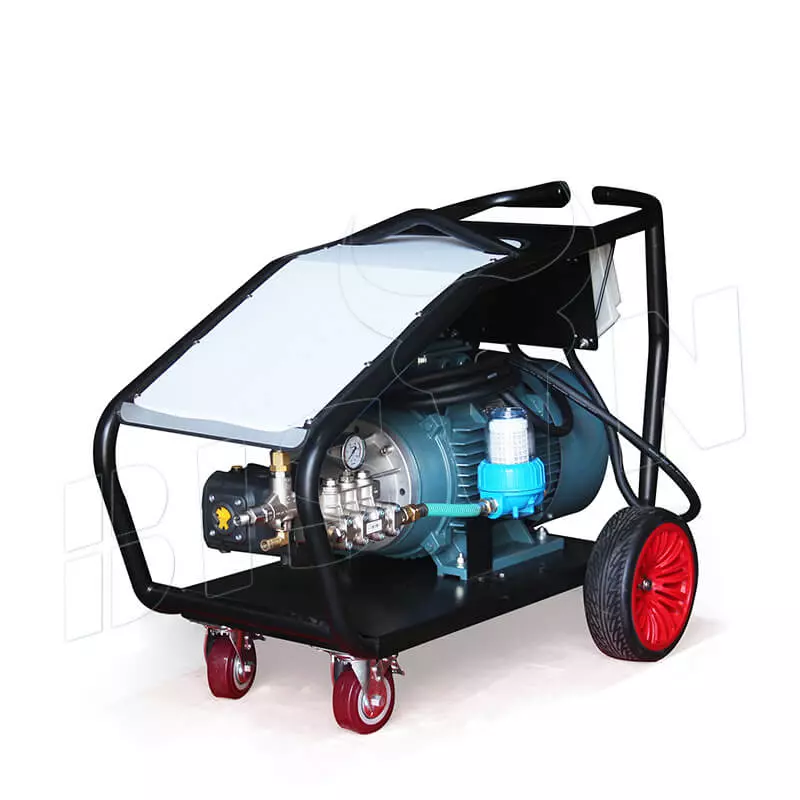
Electric: quiet, low-maintenance, and ideal for indoor cleaning where electricity is readily available. They produce no emissions but generally offer less power than fuel-driven models.
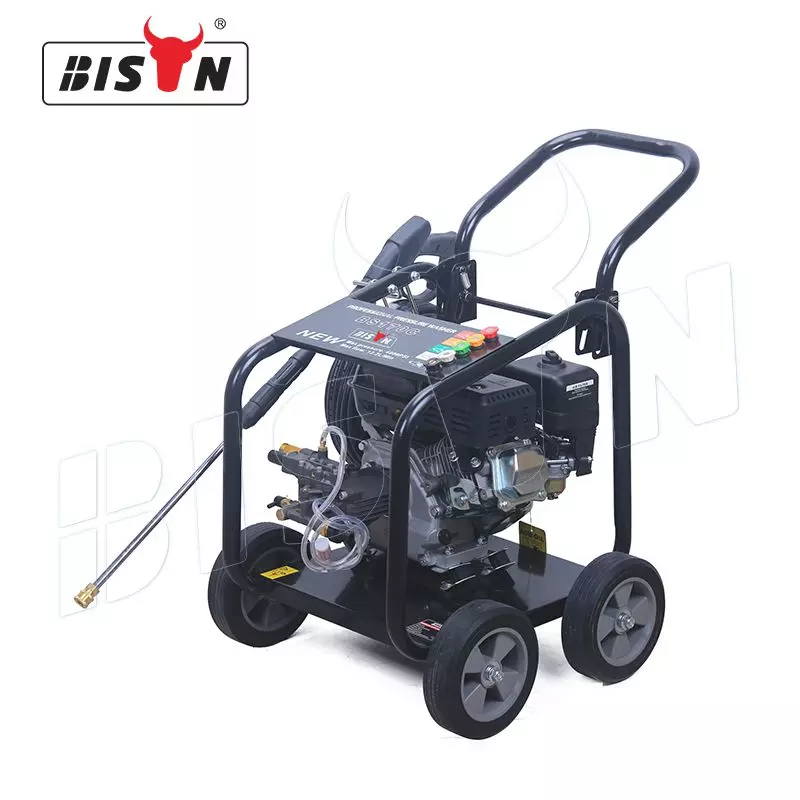
Gasoline: provides strong cleaning power and portability for outdoor or remote locations. However, they generate noise and exhaust, making them unsuitable for enclosed spaces.
Diesel: designed for the most demanding industrial cleaning tasks. They offer superior power and durability but require a higher initial investment and more maintenance. Diesel models are best for large-scale, continuous operations.
durability and quality construction
Industrial pressure washers are built to endure harsh environments and continuous use. Look for models with steel or reinforced metal frames that protect internal parts from impact and vibration. Corrosion-resistant materials, such as stainless steel or powder-coated components, further enhance longevity. Key parts like brass or stainless steel pumps and ceramic plungers increase wear resistance and extend service life. A rugged, stable design not only boosts durability but also ensures safe operation during intense cleaning jobs.
pump type and drive system
The pump is the heart of a pressure washer—it determines performance, lifespan, and maintenance needs. Industrial units typically use the following types:
Axial cam pumps: compact and affordable, suitable for light-duty or occasional use. They’re easy to maintain but not ideal for continuous operation.
Triplex plunger pumps: the preferred choice for industrial use. They have three plungers that deliver smooth, consistent pressure and last longer under heavy-duty conditions. They’re also easier to service and repair.
Belt-drive systems: reduce heat and vibration, prolonging pump life—perfect for frequent, long-duration cleaning.
Direct-drive systems: compact and cost-effective, but they wear faster under constant use since the pump is directly connected to the engine or motor.
Choosing the right pump type and drive system ensures your industrial pressure washer delivers long-lasting, reliable performance in demanding environments.
Important accessories and attachments
To maximize the performance and versatility of an industrial pressure washer, it’s important to use the right accessories and attachments. These components enhance cleaning efficiency, improve safety, and help adapt the washer to different industrial cleaning tasks.
spray nozzles
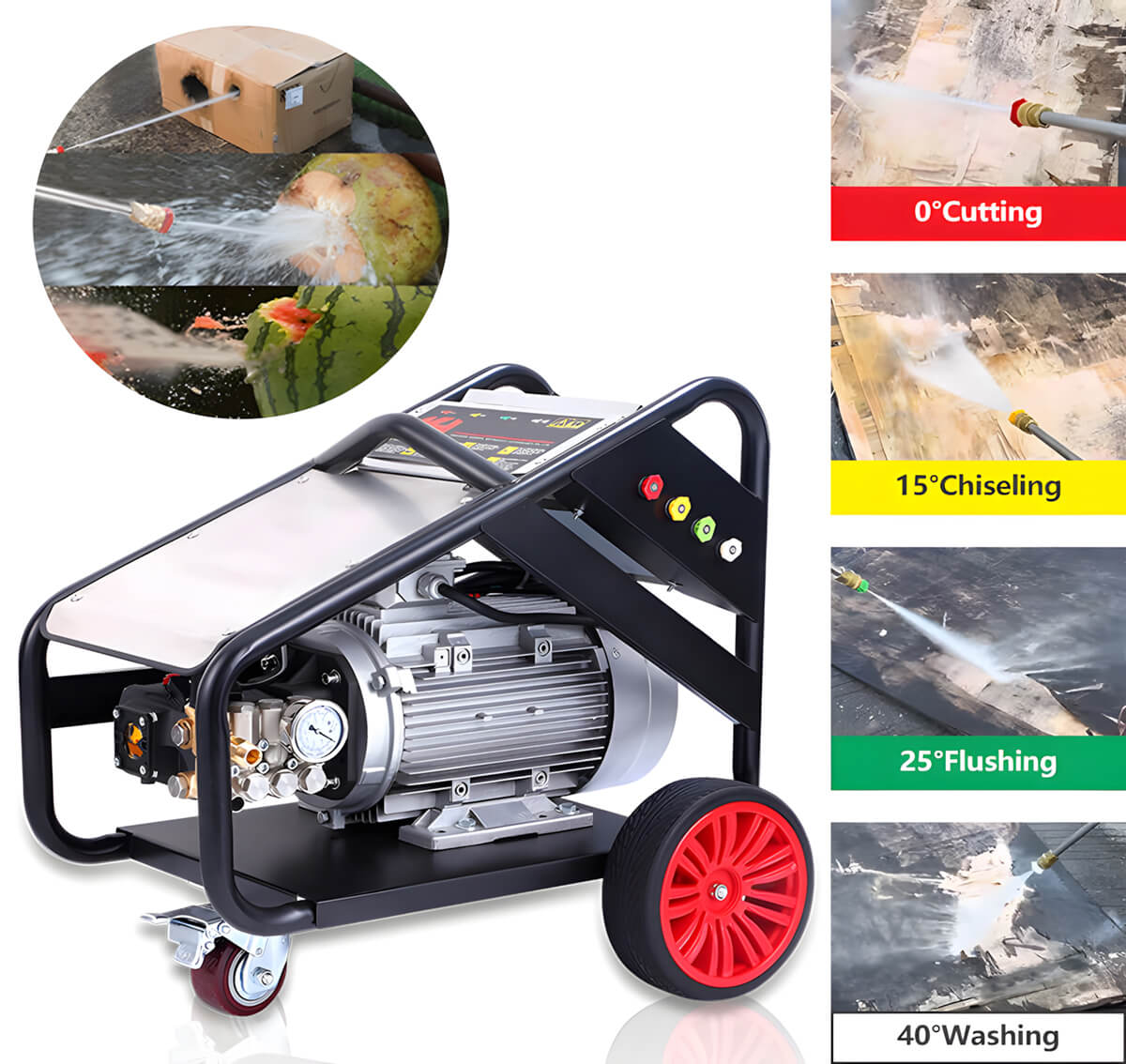
Nozzles control the spray angle, pressure, and coverage of the water stream, directly affecting cleaning results. Most industrial pressure washers come with a color-coded set:
0° (red): concentrated jet for cutting through tough grime or cleaning hard-to-reach areas.
15° (yellow): high-pressure spray for heavy-duty cleaning of concrete, metal, or machinery.
25° (green): balanced, general-purpose nozzle for most cleaning applications.
40° (white): wide, gentle spray for delicate surfaces like painted materials or glass.
65° (black): low-pressure soap nozzle for applying detergents and cleaning solutions.
Using the correct nozzle makes cleaning faster, safer, and more effective for each surface type.
turbo (rotary) nozzles
Turbo nozzles combine the power of a narrow, high-pressure jet with a rapid rotating motion, increasing cleaning efficiency by up to 50%. They’re ideal for removing thick grime, mud, and graffiti from tough surfaces such as brick, concrete, and steel.
hose extensions and reels
A high-quality hose ensures consistent water flow and makes cleaning more convenient.
Long hoses (50+ feet): provide extended reach, reducing the need to move the machine frequently—perfect for large areas.
Reinforced or steel-braided hoses: resist kinks, abrasions, and wear, maintaining durability under high pressure.
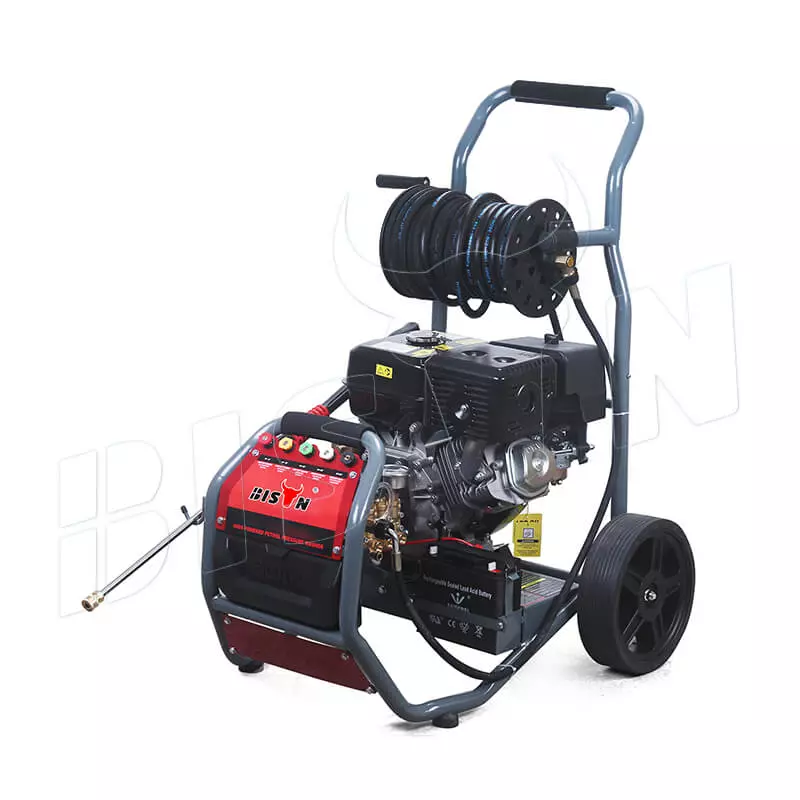
Hose reels: keep hoses organized, prevent tangling, and improve safety by reducing tripping hazards in busy workspaces.
Choosing the right hose length and material helps maintain water flow, minimizes downtime, and ensures smoother, more efficient cleaning.
surface cleaners
Surface cleaners are round, disc-shaped attachments with rotating nozzles underneath. They deliver even, streak-free cleaning over large flat surfaces such as factory floors, parking lots, loading docks, and warehouse entrances. By covering more area in less time, they significantly increase cleaning speed and consistency while reducing operator fatigue.
wands and lances
Extended or telescopic wands allow users to reach high or hard-to-access areas—like walls, ceilings, and roofs—without the need for ladders or scaffolding. Many models feature adjustable lengths, ergonomic grips, or quick-connect fittings, providing better control and comfort during prolonged use.
foam cannons and soap injectors
Foam cannons and chemical injectors make it easier to apply detergents, degreasers, or disinfectants directly through the washer. The thick foam clings to surfaces longer, loosening tough grime, grease, and oil before rinsing. This feature is especially useful in food processing facilities, vehicle washing, and industrial environments that require deep cleaning.
sandblasting kits
Wet sandblasting kits combine abrasive materials—like sand or baking soda—with high-pressure water to strip paint, rust, and corrosion from metal, concrete, or industrial machinery. This method provides a safer, dust-free alternative to dry sandblasting while maintaining strong surface-cleaning performance.
water brooms
Water brooms feature multiple nozzles arranged in a row, creating an even spray that cleans wide surfaces such as sidewalks, decks, or warehouse floors. They deliver consistent pressure and reduce water splash, making large-area cleaning faster, smoother, and more efficient.
water source compatibility
Ensure the pressure washer is compatible with your available water source. Some models require a pressurized water supply, while others can draw from tanks or reservoirs—an essential feature for remote locations or job sites without direct water access.
safety features
Safety is crucial in industrial cleaning operations. Advanced features like automatic shutoff systems protect the pump from overheating and damage when not in use. Other essential components include:
● thermal relief valves – prevent overheating.
● pressure regulators – maintain safe operating levels.
● trigger locks – avoid accidental activation.
● low oil shut-off systems – protect the engine from damage.
warranty and support
A reliable warranty and accessible technical support ensure long-term peace of mind. Always verify the availability of local service centers and spare parts to minimize downtime and keep your equipment performing at its best.
Budget considerations for industrial pressure washers
When investing in an industrial pressure washer, look beyond the initial purchase price. High-quality models with triplex plunger pumps, stainless steel frames, and ceramic components can last 5–10 years or more with the right care—protecting your investment and ensuring long-term reliability. Besides, when choosing a model, look for maintenance-friendly designs—with accessible filters, oil drains, valves, and replaceable parts.
In addition to the upfront cost, consider ongoing expenses such as fuel or electricity, water usage, and routine maintenance. Fuel-powered washers (gas or diesel) offer higher power for demanding jobs but usually have higher operating costs than electric models.
Planning for these costs helps prevent unexpected expenses and ensures consistent performance.
Factor in environmental impact
Lastly, consider how your pressure washer affects the environment. Choose models designed for efficient water use to minimize waste and reduced noise output for indoor or residential areas. When using detergents, opt for eco-friendly cleaning solutions that maintain strong cleaning power while lowering environmental impact.
Conclusion
Choosing the right industrial pressure washer is more than just purchasing a cleaning tool—it’s an investment in long-term efficiency, reliability, and performance. The right machine can completely transform your cleaning process, saving time, reducing effort, and delivering consistent results even in the toughest environments.
Never compromise on power or durability. As a leading OEM manufacturer based in China, BISON offers a wide range of durable, high-performance pressure washers. With expert guidance, reliable support, and competitive pricing, we’re committed to helping you find the ideal solution for your cleaning requirements.
Take the next step today—explore our range of industrial pressure washers and experience cleaning power that’s truly built to last.