ripping chain vs crosscut chain
2026-05-18
Table of content
A chainsaw is essential whether you're a hobbyist or a professional arborist. But choosing the right chain matters just as much as choosing the right saw—use the wrong one, and you'll fight the wood the entire time: rough surfaces, excessive vibration, and slower progress than you need.
Chainsaw chains are engineered for specific cutting directions. The two main types are ripping chains, designed for cutting along the wood grain, and crosscut chains, designed for cutting across it. Understanding the difference helps you work faster, safer, and with better results.
This guide covers how each chain works, what sets them apart, and how to choose the right one for your specific job.
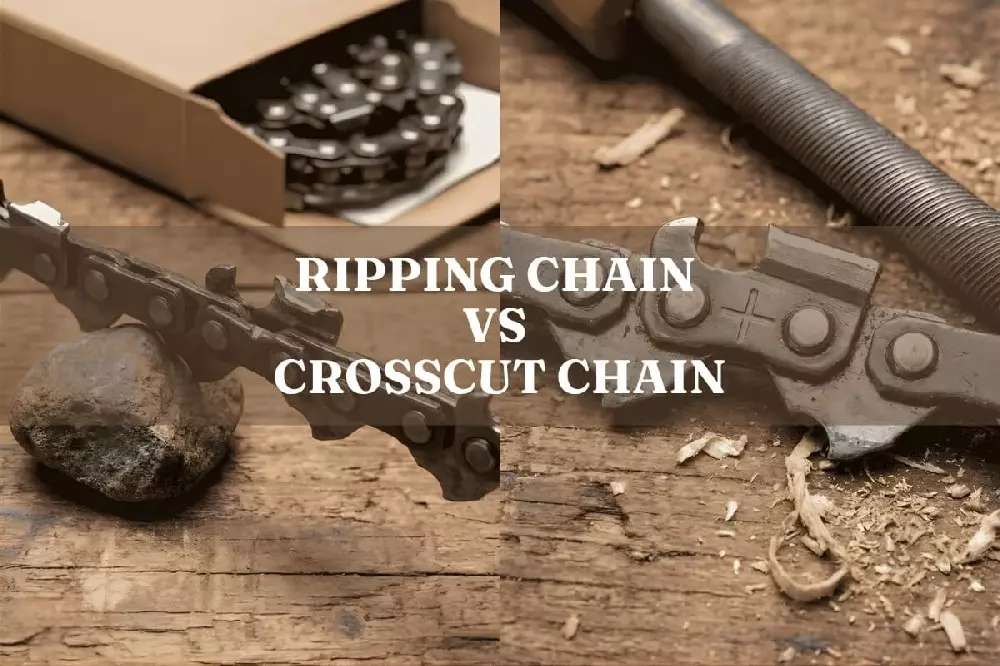
How does a ripping chain work?
A ripping chain is a specialized chainsaw chain designed to cut along the wood grain. It is mainly used for milling logs into boards, planks, or slabs, where a smooth and straight finish is required.
It works like a standard chainsaw chain, but its design allows for more controlled and less aggressive cutting. A ripping chain is designed specifically for cutting along the wood grain rather than across it.
Key design features
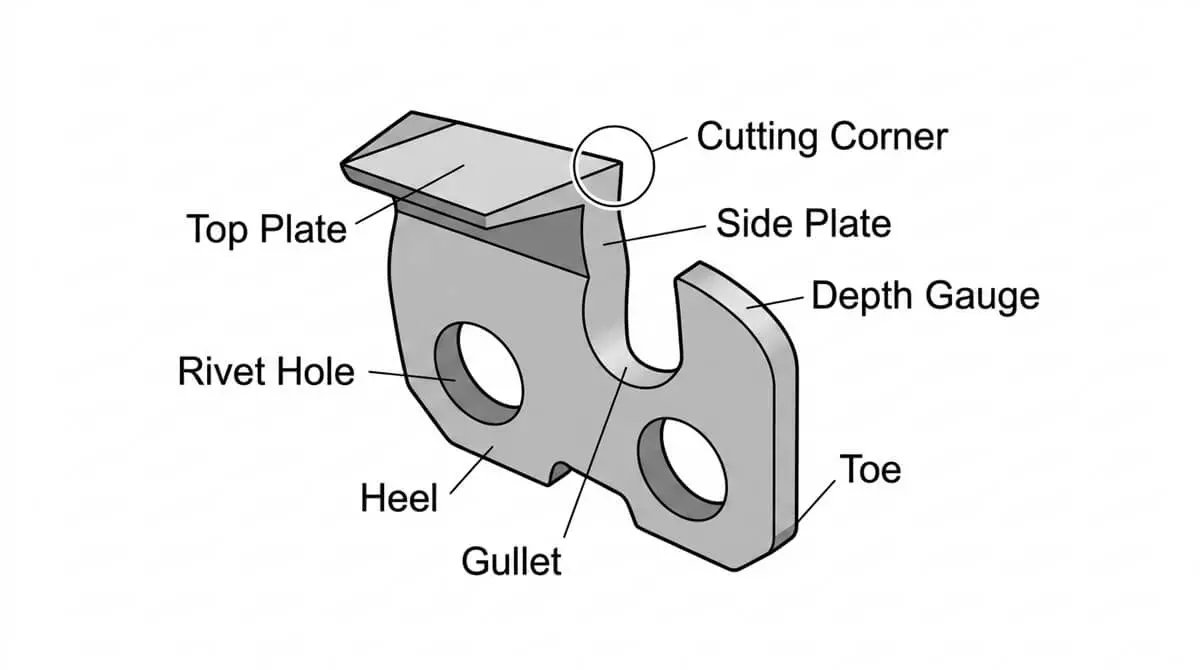
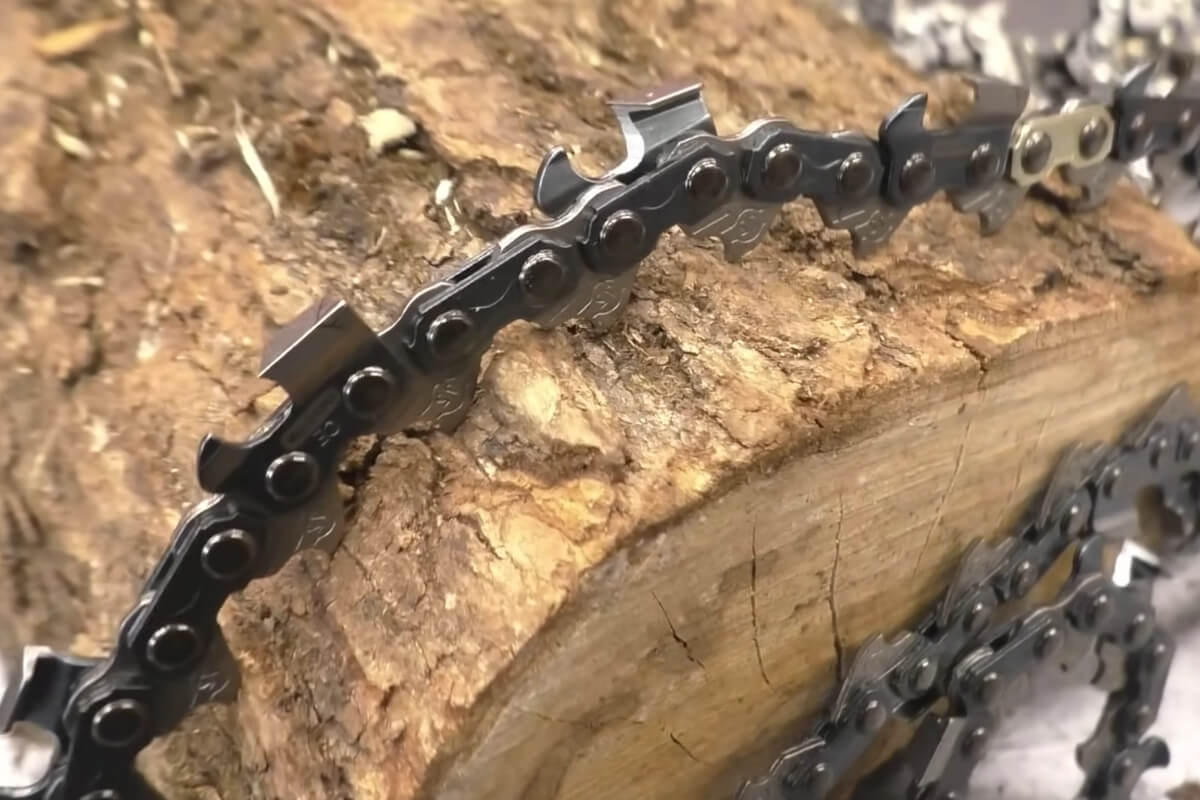
Low top-plate angle (5°–15°): Ripping chains have a much shallower top-plate angle than standard crosscut chains. This lower angle lets the chain slice smoothly along the grain instead of tearing wood fibers, producing a cleaner surface.
Smooth, controlled cutting action: Ripping cuts are slower and more controlled. Instead of chunky chips, the chain produces long, stringy shavings, showing that it is shaving wood fibers cleanly.
Reduced side force: The shallow cutter angle reduces outward pressure. The top plate does most of the cutting, while the side plate breaks weak cross-grain bonds. This keeps the cut stable and prevents the kerf from widening.
A ripping chain is ideal for chainsaw milling and producing smooth lumber surfaces, but it is not suitable for general tree felling or firewood cutting.
How does a crosscut chainsaw chain work?
A crosscut chainsaw chain is designed to cut across the wood grain, which is the most common direction in general chainsaw work. When felling a tree, limbing branches, or cutting logs into firewood, the chain is positioned at about 90 degrees to the grain.
Crosscut chains have a larger top-plate angle (typically around 30°), allowing the cutters to sever wood fibers quickly and efficiently. The top plate slices through the fibers, while the side plate helps remove material, producing small, chunky wood chips.
Because of this design, crosscut chains cut faster and more aggressively than ripping chains.
How is a ripping chain different from a crosscut chain?
Ripping and crosscut chains are similar in basic construction, but small design differences greatly affect how they cut and what jobs they are best suited for. Understanding these differences helps you choose the right chain for performance, safety, and finish quality.
Cutter angle (most important difference)
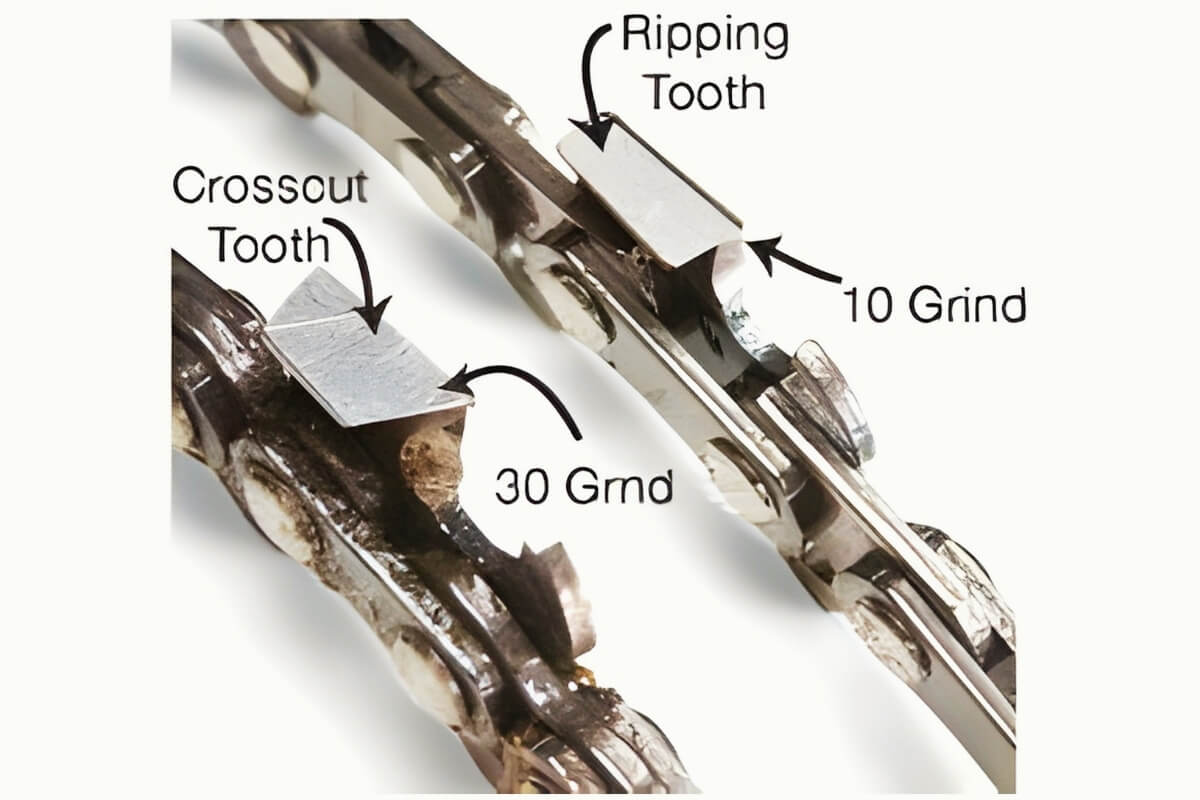
Ripping chain cutters are sharpened at a lower angle than crosscutting chains. The leading edge of the cutter top plate has only a very slight backward sweep and is almost perpendicular to the cutting direction. A typical sharpening angle for ripping chain cutters is 5 to 10 degrees, while crosscut chains are sharpened to about 30 degrees.
Crosscut chains have a steep top-plate angle, usually between 25° and 35°, which allows the cutters to aggressively slice through wood fibers rather than following the grain.
Depth gauges (rakers)
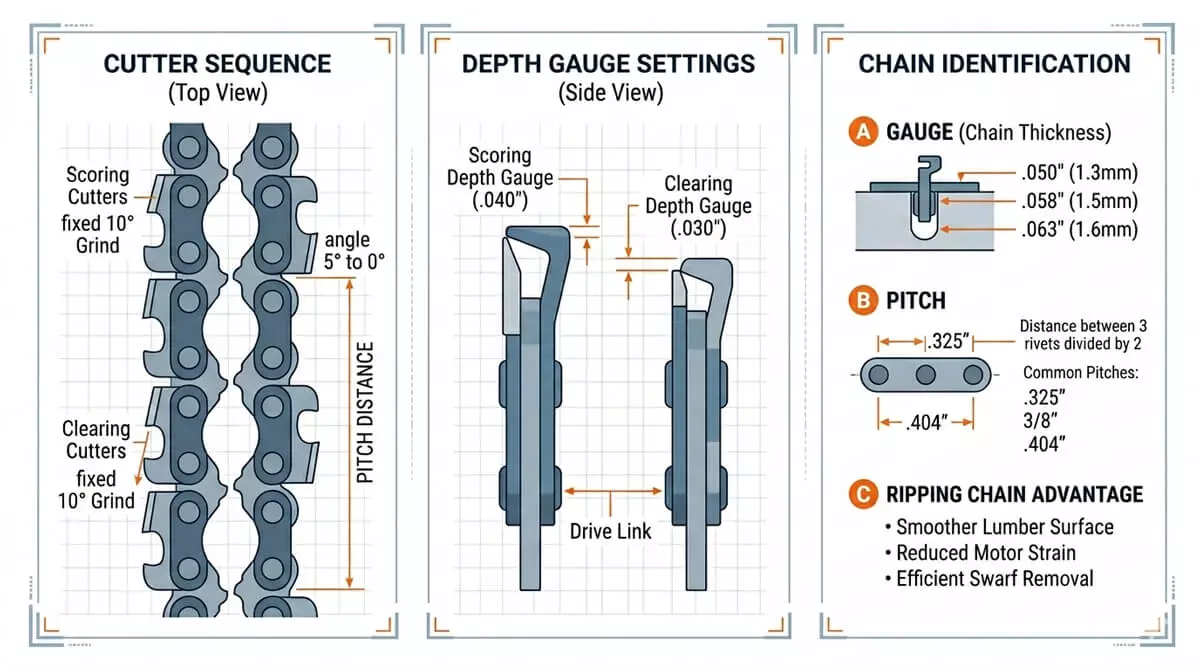
Rip chains generally have higher depth gauges than crosscut chains. These gauges, also called rakes or depth stops, precede the actual tooth in each cutter link and limit the depth of the cut. The higher depth gauges in the ripper chain limit the depth of cut per tooth compared to a standard crosscut chain, meaning each cutter takes a thinner chip.
A lighter chip load reduces the cutting force per cutter and helps your saw handle heavy ripping work. Consider that you typically engage almost the entire log width with the chain in ripping, bringing many teeth into contact with the wood simultaneously, which will easily stall a powerful chainsaw if each cutter tries to go too deep.
Scoring cutters (on some ripping chains)
In some ripper chains every other cutter pair can be replaced with scoring cutters that are narrower than standard. These cutters help to stage the cut so that each tooth only has to clear a quarter of the total cut width instead of one-half. Scoring cutters take care of the left and right edges of the cut, and the following full-width clearing cutters take care of the middle.
Usage and versatility
Ripping chains are best for milling logs into boards or planks, producing smooth, precise cuts along the wood grain. They are slow and accurate but limited in general use — not suitable for felling or firewood cutting.
Crosscut chains are versatile for felling trees, limbing, bucking, and firewood preparation. Being faster and more aggressive, a crosscut chain can cut through various hardwoods and is the better all-rounder where surface finish is not a top priority.
Durability
The longevity of a chainsaw chain depends on the job it performs and the level of maintenance. A well-maintained chain can last 2–3 years. Ripping chains are the clear winner in durability — their drives are specially designed to reduce the risk of physical damage, and their workload is relatively low. Crosscut chains, while durable, are used more frequently and across more demanding workloads, so they break down more quickly.
Production capacity
Crosscut chains are faster and can handle a wider variety of workloads, making them the more productive choice for general tasks. Ripping chains are precision tools — slower, but best in terms of accuracy and surface finish. After cutting with a crosscut chain, you may still need sandpaper or a ripping chain to smooth the surface, so productivity depends on the end goal.
| Ripping Chain | Crosscut Chain | |
|---|---|---|
| Top-plate angle | 5°–15° | 25°–35° |
| Cutting direction | Along the grain | Across the grain |
| Cutting speed | Slow, controlled | Fast, aggressive |
| Surface finish | Smooth, long stringy shavings | Rough, chunky chips |
| Best for | Log milling, boards & slabs | Felling, limbing, firewood |
| Durability | Higher (lower wear load) | Moderate (heavier, frequent use) |
Which one is better?
There is no single "better" choice between a ripping chain and a crosscut chain. The right option depends entirely on the type of work you plan to do. Using the correct chain makes your cutting safer, easier, and more efficient.
BISON, a professional chain manufacturer in China, recommends selecting your chainsaw chain based on your specific task to achieve the best performance and finish.
Choose a ripping chain if:
You are cutting along the wood grain
You are milling logs into boards, planks, or slabs
Surface smoothness and precision matter more than speed
You want controlled, accurate cuts
Ripping chains are slower but produce smooth finishes and long, stringy shavings. They are ideal for chainsaw mills and woodworking projects where cut quality is important. They also tend to experience less aggressive wear when used correctly.
Choose a crosscut chain if:
You are cutting across the wood grain
You are felling trees, limbing branches, or cutting firewood
You need faster, more aggressive cutting
You want a versatile, all-purpose chain
Crosscut chains are the standard choice for most users. They cut quickly, handle tough jobs efficiently, and are suitable for general tree work and firewood preparation. With proper maintenance, they remain durable and reliable.
Final verdict
If you are milling lumber, choose a ripping chain. If you are doing general tree work or firewood cutting, choose a crosscut chain.
There is no clear winner — each chain is designed for a specific purpose. Understanding when to use each one helps you work safer, cut faster, and get better results from your chainsaw.
Conclusion
BISON, a professional chain manufacturer in China, emphasizes the importance of choosing the right chainsaw chain for each task. The main difference between ripping and crosscut chains is the cutter angle: ripping chains have a shallow angle for smooth cuts along the grain, while crosscut chains have a steep angle for fast, aggressive cuts across the grain.
Using the correct chain improves safety, boosts cutting efficiency, extends equipment life, and ensures high-quality results. Ripping chains are ideal for milling logs and achieving smooth surfaces, while crosscut chains are best for felling trees, limbing, and cutting firewood.
By assessing your specific needs and the type of woodworking you do—whether heavy-duty or light work—you can confidently select the right chain. Professional-grade chains from trusted manufacturers like BISON provide reliable performance, available in various sizes and specifications for both ripping and crosscut tasks.
Source your chains from BISON
Whether you're equipping a retail store, building a private-label tool line, or sourcing replacement chains for an OEM product, BISON manufactures both ripping and crosscut chains to international specifications—with support for custom gauge, pitch, and drive link configurations.
Samples available for quality verification
Custom specifications at no additional cost
Consistent lead times from our Taizhou facility
Request a Quote → Browse Chainsaw Products →
FAQs
Can I use a crosscut chain for ripping?
Technically yes, but it is highly discouraged. A crosscut chain has a steep cutter angle designed to cut across the grain. Using it for ripping will be slow, inefficient, produce rough cuts, and increase the risk of kickback and accidents.
Can I modify a crosscut chain into a ripping chain?
No. The cutter angle and design of a crosscut chain are fixed. Modifying it is unsafe and will not provide the smooth, controlled cuts that a true ripping chain offers.
How do you sharpen chainsaw chains (crosscut and ripping)?
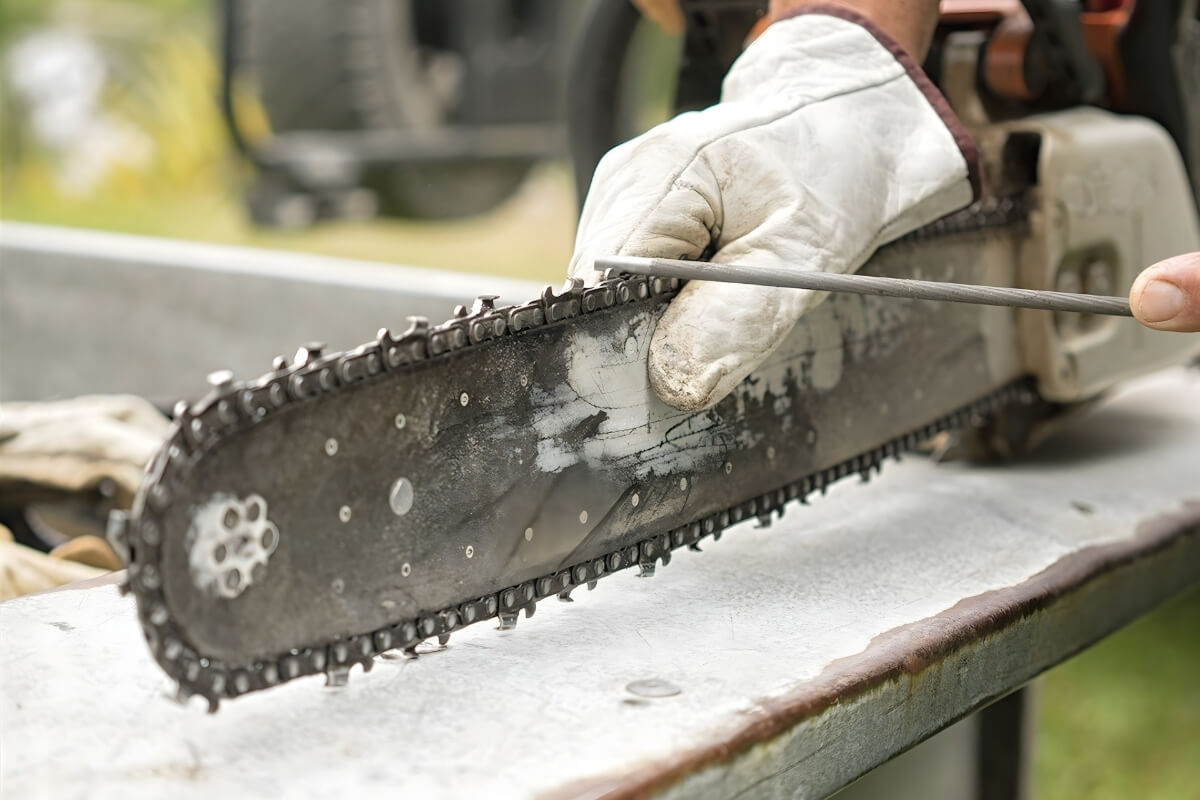
Sharpening is critical for chainsaw performance, especially in milling. Poor sharpening reduces speed, strains the saw, and affects cut quality. The basics must remain consistent: equal tooth length, correct angle, proper cutter shape, and accurate depth gauge setting.
Sharpening principles are the same for both chains — only the angle differs. Use the correct sharpening angle:
Ripping chains: 5°–15°
Crosscut chains: 25°–35°
Proper sharpening ensures safer operation and better cutting results:
Keep all teeth the same length.
Maintain a consistent angle.
Check and adjust depth gauges.
Use the correct file size.
A filing guide helps control angle and tooth length.

related blog
Acquire all kinds of knowledge from professional China factory
do electric chainsaws need oil?
So, what type of oil is electric chainsaw needed, and how much oil is needed? In this comprehensive guide, BISON will clear up the confusion and provide clear answers about electric chainsaw oil.
how to choose a chainsaw chain
Learn all the things you need to keep in mind while choosing a chainsaw chain. It’s a very important decision so don’t make any mistakes.
Chainsaw backfires: Know the issues and stay safe
BISON aims to provide a comprehensive overview of situations in chainsaw backfire. We'll reveal the root cause behind this anomaly, ranging from poor fuel quality to a faulty carburetor adjustment.
related product
Quote high quality products from professional China factory