In agriculture, water sustains crops, nourishes livestock, and supports farm productivity. Efficient irrigation helps your crops grow stronger, improves yields, and keeps your land productive year after year.
The market offers countless options, making it hard to know which pump is the best fit. Whether you're an experienced farmer or new to the field, choosing the right water pump can be overwhelming. This guide is designed to help you select the ideal agricultural water pump for your needs.
Estimating your agricultural water needs
Evaluating your water requirements is essential before investing in an agricultural water pump. Understanding your farm’s specific demands and the volume of water needed helps you choose the right pump.
determine water demand
Choosing the right pump depends on your farm’s needs. Consider the following:
Livestock watering: For supplying clean water to animal troughs, submersible or jet pumps are ideal. They deliver water efficiently from wells or tanks, ensuring animals always have fresh water. Calculate water requirements for drinking, bathing, cooling, and special operations such as dairy or aquaculture.
Pond or reservoir management: To prevent stagnation or drain ponds and reservoirs, select high-flow pumps designed to move large volumes quickly. These pumps maintain water quality and manage water levels effectively.
Crop water requirements: Different crops need varying amounts of water depending on growth stage, soil type, and climate. Consult crop-specific guidelines to estimate irrigation needs accurately. For example, vegetables and fruit trees require frequent, precise watering, while grains need less frequent irrigation. Matching crop demand with pump capacity prevents waste and ensures healthy growth.
Infrastructure and maintenance: Factor in water for cleaning equipment, washing vehicles, dust control, fence repairs, and greenhouse irrigation. Accounting for these needs ensures your pump can handle all farm operations.
water source type and quality
The type and quality of your water source influence pump selection:
Depth: deep wells require pumps capable of lifting water from far below ground, while surface water sources need pumps suited for horizontal flow. Consider seasonal variations and potential contamination risks for rivers, lakes, or ponds. Evaluate groundwater depth, yield, and quality for wells or boreholes, keeping in mind environmental impacts.
Quality: water with sand, debris, or dirt requires pumps designed to handle solids without clogging or damage.
Distance from source: flat land may need less pressure, but hilly or uneven terrain requires pumps with higher pressure to move water uphill. Longer distances also demand stronger pumps to maintain consistent flow.
Type of irrigation system
Different irrigation methods require varying water flow, pressure, and efficiency. Choosing the right method depends on your crops, soil type, and water availability.
Drip irrigation: Drip systems deliver water slowly and directly to plant roots, minimizing evaporation and runoff. They need steady, low-pressure flow, which centrifugal or solar-powered pumps can provide reliably. Drip irrigation is highly water-efficient and ideal for precise, controlled watering.
Sprinkler systems: Sprinklers require higher pressure to distribute water evenly over crops. Centrifugal or reciprocating (piston) pumps are well-suited for creating the necessary pressure. Sprinkler systems work well on small plots or uneven terrain, delivering water through overhead sprinklers or spray nozzles.
Flood irrigation: Flood irrigation moves large volumes of water quickly at low pressure to cover fields. Large centrifugal pumps with strong flow rates are ideal for handling heavy water volumes efficiently.
Manual irrigation: For smaller or flexible applications, portable pumps can provide convenient, adjustable water supply where needed.
Types of agricultural water pumps
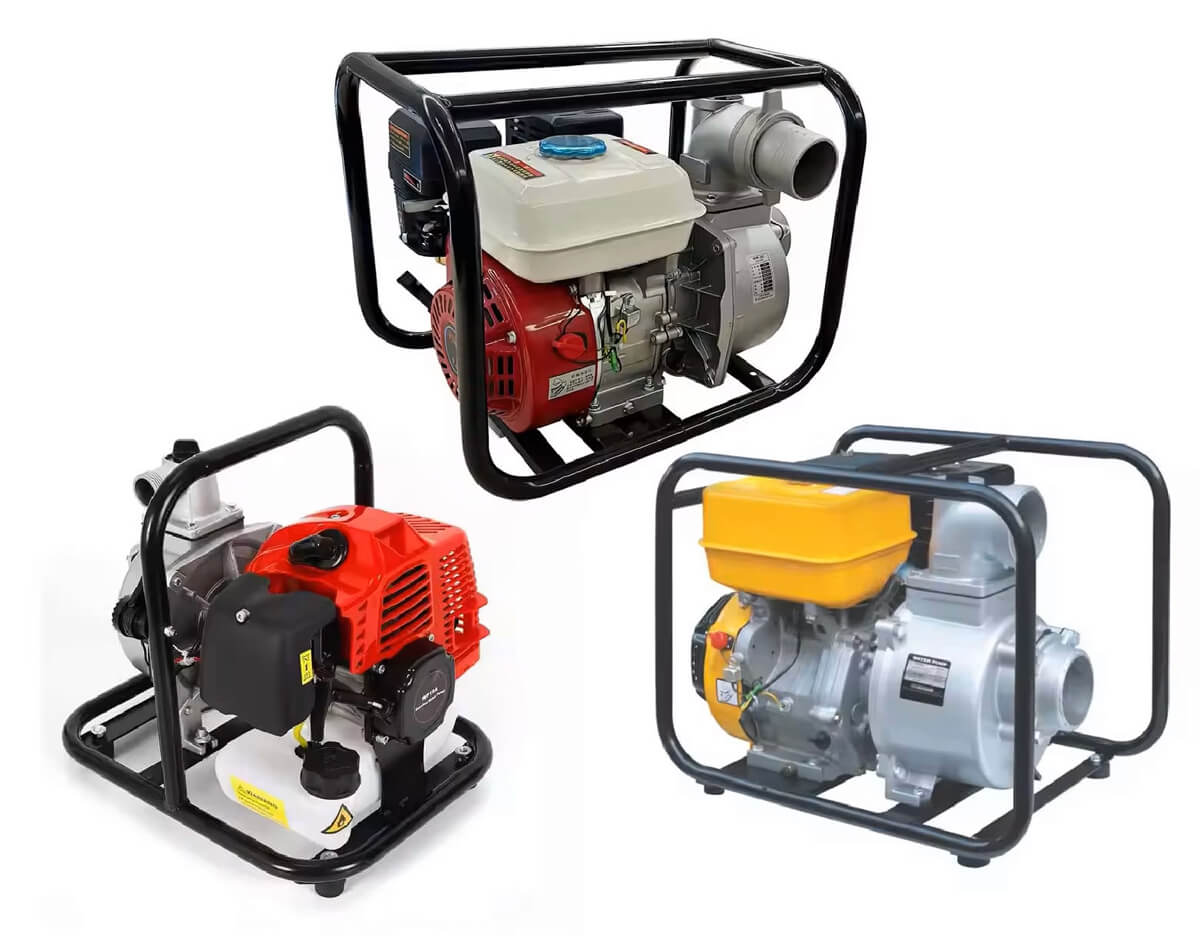
Agricultural water pumps come in various types, each suited to specific farm applications. Understanding their features and uses makes it easier to select the right pump for your needs. The most common types include centrifugal, submersible, diaphragm, and piston pumps.
centrifugal pumps
Centrifugal pumps use a spinning impeller to push water outward, creating a strong flow. They are ideal for moving large volumes of water from ponds, rivers, or canals, making them suitable for irrigating wide fields. These pumps are popular in agriculture for their simplicity, reliability, and efficiency. Key features:
submersible pumps
Submersible pumps are placed underwater in wells or boreholes, lifting water from deep sources. Because they push water upward rather than pulling it, they operate quietly and efficiently. They are ideal for deep well irrigation or water supply systems. Key features:
High-pressure capacity: effective for pumping water from deep wells.
Silent operation: submerged design reduces noise, suitable for residential or noise-sensitive areas.
Energy-efficient: requires less power to lift water compared to surface pumps.
diaphragm pumps
Diaphragm pumps use a flexible membrane to move water or liquids mixed with fertilizers or chemicals. They handle tougher liquids without damage and maintain steady pressure, ensuring efficient irrigation. Key features:
Handles solids: can pump slurry, wastewater, or sediment-rich water, ideal for manure transfer or irrigation in challenging water sources.
Self-priming: removes air from the suction line and draws water without external priming.
Adjustable flow rate: allows precise control over water delivery for varying irrigation needs.
piston pumps
Piston (or reciprocating) pumps use pistons to generate high pressure, perfect for spraying crops with pesticides, fertilizers, or misting systems. They are suited for high-pressure applications rather than flooding irrigation. Key features:
High-pressure capacity: delivers strong pressure for spraying or misting over large areas.
Variable flow rate: lets users adjust water delivery for specific irrigation or sprinkler needs.
Durable construction: made from materials like stainless steel or brass for long-term reliability.
jet pumps
Jet pumps create a vacuum to lift water, making them suitable for both shallow and deep wells. They are versatile and ideal for farms with varying water source depths.
Understanding power sources
The power source of your agricultural water pump affects its performance, efficiency, and operating costs. Choosing the right source depends on factors such as accessibility, reliability, cost, and environmental impact. The three main options are electric, diesel (or fuel-powered), and solar pumps.
electric agricultural water pumps
Electric pumps are efficient, quiet, and ideal where grid electricity is available. Key advantages:
Reliable performance: consistent operation with minimal maintenance and long service life when connected to a stable power supply.
Ease of use: can be automated or controlled remotely with timers for precise irrigation scheduling.
Environmentally friendly: produce fewer emissions and less noise than fuel-powered pumps.
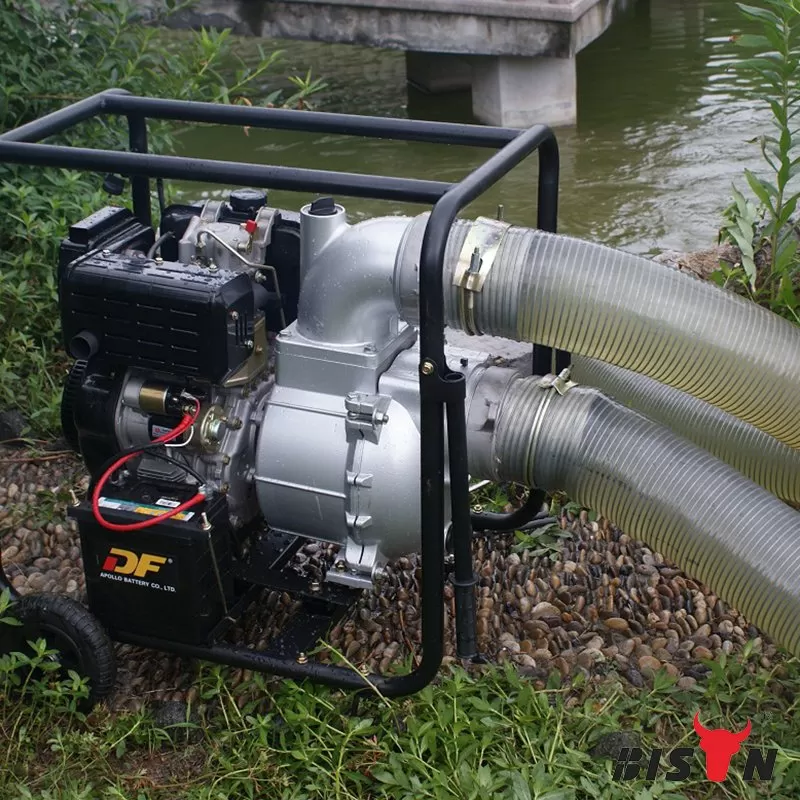
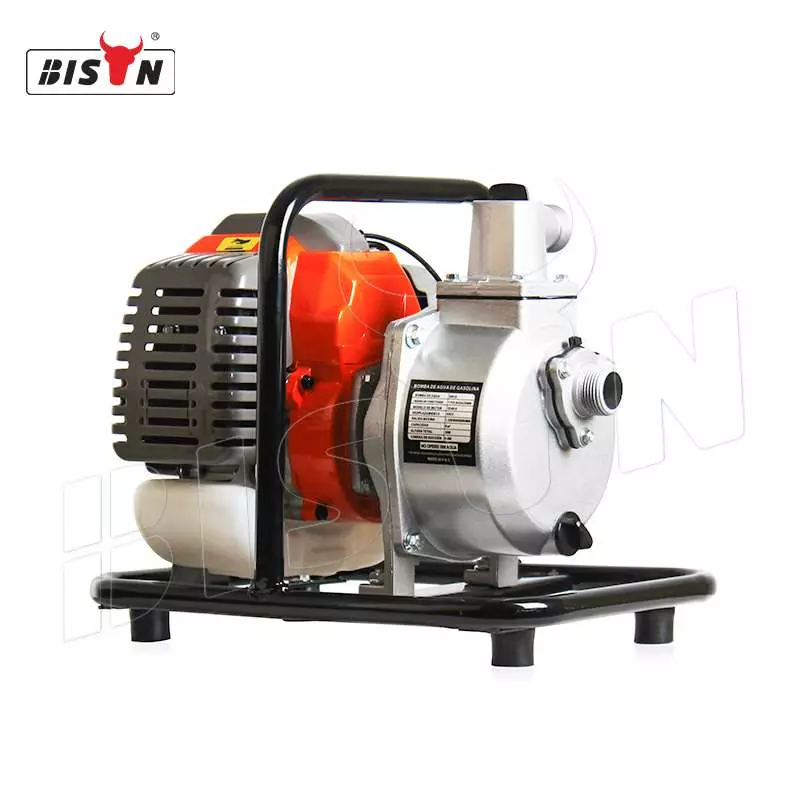
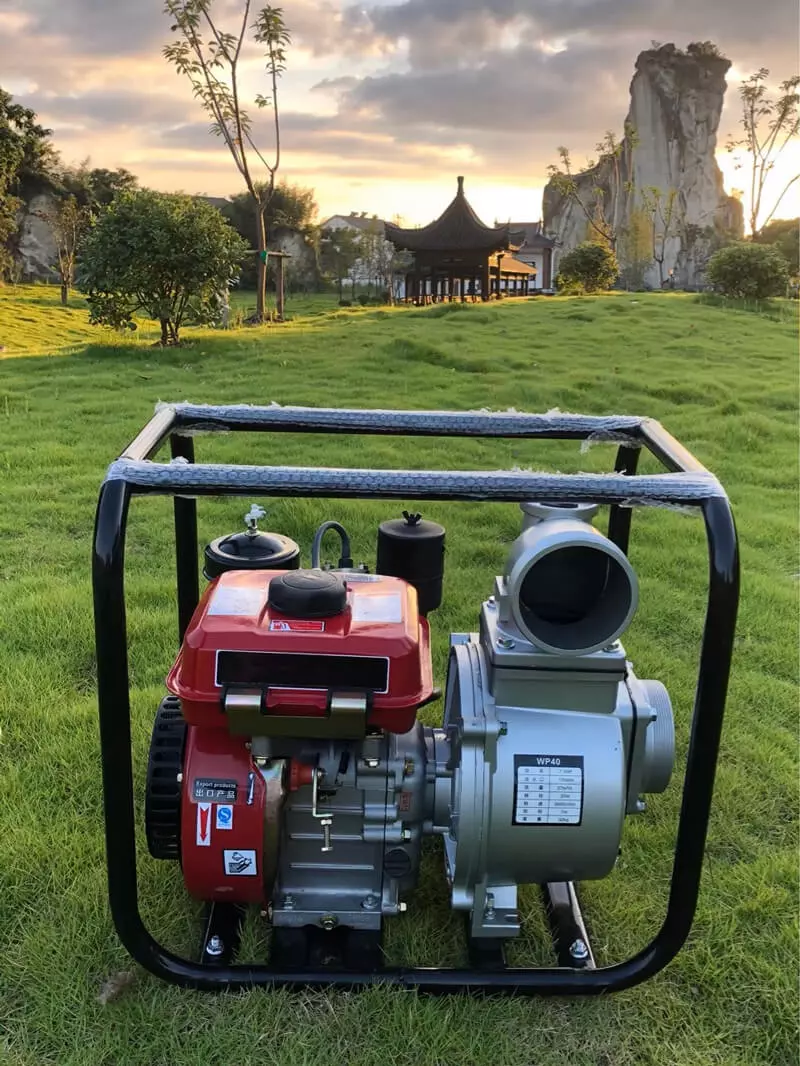
fuel-powered agricultural water pumps (diesel or gasoline)
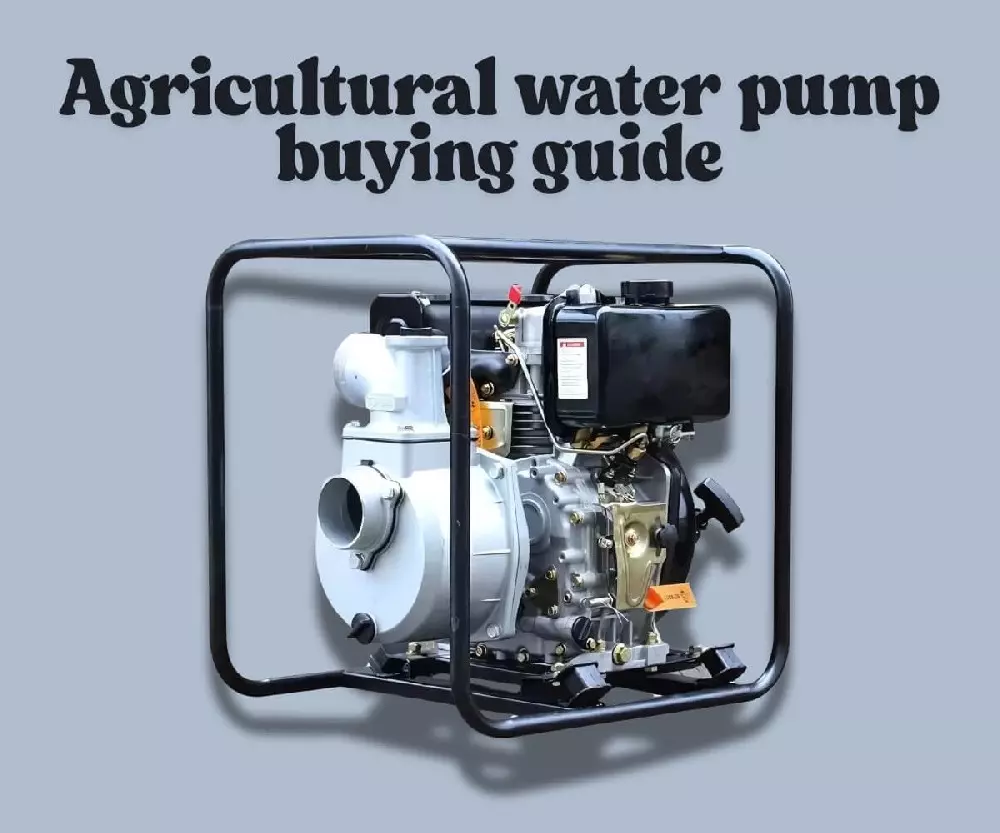
Fuel-powered pumps are suitable for remote areas without reliable electricity. Key advantages:
Portability: self-contained units that can be moved to remote locations easily.
High power output: ideal for pumps requiring high pressure or large flow rates.
Continuous operation: can run for extended periods without interruption, suitable for dewatering, drainage, or emergency water supply.
solar-powered agricultural water pumps
Solar pumps use sunlight to provide a sustainable and cost-effective solution, especially for off-grid or eco-conscious farms. Key advantages:
Energy-efficient: harness renewable solar energy, reducing dependence on fossil fuels and lowering long-term costs.
Low maintenance: fewer moving parts mean less maintenance and downtime, ideal for remote areas.
Scalable: easily expanded with additional solar panels or batteries to match changing water demands.
Balancing budget considerations
Budget is a key factor when selecting an agricultural water pump, affecting both initial investment and ongoing operational costs.
The purchase price is an important consideration. Evaluate your budget against pump features, specifications, and performance. You get quotes from multiple suppliers and compare pumps with similar capabilities.
Besides, consider long-term expenses, including maintenance, repairs, and energy consumption. Though these pumps may cost more upfront, they offer significant long-term savings.
Key water pump specifications you should know
Choosing the right pump requires understanding the key specifications that affect its performance. Calculate your desired flow rate and pressure based on your irrigation needs and system design, then match these requirements with pump performance to select the right model.
Flow rate
Flow rate measures how much water a pump can move, usually in gallons per minute (gpm), liters per minute (lpm), or cubic meters per hour (m³/hr). Determine how much water your crops need and the size of your irrigation system to ensure the pump can supply enough water.
Head (total dynamic head)
Head is the total height and pressure the pump must overcome to move water, including:
Static head: vertical distance water must be lifted (e.G., well depth or hill height).
Friction loss: resistance water encounters in pipes and hoses; longer or narrower pipes increase friction.
Pressure head: pressure required for irrigation systems to function properly, such as sprinkler spray.
Add these parts to determine the total head your pump must handle.
Horsepower (hp) or kilowatts (kw)
This indicates the pump’s power. Higher power allows for greater flow rates and higher head. Choose a pump with sufficient horsepower to meet your water volume and height requirements—too little power reduces performance, while too much wastes energy.
Pump efficiency
Efficiency measures how well a pump converts energy into moving water. A more efficient pump uses less fuel or electricity, reduces wear, and lasts longer. To maximize efficiency, select energy-efficient models, optimize system design, use variable-speed controls, and minimize pressure losses in piping.
Suction lift
Suction lift is the maximum height a pump can pull water from a source below it. Physical limits (about 7–8 meters or 25 feet) apply due to air pressure. For deeper water sources, consider a submersible pump or alternative setup.
materials and build quality
Investing in a durable water pump ensures reliable performance year after year, even under tough farm conditions. Choosing pumps made from strong materials can save money and reduce maintenance issues.
Pump casing materials
The casing protects the pump’s internal components:
Cast iron: strong and durable, ideal for heavy-duty use; may rust if not coated properly.
Stainless steel: corrosion-resistant, perfect for outdoor use or water that could cause damage.
Bronze: corrosion-resistant and suitable for salty or harsh environments.
Impeller materials
The impeller pushes water through the pump and is subject to constant wear. Materials like stainless steel, bronze, or high-quality plastic resist damage and ensure smooth, long-lasting operation.
Seal types
Seals prevent leaks and protect the pump:
Mechanical seals: reliable and long-lasting, tightly sealing moving parts.
Packing seals: cheaper but wear faster and require more maintenance.
Motor protection features
Look for pumps with:
Ip ratings: indicate resistance to dust and water; higher ratings offer better protection.
Thermal overload protection: automatically shuts the motor down if it overheats, preventing damage.
Abrasion resistance
Water containing sand, dirt, or sediment can wear down pump parts quickly. Pumps with abrasion-resistant materials and specialized components last longer and perform better in these conditions.
Easy access to spare parts
Choose brands with widely available spare parts to reduce downtime and ensure your farm operations continue smoothly if repairs are needed.
Choosing the right agricultural water pump
Selecting the right water pump requires careful consideration of your water source, irrigation type, pump specifications, and material quality. By aligning these factors with your farm’s needs, you’ll enjoy better performance, longer equipment life, and significant cost savings.
Take the time to research, ask questions, and consult experts to make the smartest choice. When you’re ready, choose bison for reliable water pumps backed by expert support and a strong commitment to quality. We provide solutions that keep your farm productive and thriving year after year.