2-stroke engine factory
A two-cycle, or two-stroke engine is a type of internal combustion engine commonly used in low-powered equipment such as scooters, dirt bikes, jet skis, small outboard motors, and lawn tools.
Thanks to their lightweight structure, simple design, and easy maintenance, BISON 2-stroke engines are known for reliable performance and remain popular in many countries.
BISON offers a wide range of 2-stroke small engines at wholesale prices as a trusted OEM manufacturer in China.
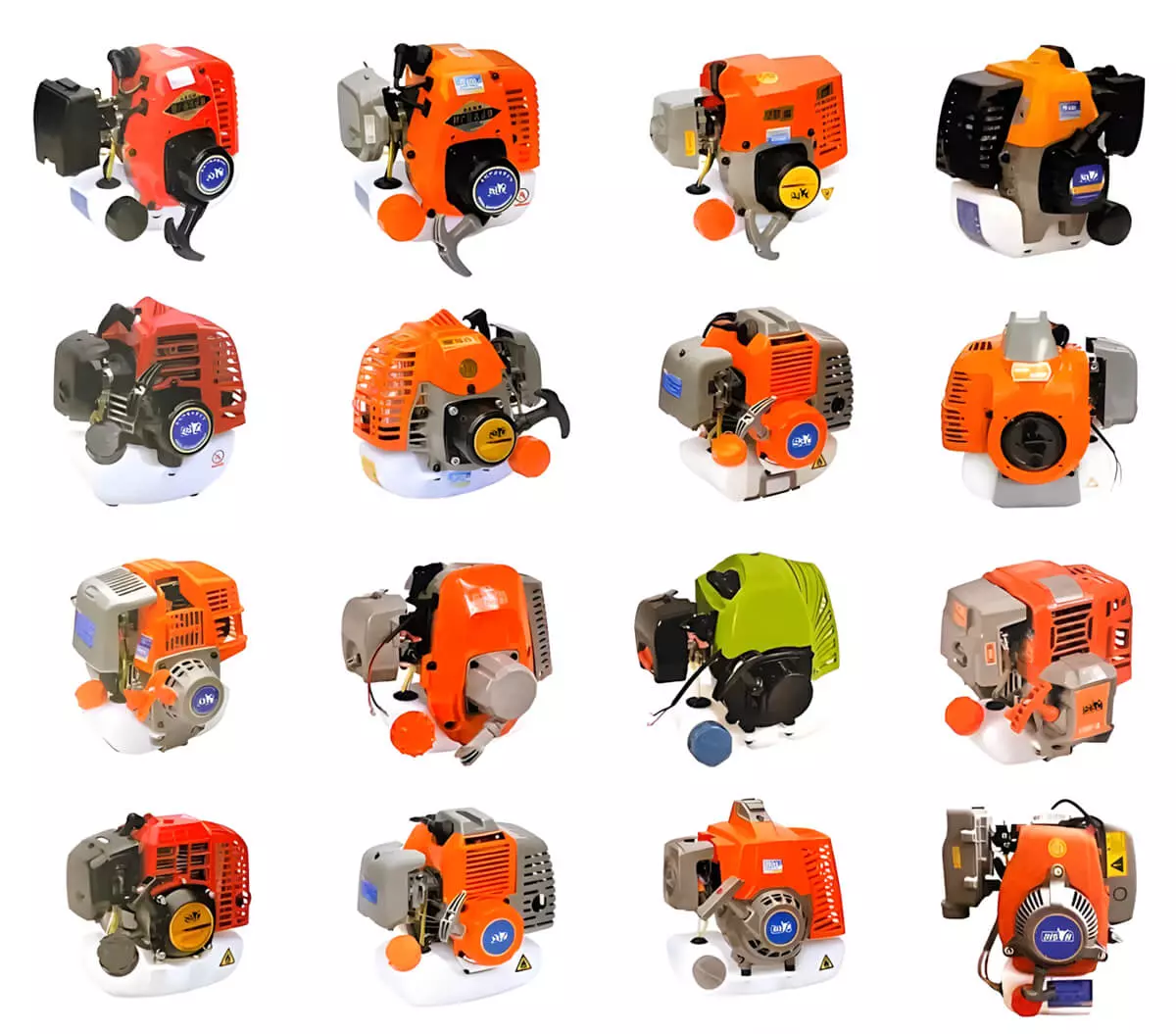
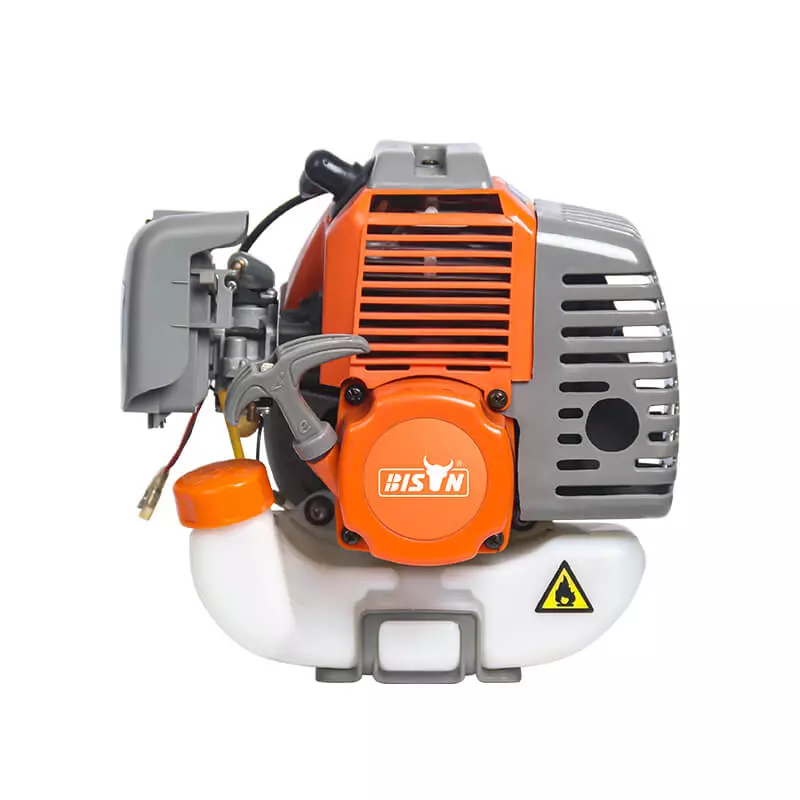
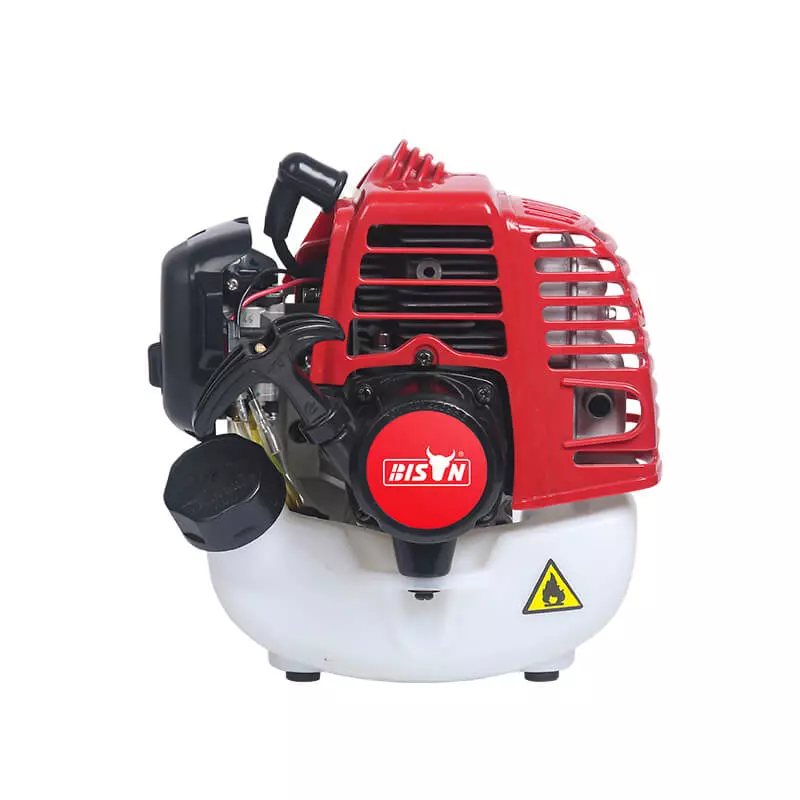
Manufacturing company that makes 2-stroke engine product
2-stroke engine 101
As the name suggests, a two-stroke small engine is an internal combustion (ic) engine that completes a full power cycle in just two piston strokes—one upward and one downward—within a single crankshaft revolution.
In petrol and diesel engines, the thermodynamic cycle includes compression, heat gain, expansion, and exhaust. In a two-stroke engine, these four processes are completed within two strokes, with two occurring during the upward movement of the piston and the other two during the downward movement.
Compared with a four-stroke engine, the structural difference is clear. Without valves or camshafts, two-stroke engines have a simpler and lighter design. Fewer parts mean less weight and higher power relative to size, which is why two-stroke engines are widely used in portable tools and outdoor equipment.
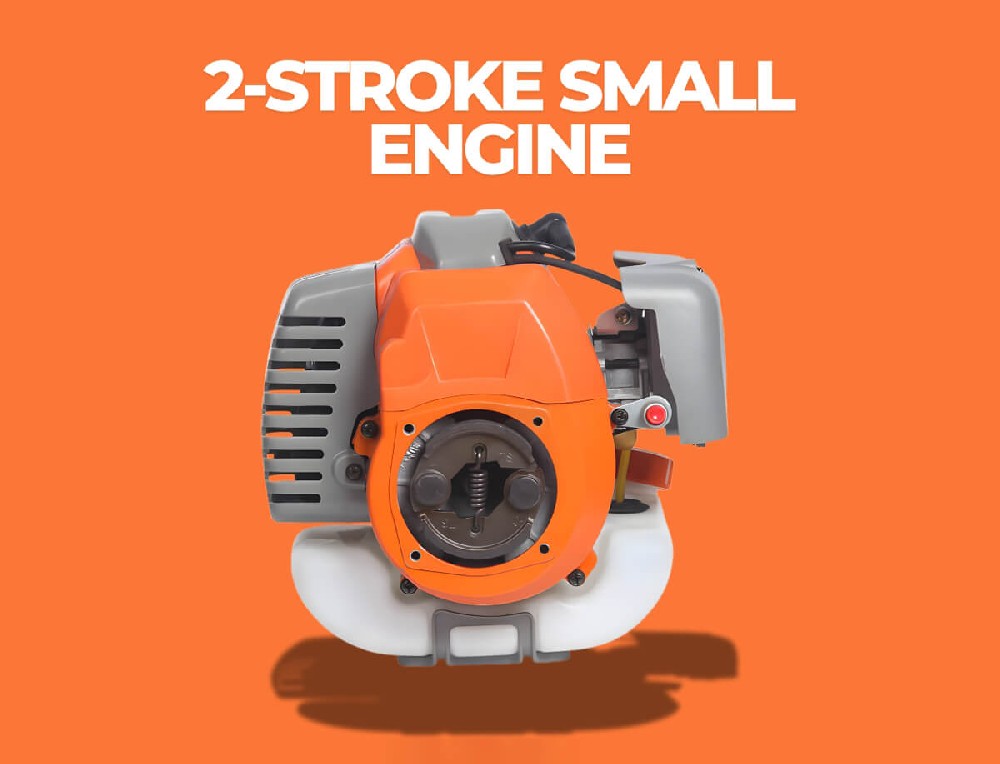
Two-stroke small engine construction
To understand how a two-stroke small engine works, it’s important to know its main components. At a basic level, these engines consist of a piston and cylinder, a crankshaft, inlet and outlet ports, and either a spark plug or a fuel nozzle.
piston and cylinder
Piston: a moving part that compresses the fuel–air mixture and converts combustion force into motion.
Cylinder: the chamber in which the piston moves up and down.
Together, the piston and cylinder contain the fuel–air mixture and transfer combustion energy to the crankshaft.
crankshaft
The crankshaft converts the piston’s up-and-down (reciprocating) motion into rotational power that drives the engine. It is directly connected to the piston and plays a key role in the compression and power process.
spark plug or fuel nozzle
Spark plug (petrol engines): ignites the fuel–air mixture inside the cylinder.
Fuel nozzle (diesel engines): injects fuel into the cylinder for combustion.
inlet and outlet ports
Ports are openings in the cylinder wall that control gas flow:
Intake port: allows fresh fuel and air to enter the cylinder.
Exhaust port: releases burnt gases after combustion.
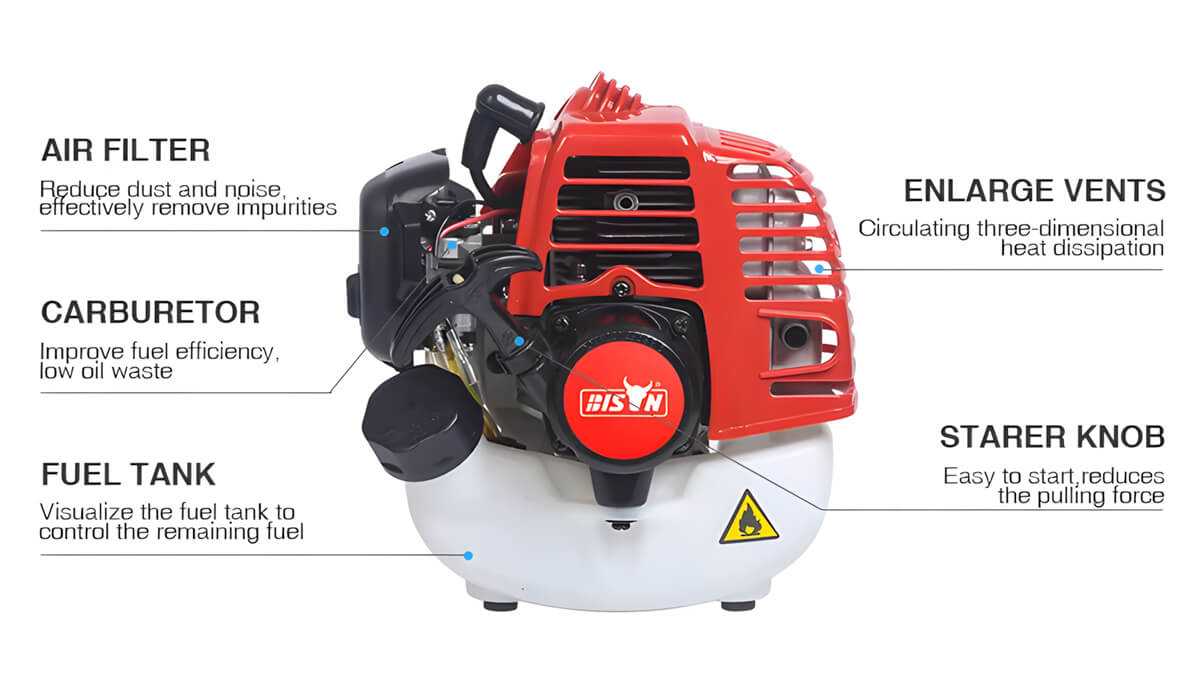
How a 2-stroke engine works?
A 2-stroke engine completes a full power cycle in just one up-and-down movement of the piston. This cycle is divided into two main stages: intake/compression and power/exhaust, allowing the engine to produce power quickly and efficiently.
Step 1: intake and compression
As the piston moves upward from bottom dead center (bdc) to top dead center (tdc), it draws a fuel–air mixture into the crankcase. At the same time, the mixture already inside the cylinder is compressed, preparing it for ignition.
Step 2: power and exhaust
When the piston reaches the top, the spark plug ignites the compressed mixture. The resulting combustion forces the piston downward, producing power. During this downward movement, the exhaust port opens to release burnt gases, while the transfer port allows fresh fuel and air from the crankcase to enter the cylinder. The piston then moves upward again, and the cycle repeats.
How fuel and lubrication work?
Unlike four-stroke engines, 2-stroke engines do not have a separate oil system. Lubrication is handled in one of two ways:
Pre-mixed fuel: gasoline is mixed with 2-stroke oil before use, allowing the oil to lubricate internal engine parts during operation.
Oil injection: a built-in pump automatically supplies the correct amount of oil from a separate tank into the fuel system.
Types of 2-stroke engines
Two-stroke engines can be classified based on fuel type, intake system, and scavenging method.
based on fuel type
two-stroke diesel engine: A two-stroke diesel engine operates on the diesel cycle and completes one power cycle in two piston strokes. Fresh air is used for scavenging, and fuel is injected only after all ports are closed to prevent fuel loss. Although two-stroke diesel engines are simpler in design and have fewer moving parts than four-stroke diesel engines, they are less common due to performance and emission challenges. They are mainly used in applications requiring a high power-to-weight ratio, such as stationary power units, locomotives, and large marine vessels. These engines are relatively easy to maintain due to their straightforward construction.
two-stroke gasoline engine: A two-stroke gasoline engine operates on the otto cycle, with intake, compression, power, and exhaust occurring within two piston strokes. These engines are lightweight, compact, and commonly used in small equipment such as chainsaws, scooters, mopeds, boats, and handheld tools. Compared to four-stroke gasoline engines, they are simpler and lighter but produce higher emissions. Lubrication is achieved by mixing engine oil with the fuel to protect moving parts such as the piston and crankshaft.
based on intake system
piston-controlled intake: In this type, the intake port is located in the cylinder wall, and its opening and closing are controlled directly by the movement of the piston.
reed valve intake: A reed valve is a one-way valve mounted on the crankcase. It opens during the piston’s upward movement to allow intake and closes during the downward stroke to prevent backflow.
rotary valve intake: This system uses a rotating disc or drum, driven by the crankshaft, to control the opening and closing of the intake passage in the crankcase.
based on scavenging method
crossflow scavenging: In crossflow scavenging, the transfer and exhaust ports are located on opposite sides of the cylinder. The piston crown helps guide fresh air toward the cylinder head, pushing exhaust gases out through the exhaust port.
loop scavenging: In loop scavenging, both the transfer and exhaust ports are positioned on the same side of the cylinder. The incoming charge flows in a looping path to expel exhaust gases efficiently.
uniflow scavenging: Uniflow scavenging uses exhaust valves in the cylinder head instead of exhaust ports, with transfer ports located around the cylinder wall. Fresh air and exhaust gases move in the same upward direction, improving scavenging efficiency.
Where 2-stroke engines are commonly used
Since the 1800s, 2-stroke engines have been widely used in small machines due to their lightweight design and strong performance. Their quick response and compact size make them well suited for both work and recreational applications.
In yard and landscaping work, 2-stroke engines power equipment such as string trimmers, leaf blowers, and hedge trimmers. For heavier outdoor tasks, chainsaws and brush cutters rely on 2-stroke engines to deliver strong cutting performance while remaining easy to handle.
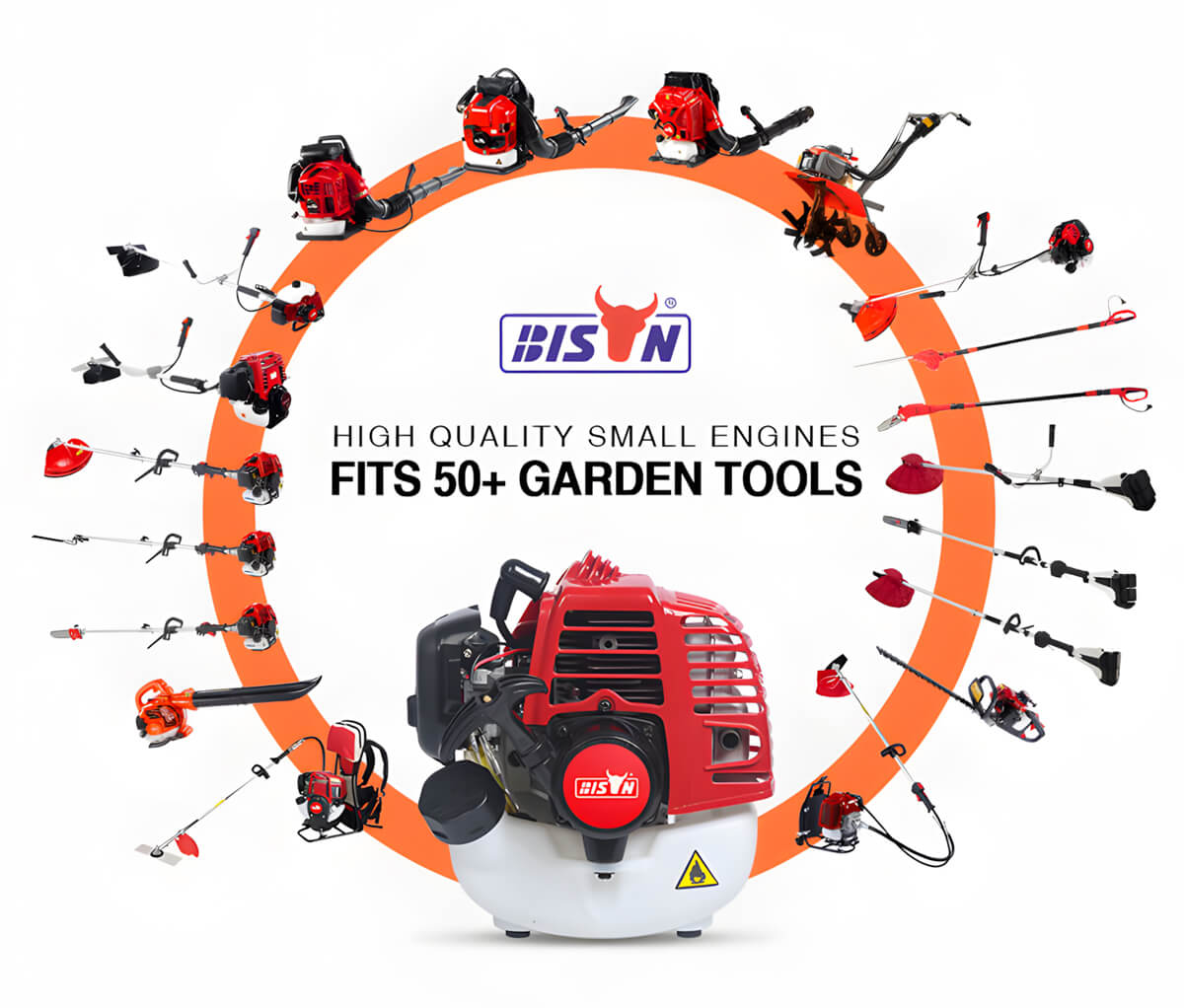
On the water, small boats, outboard motors, and jet skis commonly use 2-stroke engines because they provide high power without adding excessive weight. This balance is especially important in marine applications.
2-stroke engines are also popular in recreational vehicles such as dirt bikes, go-karts, and snowmobiles. Their fast acceleration, simple design, and easy maintenance make them ideal for off-road and performance-focused use.
In addition, many portable generators and water pumps use 2-stroke engines due to their simple construction, reliable starting, and portability—key advantages when power or water is needed quickly in remote locations.
Overall, 2-stroke engines remain a practical and dependable choice for a wide range of outdoor, recreational, and portable equipment.
Conclusion
As a professional small engine manufacturer in China, we recognize the vital role 2-stroke engines play in powering a wide range of tools and machines. Their strong power, simple design, and lightweight construction make them ideal for handheld equipment such as chainsaws, trimmers, and portable generators.
For trusted performance and solid value, explore BISON range of high-quality 2-stroke engines and equipment. Backed by expert support and dependable manufacturing, our products are built to help you get the job done efficiently and confidently.
Table of content
Common FAQ
A holistic solution to your most common questions about BISON 2-stroke engines.
-
What is the advantage of a 2-stroke engine?
2-stroke engines offer several practical advantages that make them a popular option for small tools and machines, especially where power, weight, and simplicity matter most.
- Strong power in a compact size: 2-stroke engines deliver high power relative to their size, producing one power stroke for every crankshaft revolution. This high power-to-weight ratio allows them to handle demanding tasks—such as cutting grass or wood—without the need for a large, heavy engine.
- Simple and efficient design: With no valve mechanism and fewer moving parts, 2-stroke engines have a straightforward construction. This reduces internal friction, improves mechanical efficiency, and makes the engine easier to understand, repair, and maintain. The absence of a separate oil system further simplifies the design.
- Lightweight and easy to handle: Because of their compact structure and minimal components, 2-stroke engines are lighter and take up less space than four-stroke engines. This makes them easier to carry and operate for long periods, helping reduce user fatigue during outdoor work.
- Cost-effective and reliable: Their simple construction makes 2-stroke engines less expensive to manufacture and purchase. At the same time, they remain reliable across a wide range of operating conditions, including both hot and cold environments.
- Flexible operation: Fuel-based lubrication allows 2-stroke engines to operate in different positions and directions without affecting performance, which is especially useful for handheld and portable equipment.
-
What are the disadvantages of a two-stroke engine?
While 2-stroke engines offer clear advantages, they also have limitations that are important to consider before choosing them for your equipment.
- Higher emissions and smoke: 2-stroke engines do not burn fuel as cleanly as four-stroke engines. Part of the fuel–oil mixture escapes unburned during operation, producing more smoke and exhaust emissions. This leads to greater air pollution and can be a concern in areas with strict environmental regulations.
- Lower fuel efficiency: These engines consume more fuel because some of the fresh charge mixes with exhaust gases and is lost during the cycle. As a result, they require more frequent refueling, which increases operating costs over time.
- Shorter engine life: 2-stroke engines tend to run hotter and experience more wear due to simpler lubrication and fewer components distributing the load. If the fuel–oil mixture is not correct, internal parts can wear quickly, reducing engine lifespan.
- Noisy and less smooth operation: Compared to four-stroke engines, 2-stroke engines are louder and may produce more vibration. They often have a narrow efficient speed range, can be unstable at idle, and are less suitable for noise-sensitive environments.
- Fuel mixing and cleanliness issues: Many 2-stroke engines require manual mixing of oil and fuel, which adds an extra step to operation. Incorrect mixing can affect performance and increase maintenance needs, while oil residue can lead to a messier operating environment.
-
How to mix the correct fuel and oil for two-stroke engine?
If your 2-stroke engine doesn’t have an oil injection system, you need to mix oil with gasoline before filling the tank. Follow these steps:
- Check the fuel-to-oil ratio – common ratios are 40:1 or 50:1. Always follow your engine’s manual.
- Use fresh gasoline – typically 87 octane or higher.
- Use proper 2-stroke oil – do not use regular car oil.
- Measure carefully – for a 50:1 ratio, add 2.6 ounces of oil per gallon of gasoline.
- Mix safely – combine the fuel and oil in a fuel-safe container, shake gently, then pour into the tank.
Tip: always prepare your mixture before the tank runs low to avoid rushing and potential mistakes.