what is the difference between a brushcutter and a trimmer?
2026-03-23
Table of content
The lawn looks neat after mowing, but the job isn’t truly finished. Tall grass still grows along fences, weeds appear around trees and posts, and corners often look rough and uneven. These small, hard-to-reach areas can make the entire yard appear untidy.
This is where the right cutting tool makes a difference. Many homeowners and professionals use string trimmers and brushcutters to clean edges, cut thick grass, and remove unwanted weeds. While these tools may look similar, they are designed for different levels of work.
Brushcutters provide strong cutting power for dense, thorny vegetation, while trimmers are lightweight and ideal for precise trimming and finishing tasks. Understanding these differences helps prevent tool damage, saves time, and improves efficiency in yard maintenance.
As a vertically integrated manufacturer exporting to over 80 countries, BISON produces both product lines in-house. In this guide, we break down the technical and commercial differences so you can make smarter purchasing and stocking decisions.
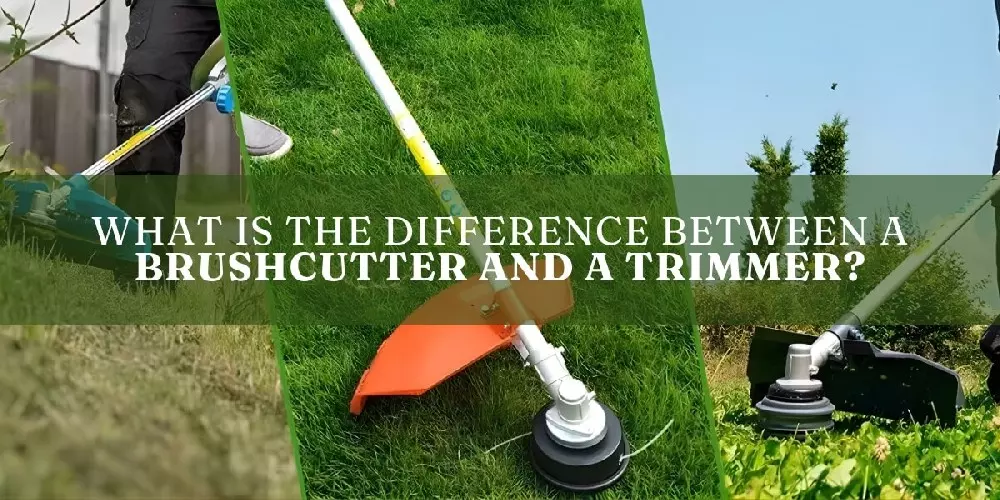
What is a string trimmer?
A string trimmer is a lightweight landscaping tool designed for detail and finishing work. It is commonly used after mowing to clean areas that a lawn mower cannot reach, such as edges, corners, and tight spaces. It is also known as a weed eater and is ideal for cutting soft plants like grass and light weeds.
How does a string trimmer work?
A string trimmer uses a fast-spinning nylon line to cut grass and light vegetation. Instead of a metal blade, it relies on a flexible nylon string that rotates at high speed, allowing it to cut smoothly and efficiently.
Because it uses nylon instead of a heavy blade, it is safer for trimming around fences, walls, flower beds, and trees.
Power sources of string trimmers
String trimmers come in different power options to suit various yard sizes and user needs:
Corded electric models: Plug into a power outlet. They are lightweight, quiet, and ideal for small yards near the house.
Battery-powered models: Run on rechargeable batteries. They offer more mobility without a cord and are suitable for small to medium-sized yards.
Gas-powered models: Provide more power and longer runtime, making them ideal for larger areas and thicker grass.
Common uses of a string trimmer
A string trimmer is mainly used for precision and finishing work. It helps give the lawn a clean and polished look after mowing. It is popular for residential use because it is lightweight, easy to operate, and safer than heavier cutting tools.
Trimmer pros and cons
String trimmers are excellent for light-duty and precision tasks, but they also have limitations.
Pros
Lightweight and easy to use
Suitable for small to medium lawns
Affordable and widely available
Ideal for edging and detail work
Quiet and easy to store
Cons
Not suitable for thick brush or woody stems
Limited cutting power compared to brushcutters
Nylon line can break easily in tough conditions
Not effective for dense or overgrown areas
May require frequent line replacement
BISON string trimmers use high-quality nylon heads with easy-reload mechanisms, reducing downtime for end users. For distributors, our trimmer line serves as an affordable entry point to onboard new retail partners before introducing higher-margin brushcutter SKUs.
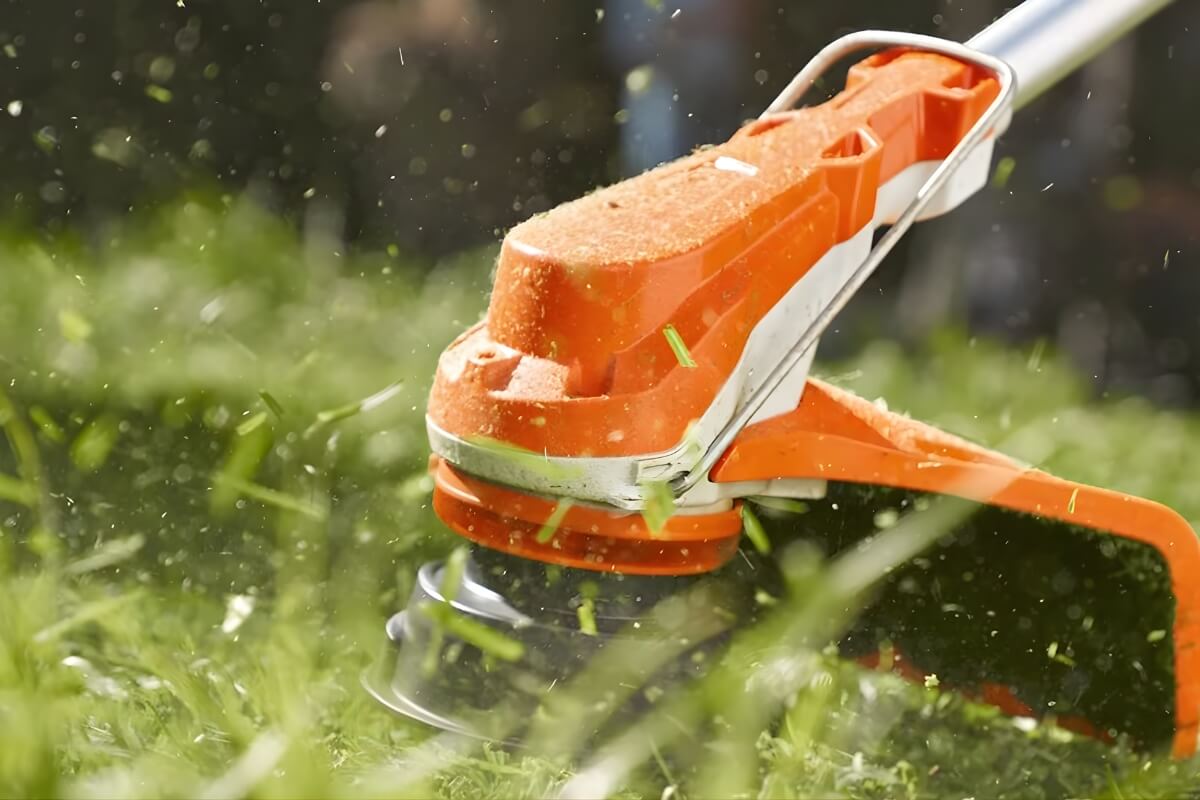
What is a brushcutter?
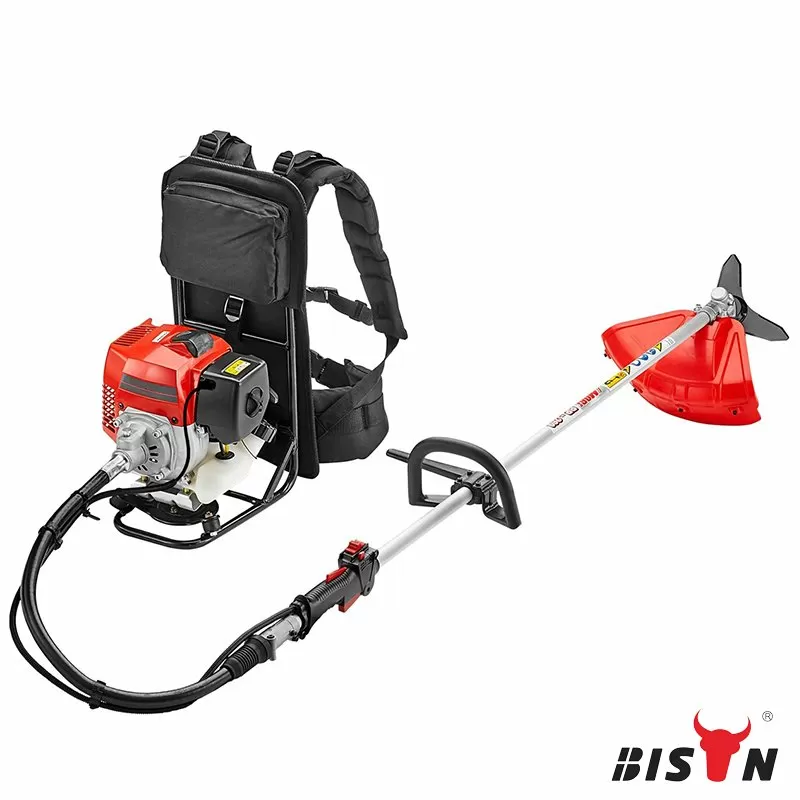
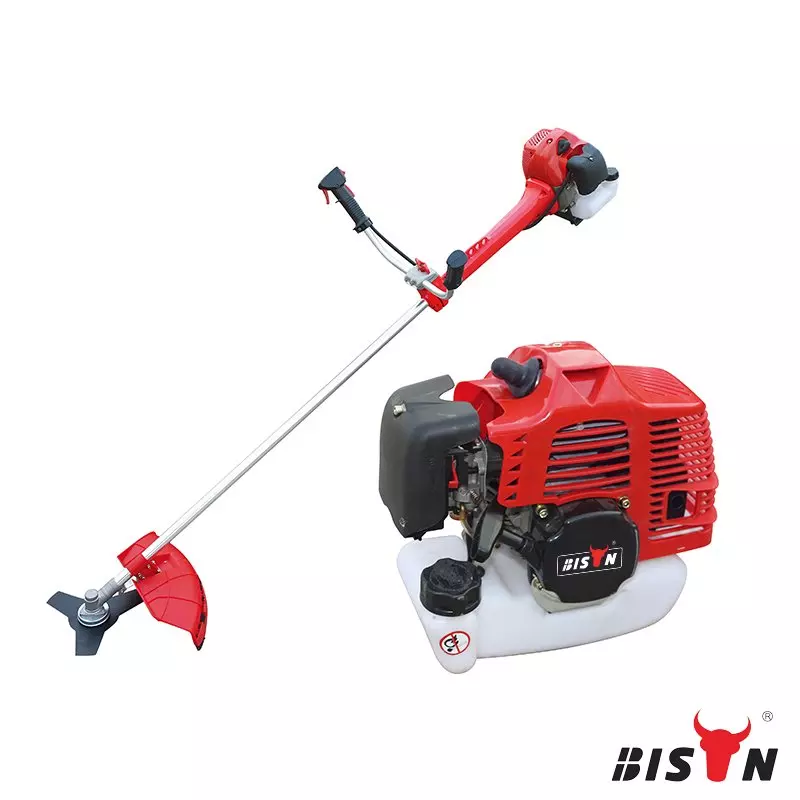
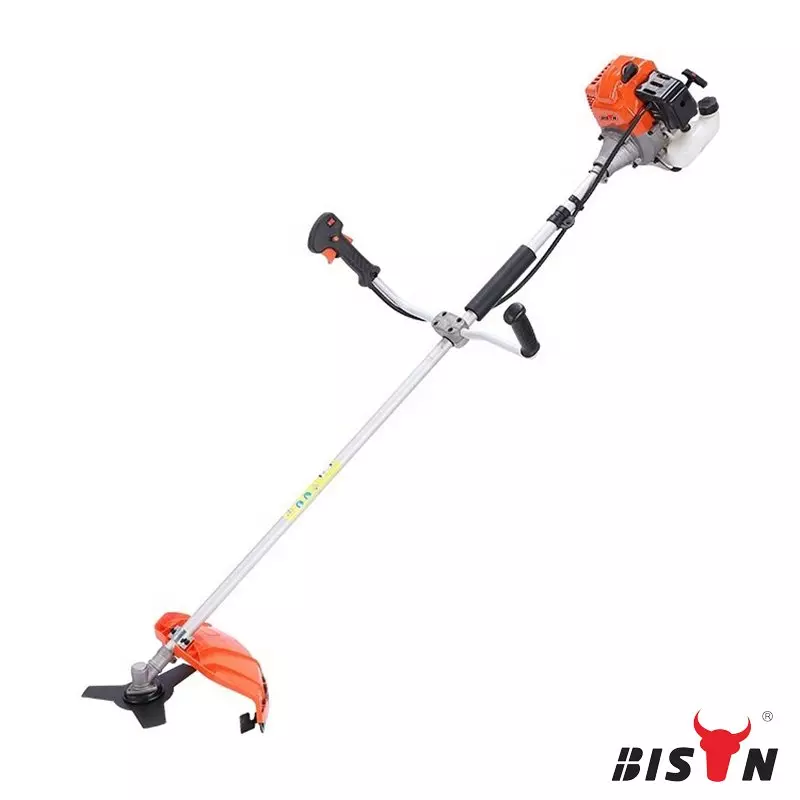
A brushcutter is a powerful landscaping tool designed for heavy-duty tasks that a string trimmer cannot handle. Known as the "powerhouse" of yard tools, it uses a strong engine and durable metal blades to cut through thick, dense vegetation such as brush, weeds, and woody plants.
How a brushcutter works
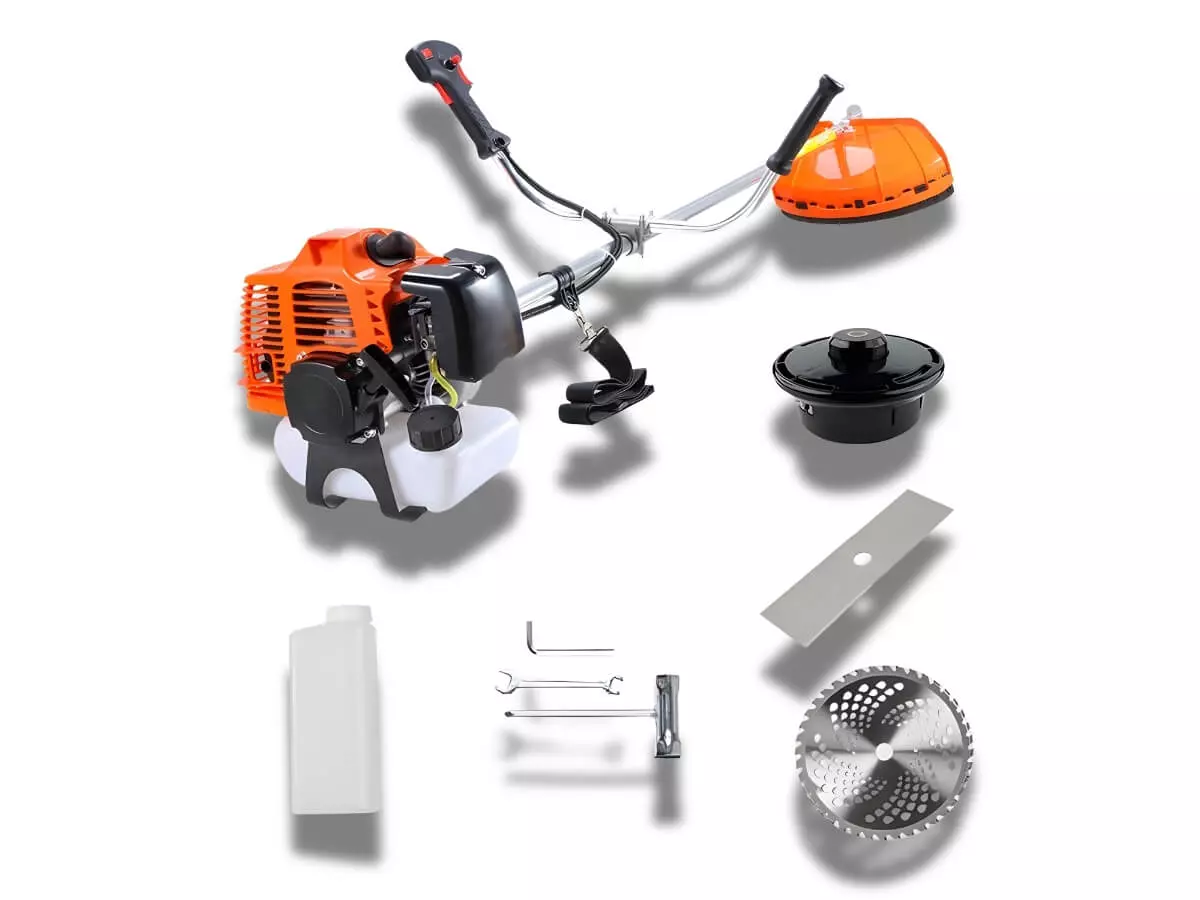
Brushcutters use different cutting attachments depending on the task. Most models allow you to switch between:
Heavy-duty string heads: stronger than standard trimmers, suitable for thick grass and weeds
Metal blades: designed for cutting tough brush, woody plants, and small saplings
This versatility makes brushcutters ideal for demanding landscaping and land-clearing work.
Power source and performance
Most brushcutters are gas-powered, providing higher power and longer runtime than electric or battery-operated tools. This allows them to handle thick vegetation efficiently, even in large or heavily overgrown areas.
Design features for control and comfort
Brushcutters are built for strength while maintaining user control. Common features include:
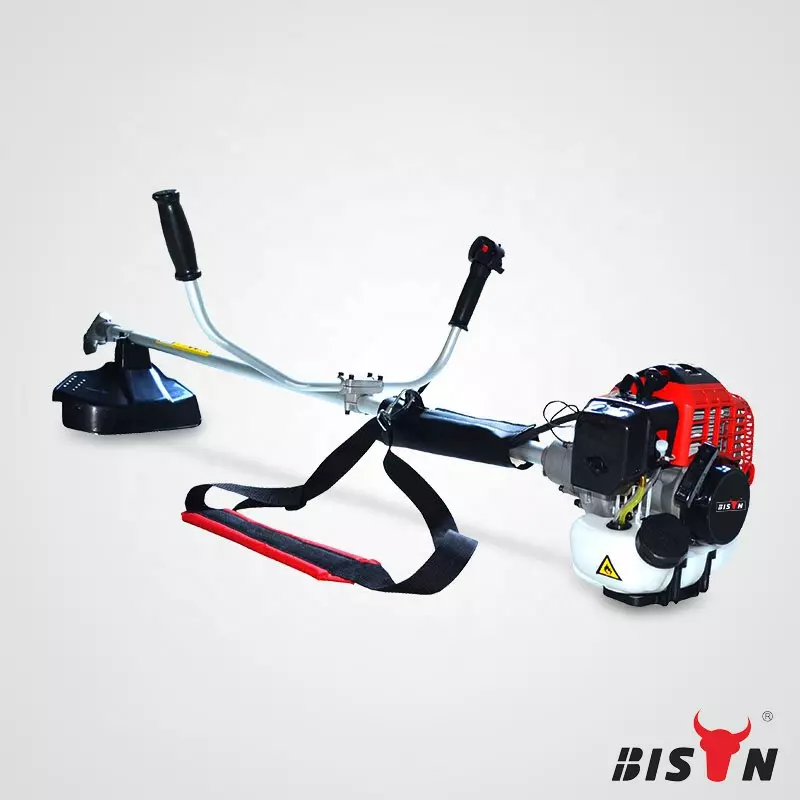
Solid straight shaft: enhances durability for heavy-duty cutting
Bicycle-style handles: improve control and precision during operation
Shoulder harness: distributes weight, reduces fatigue, and supports balance during extended use
These features help users manage the tool safely and effectively in tough environments such as overgrown land, bushy areas, and unmaintained fields.
Common uses of a brushcutter
Brushcutters are widely used in agriculture, construction, parks, and large landscapes because they can handle vegetation that lighter tools cannot. With the right blade attachment, a brushcutter can even cut small trees, making it a highly versatile tool for heavy-duty work.
Brushcutter pros and cons
Understanding the advantages and limitations helps determine if a brushcutter is the right tool for your needs.
Pros
Power: Powerful enough for thick vegetation and woody plants
Scale: Suitable for large-scale and commercial use
Versatility: Compatible with multiple blade attachments
Durability: Durable for long-term heavy-duty operation
Efficiency: Efficient for clearing large areas quickly
High perceived value: brushcutters command higher retail margins than trimmers, making them attractive for resellers.
Cons
Weight: Heavier and more tiring to use
Cost: More expensive than string trimmers
Precision: Not suitable for precise or delicate trimming
Safety: Requires proper training and safe handling
Necessity: Excessive for small residential lawns
BISON addresses the weight and cost concerns by offering models across multiple engine sizes (33 cc to 52 cc), allowing distributors to position entry-level and professional-grade products under the same brand.
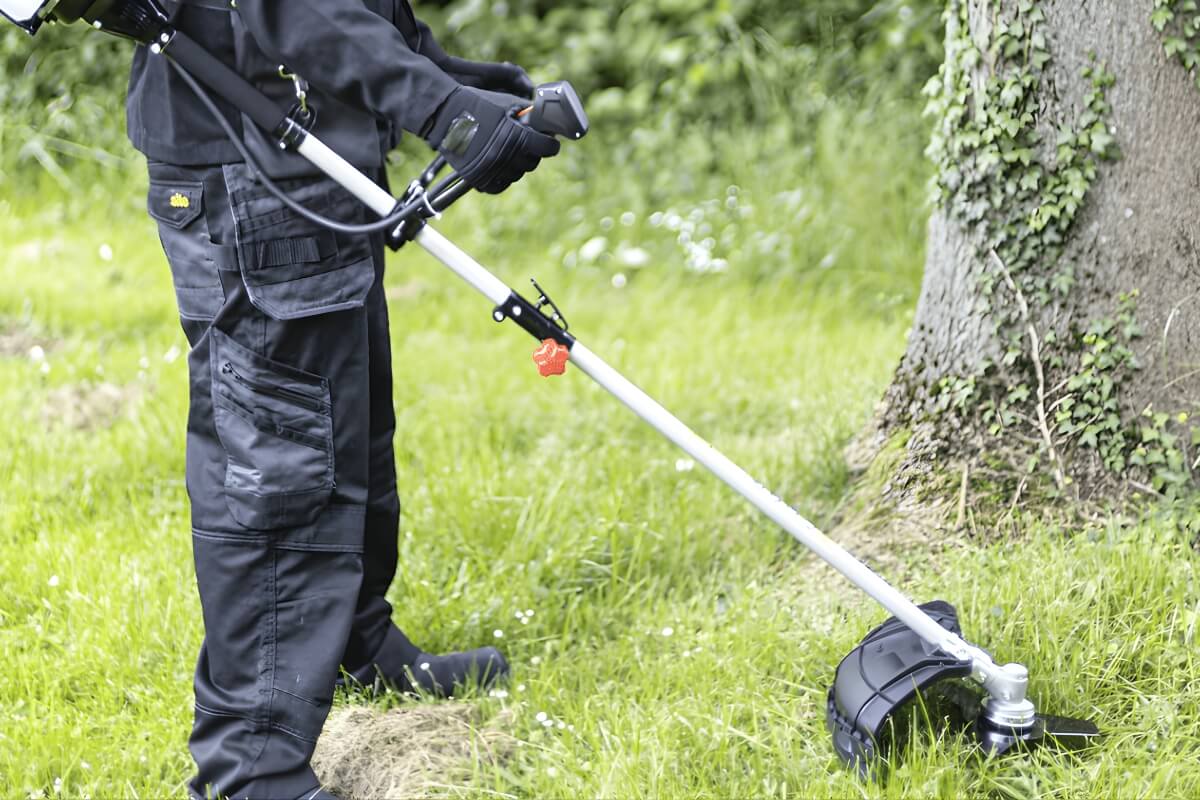
Key similarities between brush cutters and trimmers
The confusion arises because of their similar appearance and mode of operation. Both tools have a long shaft, a handle, and a rotating cutting head, so they may look the same to someone unfamiliar with yard tools.
Although they are designed for different tasks, brush cutters and trimmers share several practical similarities. These similarities make both tools essential parts of a complete lawn care setup.
Handheld outdoor power tools: Both tools are handheld machines designed for use while standing. Their long shafts allow users to reach hard-to-reach areas without bending or kneeling.
Reach areas that a lawn mower can't: Both tools can reach tight corners, fence lines, and steep slopes where lawn mowers cannot work effectively.
Regular maintenance is required: Both require proper maintenance to ensure smooth performance, including cleaning, blade or string replacement, and fuel checks to extend their lifespan.
Available in a variety of power options: Both brush cutters and trimmers are available in gas-powered, electric, and battery-powered versions, allowing flexibility based on preference, yard size, and budget.
Safety equipment is essential: Both tools operate at high speeds, so safety equipment such as gloves, goggles, ear protection, and sturdy clothing is necessary.
Key differences between brush cutters and trimmers
Although both tools belong to the same family of outdoor power tools, their differences are considerable. Each machine is designed for a specific purpose, from engine power to cutting method.
The main difference is in cutting power and intended use. A brush cutter uses metal blades and a powerful engine to cut thick grass, bushes, and small trees, while a trimmer uses a nylon string to cut grass and light weeds for everyday lawn care.
Understanding these differences helps you choose the right tool. While they may look similar, their design, power, and purpose are very different.
Design and build
String Trimmer: Lightweight and easy to handle, designed for precision work. Uses a spinning nylon string to cut grass and light weeds. Typically has a curved or straight shaft with a loop or D-shaped handle.
Brushcutter: Heavier and more robust, built for tough jobs. Uses interchangeable cutting heads, including heavy-duty strings or metal blades. Features a solid straight shaft, bicycle-style handles, and often a shoulder harness.
Summary: String trimmers are smaller and lighter for fine trimming, while brushcutters are larger and stronger for heavy-duty cutting.
Power and performance
String Trimmer: Available in corded electric, battery-powered, or gas-powered models. Suitable for light trimming and edging in small to medium yards. Gas models usually range from 15cc to 30cc.
Brushcutter: Mostly gas-powered for higher strength and longer runtime. Designed for dense vegetation and tough terrain. Engines typically range from 30cc to 50cc or more.
Summary: String trimmers focus on convenience for light work, while brushcutters provide higher power for demanding tasks.
Cutting method
Brushcutters use hardened steel blades, such as three-tooth, circular-saw, or chisel blades, which can cut dense brush and small branches.
Trimmers use a fast-spinning nylon string designed for soft vegetation like grass and light weeds. They are not suitable for thicker or thorny plants.
Cutting capability
String Trimmer: Ideal for grass edges, light weeds, and finishing work. Not suitable for thick brush or woody plants.
Brushcutter: Can cut dense weeds, thick brush, and small saplings. Suitable for clearing overgrown areas and rough landscapes.
Summary: Use a trimmer for regular maintenance and a brushcutter for heavy vegetation.
User experience
String Trimmer: Lightweight, easy to maneuver, and suitable for tight spaces. Typically weighs between 6 and 12 pounds and causes less fatigue. Maintenance is simple.
Brushcutter: Heavier and more powerful, often weighing over twenty pounds. Requires more effort to operate. Bicycle handles and a shoulder harness help with control, but long use can cause fatigue. Maintenance is more involved.
Summary: String trimmers are easier to use for short tasks, while brushcutters provide more power but require more effort.
Durability and construction
Brushcutters are built for rugged environments with reinforced shafts, gearboxes, and handles. Their metal blades can last for many years with proper maintenance.
Trimmers are suitable for moderate use but are not designed for heavy-duty tasks. Overuse can damage the motor, wear the head, or break the nylon line. They are best for light, routine maintenance.
BISON brushcutters feature forged steel gearbox housings and solid drive shafts rated for continuous commercial use. Each gearbox is load-tested before assembly to ensure durability under sustained heavy-duty operation.
Choosing the right tool for your needs
Lawn size, plant type, user experience, and usage needs are important factors when selecting the right tool. Considering these will help you make a more accurate choice.
Consider the size of your yard: Small, detailed residential areas are best suited for a string trimmer, while large, overgrown yards with wild vegetation are easier to manage with a brushcutter.
Assess the type of vegetation: Soft grass and light weeds are ideal for a string trimmer, while thick brush, woody plants, and dense growth require a brushcutter.
Think about your experience level: Trimmers are easier for beginners to use, while brushcutters require more practice, control, and safety awareness.
Budget considerations: Brushcutters are more expensive, while trimmers are a more economical choice for basic maintenance.
Frequency of use: Trimmers are suitable for regular or occasional lawn care, while brushcutters are better for heavy-duty or less frequent clearing tasks.
Power needs: String trimmers are available in electric, battery, or gas-powered options, while brushcutters are mostly gas-powered for higher strength.
Ease of handling: String trimmers are lightweight and easy to maneuver, while brushcutters are heavier but use handles and a shoulder harness for better control.
| String trimmer | Brushcutter | |
|---|---|---|
| Duty level | Light maintenance | Heavy-duty work |
| Vegetation | Soft grass, light weeds | Thick grass, dense weeds, bushes, small saplings |
| Best for | Edging along sidewalks/fences, trimming around flower beds/trees, quick lawn touch-ups | Clearing overgrown areas, removing woody plants, large-scale landscaping |
| Terrain | Flat, accessible areas | Uneven, rocky, or sloped terrain |
| Strengths | Precise, easy to use, won't damage nearby plants | Powerful, handles conditions trimmers can't |
| Use when… | Grass is soft, plants are small, ground is flat | Vegetation is thick, tough, or overgrown |
Conclusion
Choosing the right tool depends on your yard’s size, vegetation type, and specific needs. Using the appropriate BISON tool saves time, reduces effort, and delivers better results.
As a professional brush cutter manufacturer in China, BISON encourages homeowners and landscaping beginners to evaluate their yard carefully. Select a string trimmer for finishing touches or a brushcutter for heavy clearing to make landscaping easier, more efficient, and more effective.
For distributors and resellers, carrying both string trimmers and brushcutters covers the full spectrum of end-user needs — from routine lawn edging to heavy land-clearing jobs.

related blog
Acquire all kinds of knowledge from professional China factory
Which is better: 2 stroke vs 4 stroke brush cutter
This article aims to dissect the core differences between 2 stroke and 4 stroke brush cutters to give you the knowledge to make an informed purchasing decision.
Straight shaft vs curved shaft string trimmers
Learn the comparison of straight shaft and curved shaft string trimmers so you can decide which one is the right choice for you.
brush cutter blades - types, choices, maintenance...
Brush cutter blades are essential components, and understanding their types, choices, maintenance etc. can significantly enhance your product's competitiveness.
related product
Quote high quality products from professional China factory