different stages of a snow blower
2025-10-13
Table of content
Winter can be beautiful, but when heavy snow piles up on driveways and walkways, clearing it can quickly become exhausting. That’s where snow blowers come in—they make winter maintenance faster, easier, and less tiring.
Not all snow blowers are the same. When shopping for one, you’ll often hear about “stages,” which refer to how many steps the machine uses to collect and throw snow. Snow blowers come in single-stage, two-stage, or three-stage models.
Understanding these stages matters because it affects how much snow the machine can handle, how far it throws it, and how easy it is to operate.
In this article, BISON explain the differences between single-stage, two-stage, and three-stage snow blowers so you can choose the right one for your needs.
Single-stage snow blower
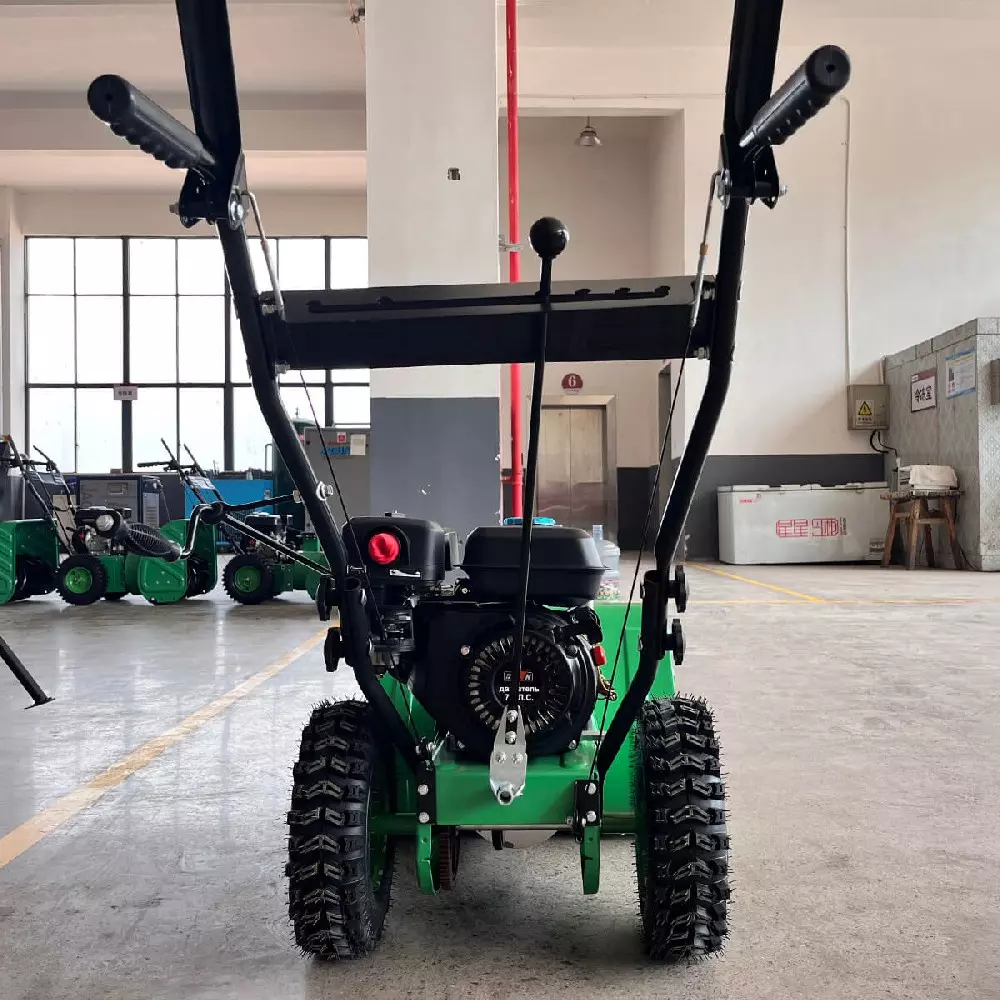
Single-stage snow blowers are the most basic type, designed for light-duty jobs. They use a single high-speed auger that scoops up snow and throws it out of the chute in one motion. Because the auger handles both tasks, the design is compact and straightforward.
Design characteristics and components
A typical single-stage snow blower includes:
Auger: picks up snow and throws it through the chute; serrated steel augers can chop through compacted, plow-deposited snow that standard rubber augers cannot handle
Chute: directs where the snow is blown.
Engine or motor: powers the auger.
Handles and controls: allow for easy pushing and steering.
Ideal applications
Light snowfall: the auger makes direct ground contact to scoop and discharge snow in one continuous motion, which limits effective clearing to snowfall under approximately 8 inches on smooth paved surfaces
The auger's direct contact with the ground clears snow down to the pavement, making it ideal for smooth surfaces, such as paved driveways, sidewalks, and walkways; gravel or uneven terrain is not suitable, as direct ground contact makes operation ineffective on those surfaces
Users who want a compact, easy-to-store machine
Advantages
Lightweight and easy to maneuver
Affordable and simple to maintain
Fewer moving parts, making repairs easier
Limitations
Struggles with heavy or wet snow
Limited throwing distance
Not suitable for gravel surfaces, as the auger scrapes the ground
They are rarely self-propelled, meaning users need to provide all the power behind them.
Two-stage snow blower
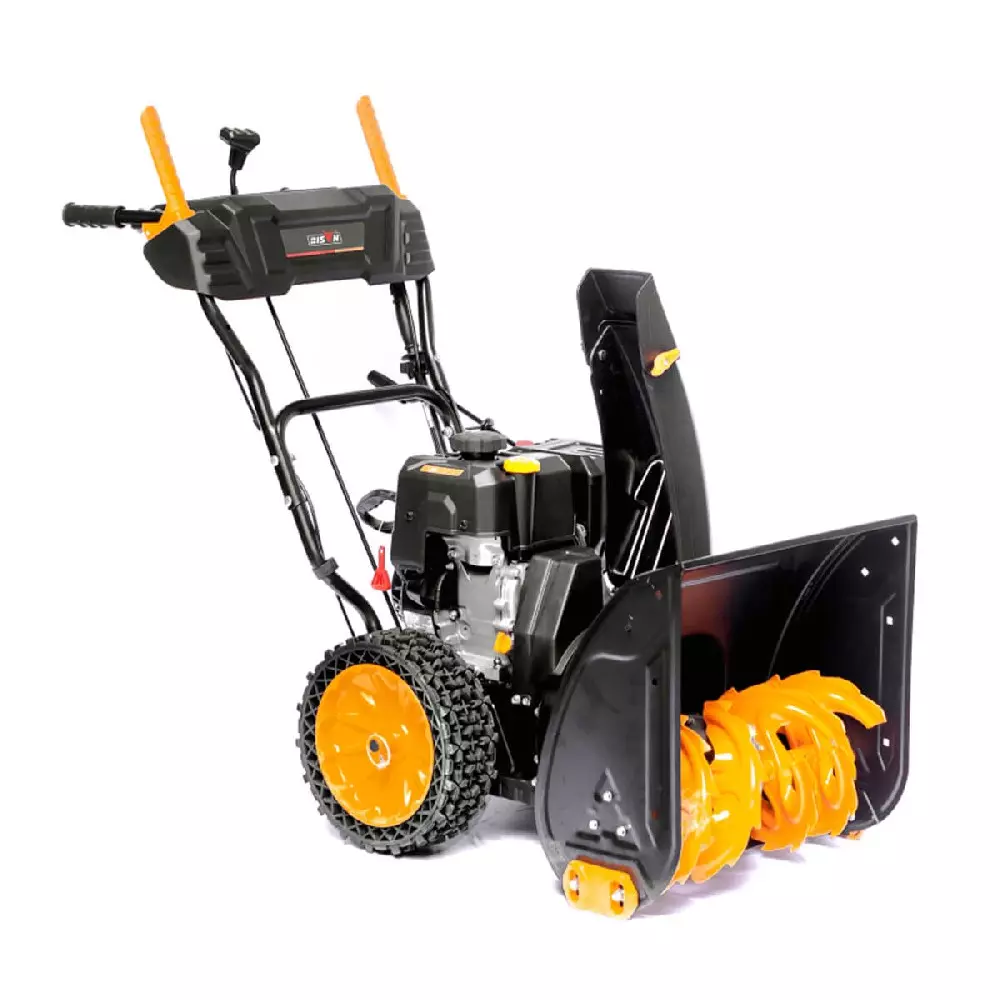
Two-stage snow blowers are designed for medium to heavy snow removal. They use two components: the auger gathers snow and feeds it into the impeller, which then throws it out through the chute with force. This two-step process provides more power and range, making them suitable for deep or compacted snow.
Components and design features
A typical two-stage snow blower includes:
Auger: collects and moves snow toward the center.
Impeller: forces snow up and out through the chute.
Chute: directs where the snow is discharged.
Engine: provides strong power.
Wheels or tracks: help the machine move across various surfaces.
Handles and controls: allow for easy steering and chute adjustment.
Ideal applications
Moderate to heavy snowfalls
Since the auger doesn’t touch the ground, two-stage models work safely on gravel, pavement, or uneven terrain without picking up debris.
Ideal for regions with frequent or deep snow.
Advantages
Handles deep, wet, or compacted snow effectively
Throws snow farther than single-stage models
Works on different surface types
Clears large areas quickly
Many are self-propelled for easier operation and may include features like heated handles or adjustable chutes.
Limitations
Heavier and less maneuverable
More expensive than single-stage blowers
Requires more storage space
Three-stage snow blower
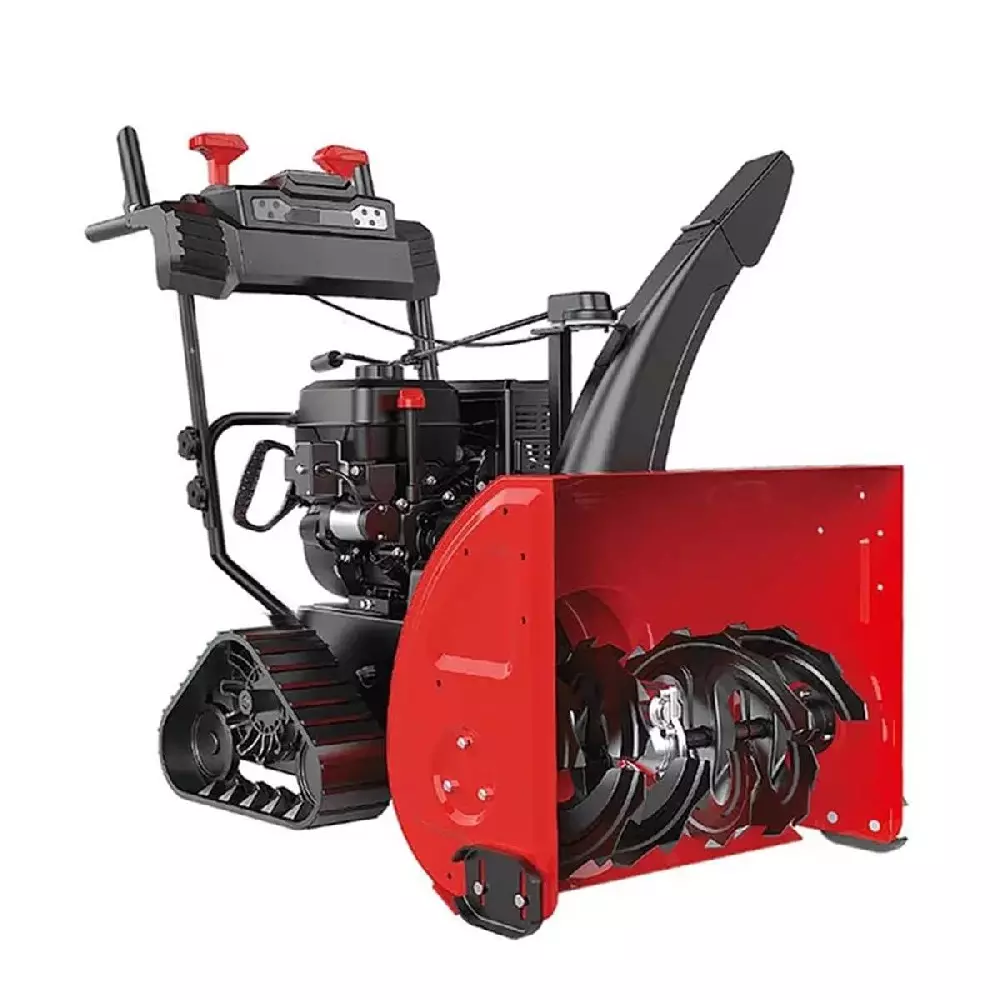
Three-stage snow blowers are built for the most demanding winter conditions. They use an advanced three-step system for faster, more efficient snow clearing. First, the auger gathers snow and feeds it into the machine. Then, a high-speed accelerator—spinning up to ten times faster than the impeller—breaks up heavy, compacted snow and ice before sending it to the impeller, which forcefully throws it through the chute.
This design makes three-stage snow blowers highly efficient, especially in deep, wet, or frozen snow. They are always self-propelled, built for durability, and best suited for heavy-duty or professional use.
Ideal applications
Large or commercial areas such as long driveways and parking lots
Deep, compacted, or icy snow
Regions with frequent, heavy snowfalls
Advantages
Breaks through dense and icy snow with ease
Clears snow faster and throws it farther than two-stage models
Provides superior efficiency for large-scale jobs
Limitations
Heavier and more expensive
Requires more frequent maintenance
Complex design best handled by professionals
Snow blower comparison table
| Feature | Single-stage snow blower | Two-stage snow blower | Three-stage snow blower |
| How it works | One auger scoops and throws snow in a single motion | Auger collects snow, impeller throws it through the chute | Auger collects, accelerator breaks up snow, impeller throws it |
| Best For | Light snow (up to 8 in / 20 cm) | Moderate to heavy snow (8–12 in / 20–30 cm) | Deep, compacted, or icy snow (16+ in / 40+ cm) |
| Surface type | Smooth, paved surfaces | Paved, gravel, or uneven terrain | Large paved or gravel areas, commercial spaces |
| Throwing distance | Short (up to ~15 ft / 4.5 m) | Medium (up to ~35 ft / 10 m) | Long (up to ~50 ft / 15 m or more) |
| propulsion | Manual push (not self-propelled) | Usually self-propelled (wheel or track drive) | Always self-propelled |
| Snow type | Light, powdery snow | Heavy, wet, or compacted snow | Dense, icy, or deep snow |
| Size & weight | Small and lightweight | Medium size and weight | Large and heavy-duty |
| Ease of use | Easiest to maneuver and store | Moderate effort; more features | Most powerful but harder to handle |
| Ideal user | Homeowners in mild climates | Homeowners in snowy regions | Professionals or those in heavy snow areas |
How to choose the right snow blower stage for your needs?
Choosing the right snow blower depends on your typical snowfall, property size, and surface type.
Start with your local winter conditions. If you usually get light snow under 8 inches on a driveway under 1,000 sq ft, a single-stage snow blower is ideal. For areas with moderate to heavy snow (8–12 inches), a two-stage model provides more power and handles wetter snow with ease. If you often face deep, heavy, or compacted snow—especially over 16 inches—a three-stage snow blower delivers the strength and speed needed for large driveways or commercial areas.
Single-stage units are lightweight and easy to maneuver, making them perfect for small driveways, sidewalks, patios, and decks. Two-stage and three-stage models are better for larger or uneven surfaces, such as long driveways and gravel paths, since they throw snow farther and prevent clogging. Also consider your power source: gas and electric models differ across noise levels, cold-weather performance, and clearing-width capabilities.
Cost is another key factor. Single-stage snow blowers are the most affordable and simplest to maintain but have limited power. Two-stage machines cost more yet offer a solid balance between performance and price. Three-stage blowers are the most powerful and efficient but also the most expensive and maintenance-intensive—ideal for those who regularly deal with heavy, wet, or icy snow.
Finally, consider your region. In mild-winter areas, a compact single-stage unit will do the job. But if you live in snowbelt regions or often deal with piles left by plows, upgrading to a two- or three-stage model saves time, effort, and frustration.
Caring for your snow blower
Proper maintenance keeps your snow blower reliable, efficient, and ready for every snowfall. While major repairs should be handled by an authorized service technician, you can easily replace common wear parts like shear pins, skid shoes, and drive belts yourself.
After each use, clear out snow, ice, and debris from the auger, chute, and housing to prevent buildup and rust. Lubricate moving parts such as the auger and chute controls to keep them operating smoothly. Inspect belts, cables, and shear pins regularly for wear or damage, and replace them as needed to avoid breakdowns.
Always refer to your owner’s manual for model-specific maintenance and troubleshooting instructions. Keeping your snow blower well-maintained ensures it performs at the level its stage was designed for—so the right choice today continues to pay off season after season.
Final thoughts
Now that you understand the different stages of snow blowers, you can confidently choose the one that best fits your winter needs.
As a professional snow blower manufacturer in China, BISON is dedicated to providing high-quality, durable machines built for efficiency and long-lasting performance. Explore BISON’s range of snow blowers across all stages to find the perfect model for your property and budget.
Investing in the right snow blower not only makes winter cleanup easier—it saves time, reduces effort, and keeps your home or business safe and accessible all season long.

related blog
Acquire all kinds of knowledge from professional China factory
related product
Quote high quality products from professional China factory