water brooms vs. surface cleaners
2025-09-22
Table of content
Keeping outdoor areas like driveways, patios, sidewalks, and parking lots clean is important for both safety and appearance. Over time, dirt, algae, leaves, and grime can build up, making surfaces slippery, unattractive, and harder to maintain. The right cleaning tools make the job faster, easier, and more effective—saving time and effort.
When it comes to pressure washing large flat surfaces, two popular attachments stand out: water brooms and surface cleaners. Both enhance the performance of pressure washers, but they’re designed for slightly different tasks and excel in different situations. Whether you’re a contractor, facilities manager, or homeowner, choosing the right one will help you clean more efficiently and with less strain.
In this article, BISON compare water brooms and surface cleaners in detail, highlighting their features, benefits, and best uses, so you can decide which tool is right for your next cleaning job.
What is a water broom?
A water broom is a pressure washer attachment designed to make cleaning large outdoor surfaces faster and easier. Instead of bristles, it uses pressurized water jets to sweep away dirt, mud, leaves, and debris.
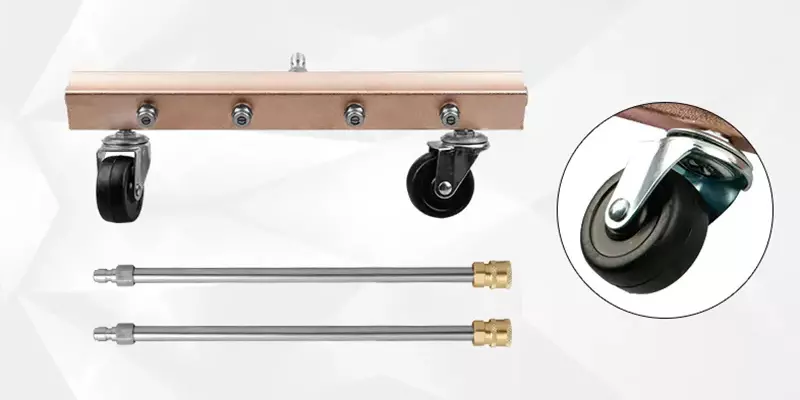
The tool typically consists of a horizontal bar fitted with multiple nozzles that spray water evenly across a wide path. This bar is connected to a pressure washer hose and often mounted on wheels, allowing you to glide it over flat surfaces like driveways, patios, sidewalks, and parking lots. By covering more area in a single pass, a water broom saves time and effort compared to moving a single pressure washer wand back and forth.
Water brooms are available in various sizes, from small three-nozzle models for tight spaces to larger options with five or more nozzles for big driveways or commercial use. Their lightweight, simple design makes them easy to use, affordable, and compatible with most electric and gas pressure washers.
How do water brooms work?
Water brooms channel high-pressure water from your pressure washer through a bar with evenly spaced nozzles. These jets spray downward in a straight, powerful line, creating a wide, uniform cleaning path.
Most models are mounted on wheels, so you simply push the broom forward, and the pressurized jets lift away dirt, dust, and light stains without the need for scrubbing or bending.
Pros of water brooms
Cost-effective – generally cheaper than surface cleaners.
Lightweight & easy to maneuver – simple design with fewer parts to maintain.
Time-saving – cleans wide, flat surfaces faster than a single wand.
Great for light cleaning – ideal for removing loose dirt, grass clippings, leaves, and debris.
Versatile applications – works well on driveways, garages, tennis courts, parking lots, and patios.
Cons of water brooms
Less powerful – not effective for tough stains, grease, or embedded dirt.
Limited to textured surfaces – jets may miss grooves or cracks.
Overspray issues – open design can cause splashing on walls, vehicles, or nearby landscaping.
Inconsistent cleaning – straight-line spray may leave streaks compared to the even results of a surface cleaner.
Best uses for water brooms
Water brooms are best for routine, light-to-moderate cleaning on large, flat outdoor surfaces. They excel at:
Clearing leaves and debris after storms.
Rinse off dust, dirt, or mud from concrete and asphalt.
Light cleaning of patios, decks, and garage floors.
Quick maintenance of tennis courts, sidewalks, and parking lots.
If your goal is fast, efficient cleaning of loose debris, a water broom is a simple and affordable tool to add to your pressure washer setup.
What is a surface cleaner?
A surface cleaner is a round, disc-shaped attachment for pressure washers that makes cleaning flat outdoor areas faster, more powerful, and more consistent than using a standard spray wand. Inside the housing is a rotating spray bar with two or more nozzles that spin at high speed, blasting away dirt, stains, algae, and grime in a uniform, streak-free pattern.
Because the spray bar is enclosed within a protective housing (often with a brush skirt), water is contained and directed downward. This reduces overspray, keeps the work area cleaner, and protects nearby walls, plants, or vehicles. Many models are equipped with handles and wheels for easier maneuvering, and they come in both residential sizes (smaller, lighter, and compatible with mid-range washers) and commercial-grade models (larger, heavier, and built for demanding jobs).
The result is a deep, even clean with less effort—ideal for homeowners who want professional-looking results or contractors tackling large-scale cleaning projects.
How do surface cleaners work?
Surface cleaners connect to a pressure washer wand or quick-connect fitting. When water flows into the rotating spray bar, the angled nozzles force it to spin rapidly, evenly distributing high-pressure water across the cleaning path. Some higher-end models even include vacuum ports or water-retention features for advanced debris control.
Pros of surface cleaners
Powerful cleaning – removes deep stains, mold, algae, oil, and heavy buildup.
Professional results – leaves a uniform, streak-free finish.
Efficient & fast – covers large areas quickly, saving time compared to a wand.
Cleaner & safer – enclosed housing reduces splash and protects surroundings.
User-friendly – handles, wheels, and ergonomic designs make them easy to guide.
Cons of surface cleaners
Higher cost – more expensive than water brooms, especially commercial models.
Maintenance required – moving parts like swivels and spray bars may need upkeep.
Bulky design – heavier and larger, making transport and storage less convenient.
Overpowered for light jobs – not necessary for quick debris rinsing or light cleaning.
Best uses for surface cleaners
Surface cleaners are best for heavy-duty and deep-cleaning tasks on hard, flat surfaces where appearance and even results matter. They excel at:
Driveways, sidewalks, patios, and decks.
Parking lots, garages, and warehouse floors.
Pool decks and large outdoor concrete areas.
Prepping concrete or wood surfaces for sealing, painting, or staining.
If your project involves stubborn stains or large square footage, a surface cleaner is the tool of choice for saving time and achieving a polished, professional finish.
Design comparison: water brooms vs. surface cleaners
While both tools attach to pressure washers and are designed for flat surfaces, their designs and performance make them better suited for different cleaning needs.
Shape & structure
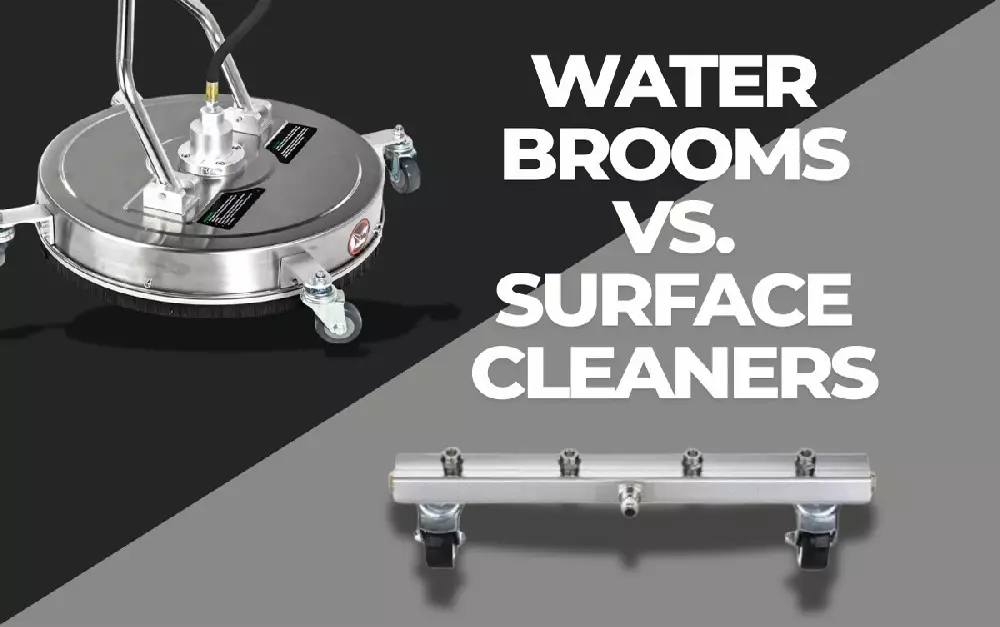
Water broom – long, horizontal bar with multiple nozzles evenly spaced underneath. Usually mounted on small wheels and sometimes attached directly to the pressure washer wand. Simple, broom-like design.
Surface cleaner – round, enclosed housing (plastic or stainless steel) with a rotating spray bar inside. It resembles a floor buffer or disc vacuum. Equipped with wheels or casters for smooth gliding.
Spray pattern & coverage
Water broom – produces a straight, wide line of water jets. Great for clearing dirt, debris, or light buildup over large areas.
Surface cleaner – uses spinning nozzles to create overlapping circular spray patterns. Provides deep, even cleaning with no streaks or missed spots.
Pressure handling
Water broom – best for light to medium-duty jobs, typically rated for 1500–3000 psi. Struggles with stubborn stains like oil or algae.
Surface cleaner – built for medium to heavy-duty cleaning. Commercial models handle 3000+ psi and excel at tackling oil, grease, mold, and heavy grime.
Portability & ease of use
Water broom – lightweight, easy to maneuver, and quick to set up. Compact, making storage and transport simple.
Surface cleaner – heavier and bulkier, but ergonomic designs (handles, wheels) make them comfortable for longer tasks. Slightly more setup required.
Splash control & water use
Water broom – open design = little splash control. Water sprays outward, often creating overspray and wasting more water.
Surface cleaner – enclosed housing contains spray, reducing mess, protecting surroundings, and improving water efficiency.
Maintenance & durability
Water broom – simple, with minimal parts to maintain. Durable for residential use but may wear faster in commercial environments.
Surface cleaner – more moving parts (swivels, bearings, spray arms) require upkeep. Higher-end models are built for heavy, frequent use and last longer with proper care.
Cost comparison
Price is often a deciding factor when choosing between a water broom and a surface cleaner. While both are designed to enhance pressure washer performance, their costs differ based on complexity, durability, and intended use.
Initial purchase cost
Water broom – affordable, with most residential models priced between $30–$100 (12–24 inches wide). Heavy-duty versions with stainless steel or brass parts can cost $150+.
Surface cleaner – higher cost due to enclosed housing and rotating spray arms. Entry-level residential models (12–15 inches) start around $70–$120. Mid-range versions run $150–$250, while large commercial units (18–30 inches, stainless steel, high psi) can reach $400–$800+.
Operational costs
Water broom – minimal upkeep since there are no moving parts. Occasional nozzle or O-ring replacements are the only likely expenses.
Surface cleaner – more parts to maintain (swivels, bearings, spray arms). Replacement parts typically cost $10–$50 each. Commercial models may also need lubrication or servicing.
Cost vs. Performance
Water broom – budget-friendly but may require multiple passes on tough stains, using more time and water. Best suited for light, routine jobs.
Surface cleaner – higher upfront cost, but delivers faster, streak-free cleaning. Can save labor and operational costs in the long run, particularly in commercial or professional settings.
Which should you choose?
The choice between a water broom and a surface cleaner depends on your cleaning goals, your budget, and the capabilities of your pressure washer, whether you're tackling light residential cleaning or demanding commercial projects. First, ask yourself a few key questions:
How large is the area I need to clean?
Is the surface flat, uneven, or delicate?
Do I need to remove stubborn stains, or simply rinse away dirt and debris?
How often will I use the tool? What's my budget?
Choose a water broom if:
You need to clean light debris like dust or leaves.
You prefer a lightweight device for everyday use.
You use a low-pressure washer.
You are cleaning delicate or painted surfaces.
Choose a surface cleaner if:
You are cleaning stained concrete, driveways, or industrial areas.
You own a gas-powered high-pressure washer.
You want professional-grade cleaning results with minimal streaking.
You regularly perform heavy-duty cleaning tasks.
Sometimes, two tools work best together. For example, a water broom can quickly remove leaves, dirt, and debris, while a surface cleaner can tackle stubborn stains and leave the surface streak-free.
When deciding whether to rent or buy, consider how often you'll use the tool. If it's a one-time or occasional project, renting can save you money. If you plan to clean or maintain large areas regularly, purchasing your own water broom or surface cleaner is more economical and convenient.
By answering these questions and understanding each tool, you can make an informed choice based on your cleaning needs, budget, and timeline.
As a professional pressure washer manufacturer in China, BISON provide durable, high-quality water brooms and surface cleaners designed for both residential and commercial use. Explore our range today and experience reliable performance that makes outdoor cleaning faster and easier.

related blog
Acquire all kinds of knowledge from professional China factory