What are the applications of circular saws
2026-03-02
Table of content
Circular saws are versatile power tools essential for anyone needing an electric saw. Whether for a construction site, a DIY project at home, or professional work, a circular saw provides speed, precision, and reliability.
Often called the “workhorse” or the “Swiss Army knife” of power saws, the circular saw is a portable tool equipped with a toothed or abrasive rotating blade. This allows it to cut through a wide range of materials, making it indispensable across industries. From construction and carpentry to metalworking, manufacturing, renovation, and home projects, its versatility continues to make it a top choice for both professionals and hobbyists.
As a professional saw manufacturer in China, BISON aims to help users understand the full potential of this essential tool. Circular saws have diverse applications—from rough construction and fine woodworking to cutting materials far beyond wood.
Discover the many uses of circular saws, whether for precise cuts in construction or DIY home projects.

What is a circular saw?
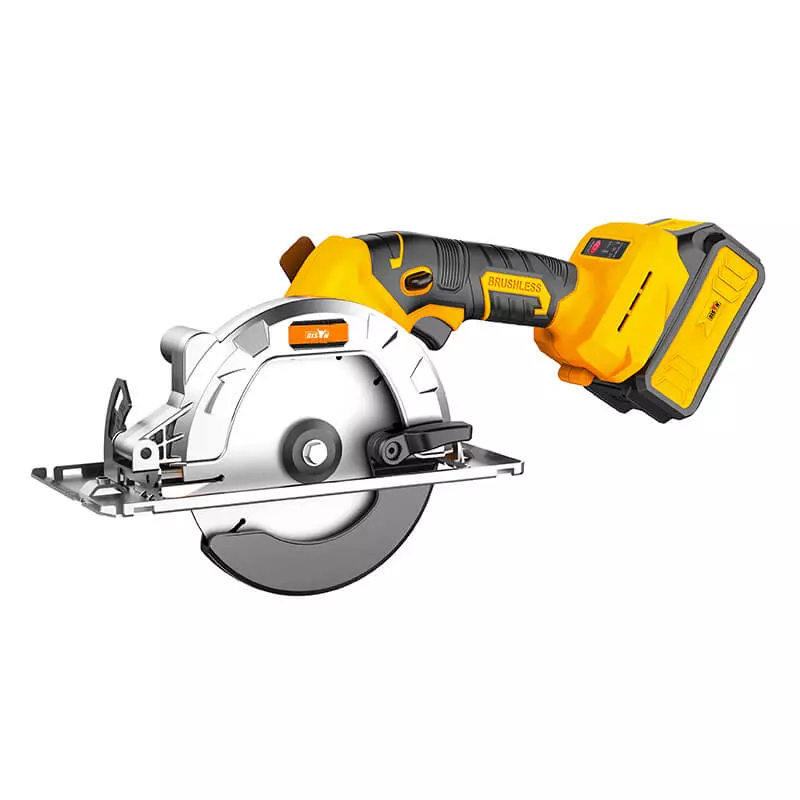
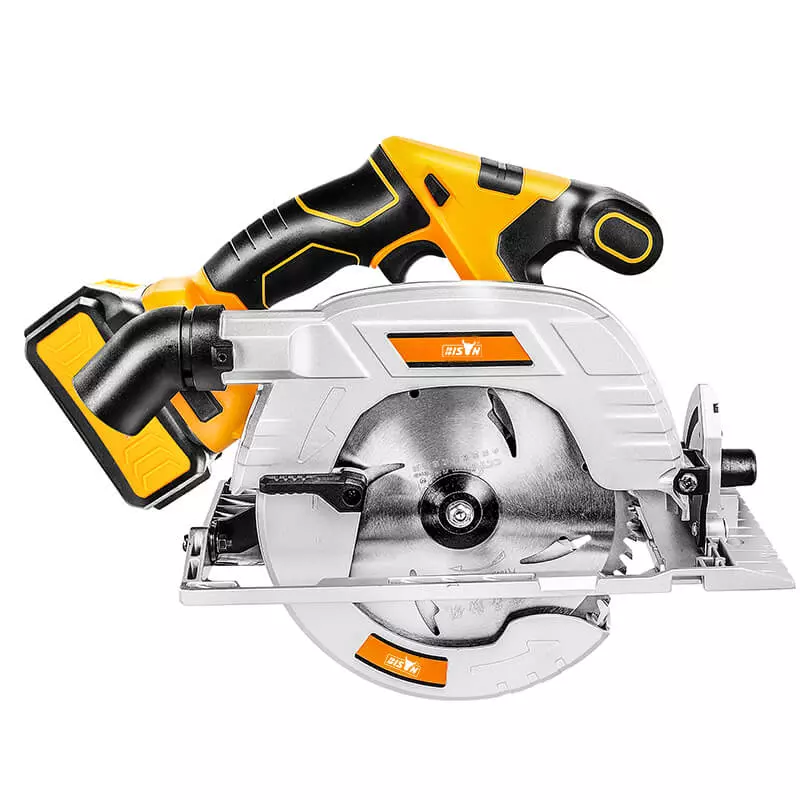
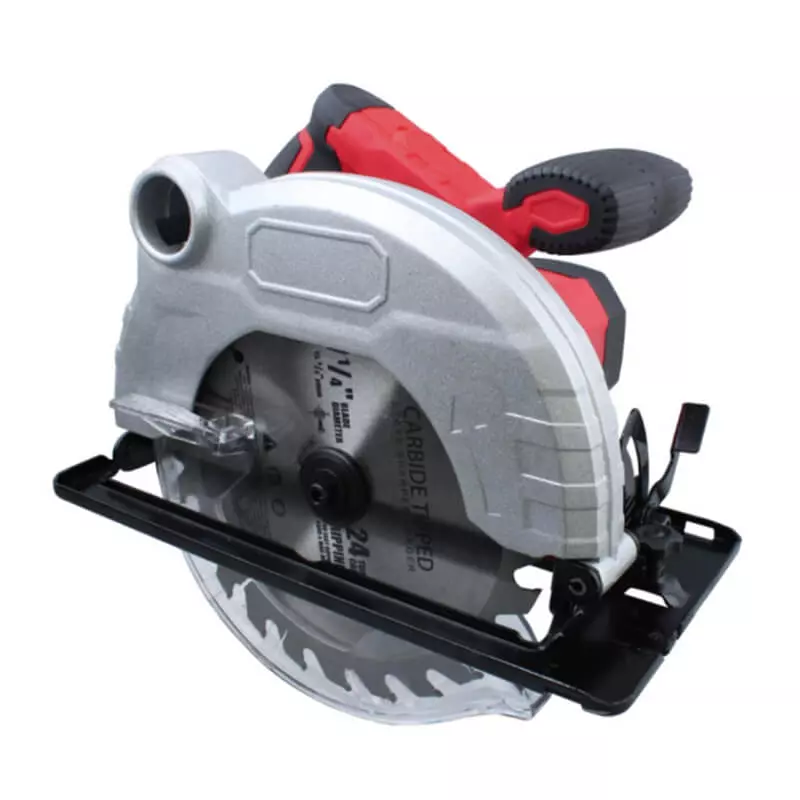
A circular saw is a powerful cutting tool that uses a rotating disc-shaped blade to make straight, fast, and accurate cuts. It is commonly used for cutting wood, metal, and other materials. Its simplicity, portability, and cutting strength make it one of the most widely used tools in construction, woodworking, and general fabrication.
Portable circular saws were originally called "skull saws," named after the company that first produced them. Its primary function is to cut straight lines on pieces of material. Understanding the basic components makes using a circular saw easier.
Basic components of a circular saw
Blade: The heart of the tool. Blades vary in size and material — carbide-tipped for wood, abrasive wheels for metal, and diamond blades for masonry.
Motor: Provides rotational power. Motor strength affects cutting speed, depth, and performance.
Handle: Designed for comfort and control, allowing the user to guide the saw safely.
Guard: A safety feature; the upper guard is fixed, and the lower guard retracts as the saw advances, protecting the user from accidental contact.
Power trigger: Squeezing the trigger activates the blade; releasing it stops the saw.

Types of circular saws
Sidewinder (direct drive): Motor beside the blade, lightweight, fast, and ideal for general-purpose cutting, including overhead work.
Worm drive: Motor at the back, taller and narrower, provides higher torque but lower blade speed. Great for heavy-duty framing, long rip cuts, and plunge cutting.
Hypoid: Similar to worm drive but with a different gearbox, improving blade contact, reducing motor size and noise, and increasing power efficiency. Best for cutting long or damp wood.
Corded: Offers consistent power, ideal for professional and continuous use.
Cordless: Battery-powered, portable, and convenient for sites without stable electricity.
Handheld: Portable, perfect for on-site cutting.
Table-mounted: Offers stability and precision, often used in workshops with guide tables.
Advantages of circular saws
Accurate and smooth cuts: Circular saws provide precise cuts with a superior surface finish. Their thicker blades reduce vibration, contributing to a smoother result.
Versatility: They can handle a wide range of materials, making them adaptable for woodworking, self-assembly projects, and more.
Portability and ease of use: Circular saws are simple to operate and maintain, and their portability allows for use in various settings.
High processing capacity: Adjustable blades and the use of hydraulic weighing appliances enable efficient wood processing with high accuracy.
Durability and cost-effectiveness: Circular saws offer long service life and low operational costs.
Low noise operation: These machines operate with relatively low noise.
Robust performance: Circular saws can withstand extreme working environments and are suitable for both indoor and outdoor use, though electric models require a nearby power source.
Specialized models available: For example, BISON offers circular saws in various specifications, capable of cutting materials evenly with a smooth finish.
Materials a circular saw can cut
While circular saws are often associated with woodworking, their true versatility shines when paired with the correct blade. Choosing the right blade is essential for achieving clean cuts, maintaining tool longevity, and ensuring safety. By using the appropriate blade, circular saws can cut a wide variety of materials:
Wood
The most common application, including framing lumber, plywood, and hardwood.
Metal
With abrasive or carbide-tipped metal-cutting blades, circular saws can handle metal sheets, pipes, rods, rebar, and structural components. These blades reduce heat buildup and friction, ensuring precise cuts for fabrication, construction, and repair tasks.
Masonry
For concrete, bricks, stone, pavers, and tiles, diamond blades are the ideal choice. Circular saws equipped with these blades can score, slice, and shape masonry materials with minimal chipping, making them suitable for construction, landscaping, and renovation projects.
Plastics and composites
Circular saws can cut PVC pipes, acrylic sheets, and composite decking. Using fine-toothed or specialized blades prevents cracking or melting, resulting in smooth, precise cuts for plumbing, DIY projects, and outdoor installations.
The fundamental cuts: understanding the basics
A circular saw is valued not just for its power but for its versatility. With the right technique and setup, it can perform several fundamental cuts that form the foundation of most construction and woodworking tasks. Understanding these basic cutting methods helps users work more efficiently and unlock the full potential of the tool.
Cross-cutting
Cross-cutting refers to cutting across the wood grain, typically to shorten boards to specific lengths. Using a straightedge or guide, a circular saw makes this process fast and accurate. This type of cut is essential in framing, decking, cabinetry, and general carpentry tasks.
Rip-cutting
Rip-cutting means cutting parallel to the wood grain. Because this cut runs along the board's length, a fence, straightedge, or guide rail is often used to maintain a consistent line. Circular saws excel here, especially on job sites where long sheets of plywood or lumber need to be sized quickly.
Bevel cuts
Bevel cuts are angled cuts achieved by tilting the saw's base plate (shoe). Most circular saws allow adjustment up to 45° or more, enabling angled edges for trim work, miter joints, roof framing, and decorative woodworking. Circular saws make it easy to set and execute these cuts quickly. Bracing the wood and marking the line beforehand ensures accuracy.
Plunge cuts
Plunge cuts allow the user to start cutting in the middle of a workpiece instead of from an edge. This is useful for creating openings for sinks, vents, electrical outlets, and other cutouts in countertops, flooring, and cabinetry.
Unlike jigsaws, which often require a pilot hole, circular saws can cut directly into the material. To perform a plunge cut safely, mark the location, tilt the saw forward carefully, hold the guard to prevent it from getting under the blade, and push down as it rotates. Using a track saw — a circular saw with guide tracks — can make plunge cuts more precise and safer.
Applications in construction
Circular saws are indispensable on construction sites. Their portability allows workers to make accurate cuts directly on-site, reducing material waste and increasing efficiency. They enable on-the-spot sizing and adjustments when pre-cut materials don't fit perfectly, helping projects stay on schedule.
Cutting framing lumber
Circular saws are commonly used to cut framing lumber for studs, joists, and rafters. They make quick work of sizing these essential structural components for walls, floors, or roof frameworks.
Cutting sheathing and decking materials
Circular saws are ideal for cutting sheathing and decking materials, including OSB, plywood, and subfloor panels. Using straightedges or guide rails ensures precise cuts for proper alignment and structural integrity.
Cutting roofing materials
From asphalt shingles to corrugated panels, circular saws equipped with the right blade make roofing tasks faster and more accurate. Adjustable bevels allow for angled cuts, perfect for roof slopes and trim work.
Laminate countertop installation
Circular saws are excellent for cutting laminate countertops to precise sizes during home construction or remodeling. By measuring, marking, and cutting each side, the countertop can be fitted accurately into place. Portability and precision make circular saws a practical choice for these tasks.
Cutting tiles
With diamond blades, circular saws can cut ceramic tiles efficiently. Marking the line, using a guide, and properly bracing the material ensures precise cuts. This is ideal for one-time jobs or small-scale tile installations.
Slicing plastic and fiberglass
Circular saws can cut sheets of polycarbonate, plexiglass, and most types of plastic. Fragile or brittle plastics require care to avoid cracking. Large sheets should be supported properly to ensure smooth, accurate cuts.
Cutting concrete and masonry
Equipped with diamond or abrasive blades, circular saws can handle tougher materials like concrete, bricks, and masonry blocks. They are useful for foundation work, pathways, sidewalks, driveways, and other exterior structures. Plunge cuts allow for cutting sections of concrete or asphalt efficiently, while angled or guided cuts ensure clean, precise edges.
Applications in woodworking and furniture making
Circular saws are a core tool in woodworking and furniture making, prized for their combination of portability, precision, and efficiency. Whether in a professional shop or a home workshop, they help craftsmen and hobbyists bring ideas to life.
Cutting lumber for small builds
Circular saws make quick work of sizing boards for small woodworking projects, such as shelves, tables, and storage units. They speed up the preparation stage and provide accurate cuts.
Breaking down sheet goods
Circular saws excel at breaking down large sheet goods like plywood, MDF, particleboard, and OSB. Using a guide or track system ensures straight, clean cuts, reduces material waste, and improves accuracy. Bracing wide sheets properly helps maintain even cuts, while guides allow precision comparable to a table saw.
Precision cutting for cabinetry and furniture
Circular saws allow for the precise cuts needed in cabinetry and furniture making, including edge trimming, cutting panels to size, and producing components that fit together seamlessly. Their versatility makes them reliable for both rough and fine work.
Creating simple joinery
Repeated cuts with a circular saw can create simple joinery such as half-laps, rabbets, and dadoes. While more complex joinery may require specialized tools, the circular saw remains practical for many traditional woodworking techniques.
Common uses in DIY projects
DIY enthusiasts rely on circular saws for building furniture, home storage solutions, garden structures, and more. Their portability and ease of use make them ideal for small and medium-scale projects.
Chopping firewood
Circular saws can also be used for cutting firewood efficiently. For thicker logs, flipping the wood and making additional cuts achieves the desired size. This method is often faster and easier than using an axe, especially for stoves or smaller wood pieces.

Applications in metalworking
Circular saws are highly valuable in metalworking, offering speed, precision, and versatility when equipped with the correct blade. Using the right blade and proper technique, they become indispensable tools in fabrication, repair, and construction tasks.
Cutting metal sheets and pipes
With abrasive or carbide-tipped metal-cutting blades, circular saws efficiently cut through metal sheets, rods, and pipes. They are especially suitable for soft metals such as aluminum, corrugated roofing sheets, and thin sheet metal. Bracing the material and using a guide ensures accurate cuts. Circular saws are not suitable for hard metals like thick steel, even with specialized blades.
Preparing materials for fabrication and welding
Circular saws help prepare metal components for fabrication and welding by producing clean, straight cuts. This reduces fitting errors and improves joint quality, which is crucial for maintaining structural integrity in metal assemblies.
Use in automotive and machinery repair
In automotive repair and machinery maintenance, circular saws are used to trim, modify, or remove metal parts, including exhaust pipes, brackets, and panels. Their portability allows mechanics and technicians to work efficiently on-site or in the shop.
Applications in plumbing and electrical work
Circular saws are versatile tools in plumbing and electrical work, providing speed, precision, and portability. They help professionals complete tasks efficiently while maintaining accuracy and safety.
Cutting pipes
Equipped with the appropriate blade, circular saws can cut PVC, copper, or steel pipes to the desired length. This speeds up installation for water, gas, and drainage systems while producing clean, precise cuts.
Trimming conduits and cable trays
Electricians use circular saws to trim metal or plastic conduits and cable trays. Accurate cuts ensure proper alignment, easier installation, and a professional finish for electrical systems.
Creating access points
Circular saws allow workers to create openings in walls, floors, or ceilings for plumbing or electrical installations. Using plunge cuts, workers can start cutting in the middle of a surface to make precise access points for outlets, vents, pipes, or wiring without damaging surrounding structures.
Applications in demolition and renovation
Circular saws are invaluable in demolition and renovation projects, providing speed, precision, and versatility for removing or modifying existing structures.
Fast removal of old materials
Circular saws enable workers to quickly remove materials such as wood framing, drywall, flooring, and paneling. Their portability allows cuts to be made directly on-site, reducing labor time and increasing efficiency.
Cutting through nails, screws, and mixed materials
With the proper blade, circular saws can cut through materials containing nails, screws, or reinforced components, including composite panels. This capability allows workers to handle tough demolition tasks without constantly changing tools.
Salvaging reusable materials
Circular saws help salvage reusable materials by enabling precise cuts that minimize waste. Old boards, panels, and fixtures can be resized and repurposed, making renovation projects more cost-effective and environmentally friendly.
Industrial and manufacturing applications
Circular saws are essential in industrial and manufacturing settings, where efficiency, precision, and repeatability are critical.
Mass production cutting in factories
In factories, circular saws handle high-volume cutting of wood, metal, plastics, and composites. Their speed and reliability help maintain production schedules, reduce downtime, and ensure consistent output quality.
CNC circular saws for automated precision
Advanced manufacturing often uses CNC (Computer Numerical Control) circular saws for automated, high-precision cutting. These systems execute complex patterns and repeat cuts with exact accuracy, ideal for industries requiring tight tolerances and minimal human error.
Sawmill applications
Circular saws are widely used in sawmills to convert logs into lumber. Large industrial saws efficiently produce boards, planks, and beams of uniform size and quality for construction, furniture making, and other applications.
Safety considerations
Circular saws are powerful and versatile tools, but improper use can lead to serious injuries. Prioritizing safety ensures efficient work while minimizing hazards.
Selecting the correct blade
Using the appropriate blade for each material is crucial. Wood, metal, masonry, and plastics each require specialized blades. Incorrect blade selection can cause poor cuts, excessive wear, or dangerous kickbacks.
Common blade types include:
Ripping blades: designed to cut along the grain of wood for clean, smooth cuts. Large, straight teeth help remove sawdust efficiently.
Combination blades: also called all-purpose blades, they can handle both crosscuts and rip cuts, suitable for versatile circular saw use.
Crosscut blades: cut perpendicular to the wood grain for smooth, precise cuts. Often carbide-tipped with alternating left and right-tilted teeth.
Always unplug the saw or remove the battery when changing blades or when not in use.
Personal protective equipment (PPE)
Wear safety glasses, hearing protection, and dust masks when operating a circular saw:
Eye protection guards against flying debris.
Hearing protection reduces noise-related risks.
Dust masks prevent inhalation of harmful particles.
Understanding safety features
Familiarize yourself with safety features such as blade guards, electric brakes, and adjustable depth settings:
Blade guards prevent accidental contact.
Electric brakes stop the blade quickly after the trigger is released, reducing injury risk.
Kickback prevention
Kickback occurs when the blade binds or catches on the material, causing the saw to jerk back. Prevent kickback by:
Maintaining a firm grip on the saw.
Using the correct blade.
Keeping the cut line straight.
Avoiding twisting or forcing the saw.
Proper handling methods
Secure the workpiece with clamps or a stable surface.
Keep both hands on the saw while cutting.
Position yourself for balance and avoid overreaching.
Never cut freehand with unstable material or force the saw through tough spots.
By following these safety considerations, users can maximize efficiency and versatility while significantly reducing the risk of injury.
Conclusion
Circular saws are versatile tools that have earned their place in workshops, job sites, and factories worldwide. Circular saws’ ability to cut a wide range of materials—wood, metal, plastic, and masonry—demonstrates their indispensability across industries and projects. From woodworking and furniture making to construction, metalworking, masonry, and industrial applications, they deliver speed, precision, and adaptability for both professionals and DIY enthusiasts.
As a professional power saw manufacturer in China, BISON is committed to providing high-quality, reliable circular saws that empower users to tackle any project with confidence. By combining the right tools with proper techniques and knowledge, you can unlock your full creative potential and turn ambitious ideas into reality.
Technological advancements, including specialized saws like track and miter saws, have further increased the versatility and usefulness of circular saws in challenging tasks.
Take the first step today—equip yourself with the right BISON circular saw and see what you can build!

FAQs and tips for circular saw use.
What are the advantages of using a circular saw instead of a hacksaw?
The main advantage of using a circular saw blade instead of a band saw blade is its ability to make fast, repeatable, accurate cuts with excellent surface finish. These saw blades are flexible and able to move material efficiently.
How powerful is a circular saw?
Corded tools are almost always 15-amp because that is the maximum power output from a standard electrical outlet. Cordless tools vary considerably. 18- and 20-volts are common (they're effectively the same thing), but compact circular saws can be 12-volt, and heavy-duty models can be 36-volt or 60-volt.
How to make an excellent, clean cut?
A clean cut is essential to ensure your finished product looks professional:
Cut with the good side facing down, as a circular saw can tear the wood upwards.
To minimize splintering, make your cut line on the masking tape.
You should restart if you see that you have strayed from the cut line rather than trying to maneuver your way back onto the track.
Do not clamp both sides of the cut.
For safety, keep the blade depth no less than 1/4 inch from the thickness of the board.

related blog
Acquire all kinds of knowledge from professional China factory
how to use a circular saw?
Learn how to use a circular saw safely with step-by-step instructions. Covers blade adjustment, bevel gauge use, proper spacing, and essential safety checks before operating.
What are the applications of circular saws
Circular saws have diverse applications—from rough construction and fine woodworking to cutting materials far beyond wood.
related product
Quote high quality products from professional China factory