how to use a circular saw?
2025-10-20
Table of content
Knowing how to use a circular saw correctly lets you tackle woodworking, construction, and DIY projects with speed and precision. Their high-speed rotating blades can cut through materials such as wood, plastic, metal, and even concrete with precision and efficiency. With its ability to make quick, accurate cuts, it’s an essential tool for craftsmen and hobbyists alike.
However, as powerful as it is, using a circular saw without proper knowledge can be dangerous. Understanding how to operate it safely is essential to prevent accidents and ensure accurate, smooth results.
This guide is designed to help beginners use a circular saw effectively and safely. It covers everything from setup and basic operation to advanced cutting techniques and maintenance. By following these guidelines, you’ll gain the confidence and skills to make precise cuts while keeping safety a top priority.

Understanding circular saws
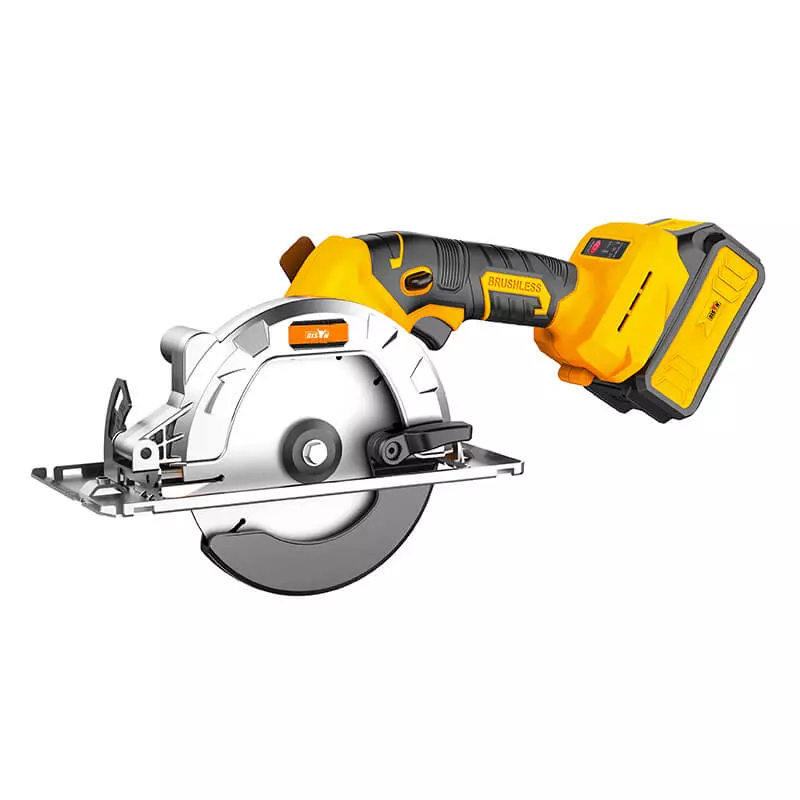
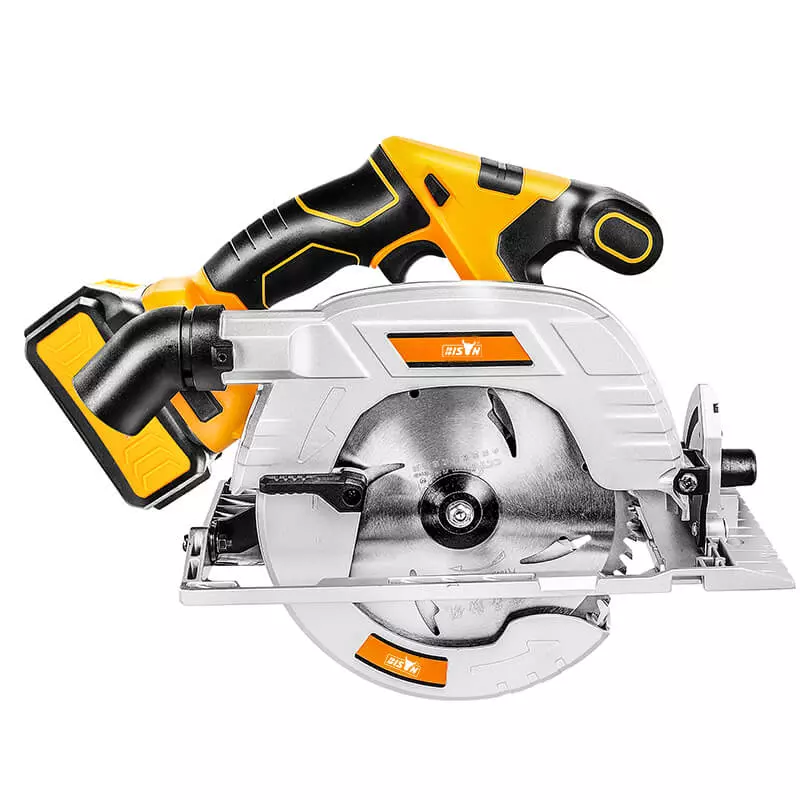
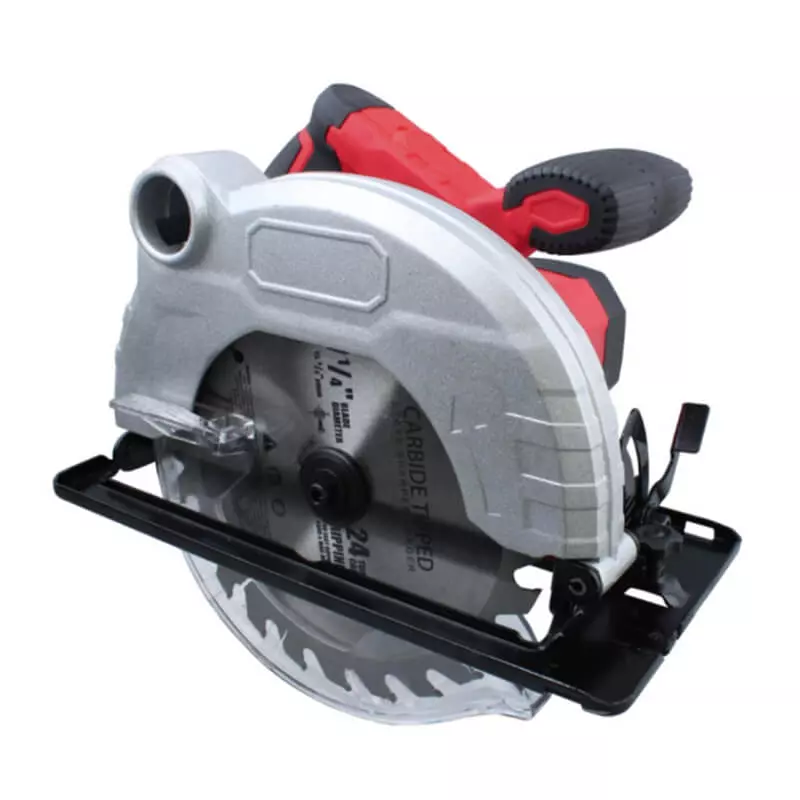
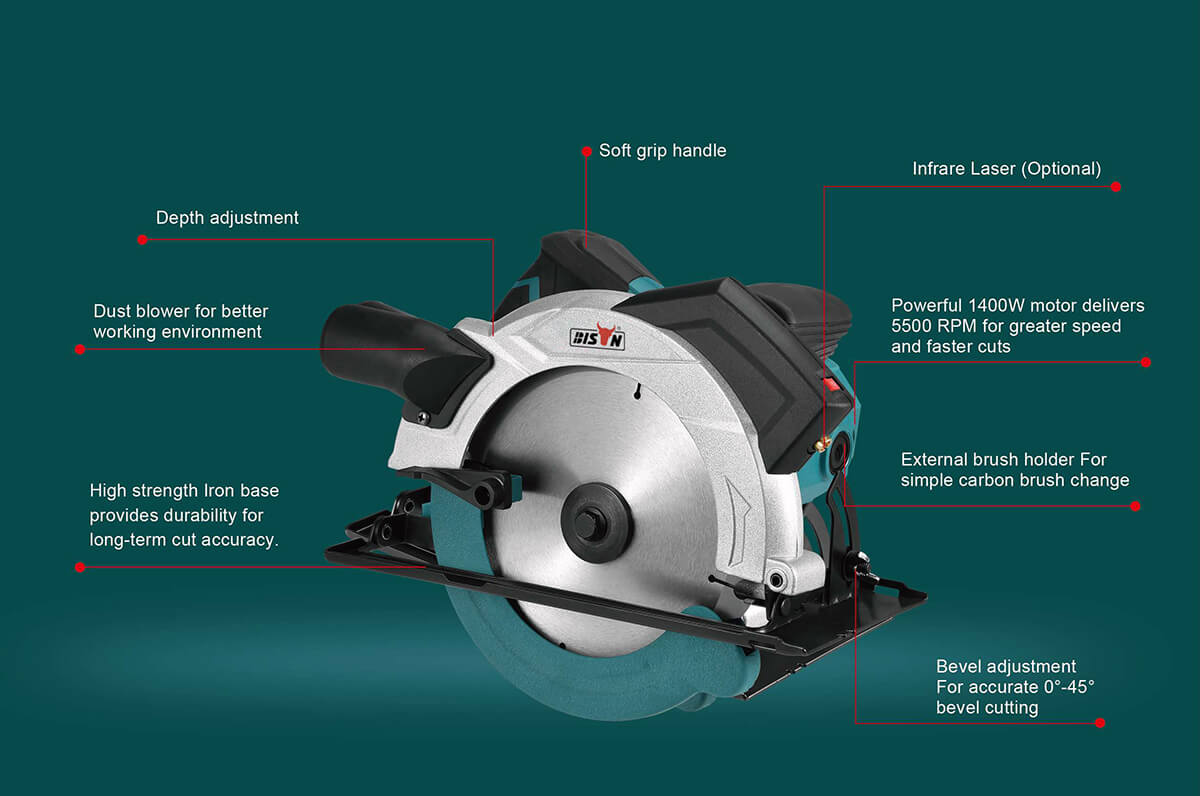
Using a circular saw effectively and safely starts with knowing its key components. Each part contributes to cutting precision, performance, and user safety.
Circular blade: The blade performs the actual cutting. Circular blades come in different blade diameters and tooth configurations suited for specific materials. A 24-tooth blade handles rough cuts on dimensional lumber and framing, while 40-tooth blades suit general-purpose cuts. Higher tooth counts (80+) deliver cleaner finishes on plywood. The blade selected determines the saw's cutting capability—the same tool can cut wood, metal, or plastic depending on blade type.
Motor and housing: The motor powers the blade, providing the force needed to cut through material. Circular saws can be corded (electric) or cordless (battery-powered). Sidewinder models use a direct-drive motor mounted beside the blade, while worm-drive models use a rear-mounted motor with gear reduction to deliver higher torque at lower blade speeds—making them better suited for dense or thick materials. Note that worm-drive and hypoid-drive gear-driven saws both require periodic gear oil maintenance, a servicing requirement absent from direct-drive sidewinder saws. The housing protects the motor and internal components while maintaining a lightweight, balanced design for better control.
Base plate (shoe): The base plate, also known as the shoe, rests against the work surface and helps guide the saw along a straight line. It provides stability during cutting, ensuring precision and consistent depth.
Depth adjustment: This lever allows users to control how deep the blade cuts into the material. A 7-1/4-inch blade, for example, achieves a maximum cut depth of approximately 2-1/2 inches at 90 degrees, enough to cut cleanly through dimensional lumber in a single pass. Proper depth adjustment improves accuracy, prevents excessive motor strain, and ensures cleaner cuts.
Bevel adjustment: The bevel adjustment enables the user to tilt the blade for angled or bevel cuts, typically up to 45 degrees. It’s especially useful for projects requiring precision angles, such as trim work or furniture making.
Handle and trigger: The handle provides a secure, comfortable grip for better control, while the trigger operates the saw’s motor. Many models include a safety switch to prevent accidental activation, enhancing overall safety.
Safety guard: The safety guard covers the blade when not in use and retracts automatically during cutting. It consists of two parts: the upper guard (fixed) and the lower guard (spring-loaded). Together, they protect the user from accidental contact with the spinning blade.
Safety precautions
Using a circular saw safely means wearing the right protective gear, inspecting the tool, and preparing your workspace before every cut. These power tools can cause serious injuries if not handled properly.
Importance of safety equipment
Eye protection: Wear safety goggles to shield eyes from flying chips and dust.
Hearing protection: Use earmuffs or earplugs; circular saws generate high noise levels that cause hearing damage over time.
Hand protection: Wear snug work gloves for grip and protection.
Dust protection: Use a dust mask or respirator—dust from certain wood species and pressure-treated lumber poses heightened lung-damage risk.
Proper clothing: Avoid loose clothing, jewelry, or long hair that can catch in the blade.
Tool and workspace safety
Unplug before adjustments: always disconnect the saw from its power source before changing blades, adjusting depth, or performing maintenance to prevent accidental starts.
Inspect the saw: before each use, check for damaged cords, dull blades, or loose screws. A well-maintained saw operates more safely and efficiently.
Clear the workspace: keep your cutting area clean and free from clutter, scrap materials, or obstacles. Ensure you have enough space to move the saw safely. When cutting sheet material, fully support it — for example, support blocks placed beneath plywood prevent the sheet from sagging and binding the blade during a cut.
Maintain safe hand position: always keep your hands at a safe distance from the spinning blade, and never let your free hand cross the kerf line while the blade is in motion — doing so is a direct injury risk during any cut, and especially during a kickback event. Use clamps, guides, or supports to secure the material instead of holding it by hand.
Preparing and using the circular saw
Using a circular saw safely and effectively requires proper preparation, correct positioning, and controlled cutting. Follow these step-by-step guidelines to achieve accurate results while maintaining safety.
Preparation
Use the correct blade: Always use a blade designed for the material you are cutting—wood, metal, plastic, or masonry. The wrong blade can cause poor-quality cuts or dangerous kickbacks. Use carbide-tipped blades for hardwoods and abrasive materials, and high-speed steel blades for softwoods and non-ferrous metals. or tooth count, choose 14–24 teeth for rough framing and fast rip cuts, 40–60 teeth for finish crosscuts and sheet goods, and 80+ teeth for ultra-fine finish work. When cutting steel, use carbide-tipped or TCT blades rated for metal — always ensure the saw's RPM does not exceed the blade's rated RPM.
Measuring and marking: Measure your cut line accurately and mark it clearly using a pencil or chalk. Double-check measurements before cutting to avoid errors.
Adjusting blade depth and bevel angle: Set the blade depth so it extends no more than 1/8 inch (approximately 3 mm) below the material's thickness. Limiting exposure this way prevents the blade from binding in the kerf, which is the primary trigger for kickback. e especially cautious with blind or plunge cuts where hidden wiring may be present behind the material — contact with live wires during such cuts can cause lethal shock or fire, so always verify the cut path is free of electrical lines before proceeding. For angled cuts, adjust the bevel angle by loosening the bevel lever, tilting the base plate to the desired degree, and retightening. Correct depth and angle settings ensure accuracy and reduce strain on the motor.
Securing the material: Clamp the workpiece firmly using a vise or clamps to prevent movement during cutting. For larger or longer pieces, use supports or sawhorses to keep the material stable and level. A secure setup minimizes blade binding and kickback.
Positioning and starting
Placing the shoe flat: Ensure the base plate rests completely flat on the material before starting.
Checking the blade guard: Verify both upper and lower guards move freely and retract smoothly.
Aligning before the cut: Back the blade off roughly 1/16" to 1/8" from the board at startup, since starting off-line is the hardest error to correct once underway.
Starting before contact: Press the trigger to start the saw and allow the blade to reach full speed before touching the material. Keep the trigger pressed until the blade fully clears the material, then release so the lower guard closes automatically.
Proper hand placement and body positioning: Hold the saw firmly with both hands—one on the main handle, one on the front support. Stand with feet shoulder-width apart, positioned slightly to the side of the cutting line, not directly behind the saw.
Making the cut
Maintaining steady pressure: Guide the saw smoothly along the cutting line using light, consistent pressure. Let the blade do the work; do not force the tool. Once the blade is embedded in the kerf roughly 6 inches into the cut, it resists deviation and tends to hold a fixed straight course.
Keeping the shoe flat: Maintain base plate contact with the material throughout the cut for precision and stability.
Using guides for straight cuts: For long or accurate cuts, use a straightedge, guide rail, or clamp-on cutting guide to constrain the blade's path and reduce veering.
Stopping a cut safely
If you need to stop partway through a cut, release the trigger first, let the blade come to a complete stop before pulling the saw back, and never reverse or twist it out of the wood while the blade is still spinning.
Backing the saw up mid-cut is especially risky: because the blade cuts along its entire length, reversing it creates matching notches at both the front and back of the cut, producing a jagged, barbed-wire-like edge with heavy blowout. Always avoid backing up mid-cut for this reason—stop, let the blade fully stop, then withdraw straight back.
Completing the cut
Supporting off-cuts: Support the off-cut section to prevent blade pinching or unexpected falling. For crosscuts, hold or clamp the cutoff piece through the final stroke to keep wood fibers supported and produce a cleaner edge. Cutting without supporting the scrap can cause blade pinching and kickback. For cutoff pieces up to 6-8 inches, support by hand; longer boards require supporting both sides of the cut line.
Releasing the trigger: After completing the cut, release the trigger and wait for the blade to stop completely before lifting the saw.
Handling debris safely: Clear sawdust and off-cuts only after the blade has stopped.
How to cut straight with a circular saw?
Cutting straight lines with a circular saw requires careful preparation, steady control, and the right guiding tools. Whether making crosscuts or rip cuts, accuracy depends on proper setup and smooth technique.
Types of straight cuts
Crosscut (across the grain): Runs across wood grain to shorten a board or create precise end cuts; common in framing and furniture building.
Rip cut (along the grain): Follows wood grain to cut boards lengthwise; useful for resizing lumber or creating narrower pieces.
Tip: Use a rip fence or guide rail for accurate rip cuts, and a miter gauge or crosscut guide for precise crosscuts.
Step-by-step guide to making a straight cut
Mark the cutting line: Measure carefully and draw a clear, straight cutting line using a ruler, square, or chalk line. For a finer, more precise line, pull two reference marks off a squared board end and connect them with a metal straightedge rather than relying on a single mark. Double-check all measurements before cutting to ensure accuracy.
Set the blade depth: Adjust the blade depth so it extends just slightly - no more than 1/8 inch - below the thickness of the material. This minimizes resistance and provides a cleaner, safer cut.
Position the saw: Align the saw’s blade with your cutting line, using the zero notch on the baseplate as your guide—this notch marks the outer edge of the cutline, so lining it up precisely with the cut line accounts for the material the blade itself will remove. Make sure the base plate (shoe) rests flat on the workpiece and the saw is steady before you start.
Secure the workpiece: Clamp the material firmly to a stable surface, such as a sawhorse or workbench. This prevents movement and ensures a smoother, more accurate cut.
Start the saw: Hold the saw firmly with both hands and press the trigger. Allow the blade to reach full speed before touching the material—this prevents chipping or kickback.
Guide the saw along the line: Move the saw steadily along the cutting line, keeping the base plate pressed firmly against the material. For long cuts where precision is not critical, use the short rip fence accessory supplied with your saw—practice on scrap material first to learn the fence's offset before committing to a final piece. For greater accuracy, clamp a straightedge or guide rail to the workpiece; a DIY edge guide works well when the fence strip is sized to match your saw's base plate offset distance, keeping the cutting side approximately 150–200 mm wide for stable support. Avoid forcing the saw—let the blade do the work.
Use a crosscut jig for repeatable square cuts: A simple T-square jig improves accuracy on crosscuts. Leave the fence end deliberately long, then make your first saw pass to trim it flush—this self-calibrates the jig to your saw's exact kerf offset and eliminates measurement error on every subsequent cut.
Finish the cut: Continue until the saw reaches the end of the line. Release the trigger and wait for the blade to stop completely before lifting the saw from the material.
Check your work: Inspect the cut for straightness and smoothness. If adjustments are needed, review your marking and guide setup before the next cut.
How to cut a 45-degree angle with a circular saw?
A 45-degree cut, also known as a bevel or miter cut, is commonly used in woodworking projects to create angled joints, decorative edges, or trim work. Follow these steps for best results:
Mark the angle: Measure and mark a 45-degree cutting line on the workpiece using a protractor, combination square, or miter gauge. Double-check the angle to ensure accuracy before cutting.
Set the bevel angle: Loosen the bevel adjustment knob or lever on the saw, tilt the base plate (shoe) to a 45-degree angle, and tighten the knob securely to lock it in place.
Position the saw: Place the saw on the workpiece, aligning the blade with the marked cutting line. Ensure the base plate rests flat and stable against the material’s surface.
Secure the workpiece: Clamp the workpiece securely to prevent movement during cutting. Stability helps maintain precision and reduces the risk of kickback.
Start the saw: Hold the saw firmly with both hands and press the trigger. Allow the blade to reach full speed before contacting the material.
Make the cut: Guide the saw smoothly along the marked 45-degree line, keeping the base plate pressed firmly against the material. Maintain steady forward pressure—avoid forcing the saw through the cut.
Finish the cut: Continue guiding the saw until the cut is complete. Release the trigger and wait for the blade to stop completely before lifting the saw away from the workpiece.
Check the cut: Inspect the finished edge to ensure the angle is accurate and clean. If the cut is slightly off, adjust the bevel setting or guide alignment before attempting another cut.
Plunge cut
A plunge cut allows the blade to enter the interior of a material without starting from an edge, enabling cuts—such as openings or cutouts—in the middle of a panel without pre-drilling. This capability distinguishes the circular saw from many stationary saws, which must begin every cut from an outside edge.
Some circular saws have a dedicated plunge feature that lets you lower the spinning blade directly into the workpiece surface. Always follow the manufacturer's instructions for safe use when performing a plunge cut.
Specialty cuts: dado, groove, and miter
Once you're comfortable with basic cuts, you can progress to specialty cuts that expand the circular saw's versatility.
With the right setup, a circular saw can handle many cuts typically associated with a table saw.
Dado cuts
A dado is a flat-bottomed channel cut across the grain, used to seat shelves or panels into a board. To cut one with a circular saw, set the blade depth to match the desired channel depth, make two outer cuts to define the width, then make repeated passes between them to clear out the waste material.
Groove cuts
A groove is similar to a dado but runs with the grain rather than across it. The technique is the same — set depth, define the edges, clear the waste with repeated passes — but you'll want a straightedge guide clamped along the full length of the cut to keep the groove parallel.
A few practical notes for all three:
Use a straightedge or guide rail for dado and groove cuts — freehand passes rarely stay consistent in width or depth.
Test your depth and angle settings on scrap material before cutting your workpiece.
Go slowly on repeated passes; rushing through waste removal is where blade wander and uneven channels usually happen.
These cuts require more setup than a basic crosscut, but they let a single saw handle joinery work that would otherwise need a dedicated table saw or router.
How to cut a 4×4 with a circular saw?
Cutting 4×4 lumber with a circular saw requires proper setup and technique for safety and accuracy. Follow these steps:
Mark the cutting line: Measure and mark the line on the 4x4 using a square and pencil. Double-check your measurements for precision.
Set the depth of the saw: Adjust the blade depth slightly deeper than the thickness of the 4×4 using the saw’s depth adjustment lever.
Place the saw: Align the blade with the cutting line and ensure the base plate rests flat on the wood.
Secure the workpiece: Clamp the 4×4 firmly to prevent movement while cutting. This improves accuracy and safety.
Start the saw: Let the blade reach full speed before making contact with the wood. Hold the saw firmly with both hands.
Make the cut: Guide the saw steadily along the line, keeping the base plate flat and applying consistent pressure for a smooth cut.
Finish the cut: Complete the cut, then release the trigger and wait for the blade to stop before lifting the saw.
Check the cut: Inspect the result for straightness and smoothness. Make adjustments if needed.
Maintenance and care
Proper maintenance is essential to keep your circular saw running efficiently and safely. Regular care extends the tool’s lifespan and ensures smooth, accurate cuts every time.
Cleaning after use: After each use, remove sawdust, debris, and resin buildup from the blade, motor housing, and vents. Use a brush or compressed air to clean hard-to-reach areas. Keeping the saw clean prevents overheating and maintains performance.
Checking blade sharpness: A dull blade can cause rough cuts, kickback, and motor strain. Inspect the blade often and replace or sharpen it when needed. Signs of wear include dullness, sticking, warping, or missing teeth. Higher-cost blades are often worth professional sharpening; more affordable blades are usually best replaced once worn.
Inspecting and lubricating moving parts: Check the depth and bevel levers, blade guard, and bearings regularly. Apply light lubrication to moving parts for smoother operation and reduced wear.
Safe storage: Store the saw in a clean, dry place, preferably in a case. Avoid damp or dusty areas.
Conclusion
Learning how to use a circular saw can greatly improve your woodworking, construction, and DIY projects. This guide covered everything from setup and adjustments to essential and advanced cutting techniques for safe, effective use.
To ensure success and safety, always follow proper techniques—wear protective gear, take accurate measurements, and maintain steady control while cutting. Practicing on scrap material helps build confidence and precision. Regular maintenance, such as cleaning, blade inspection, and correct storage, keeps your saw performing reliably for years.
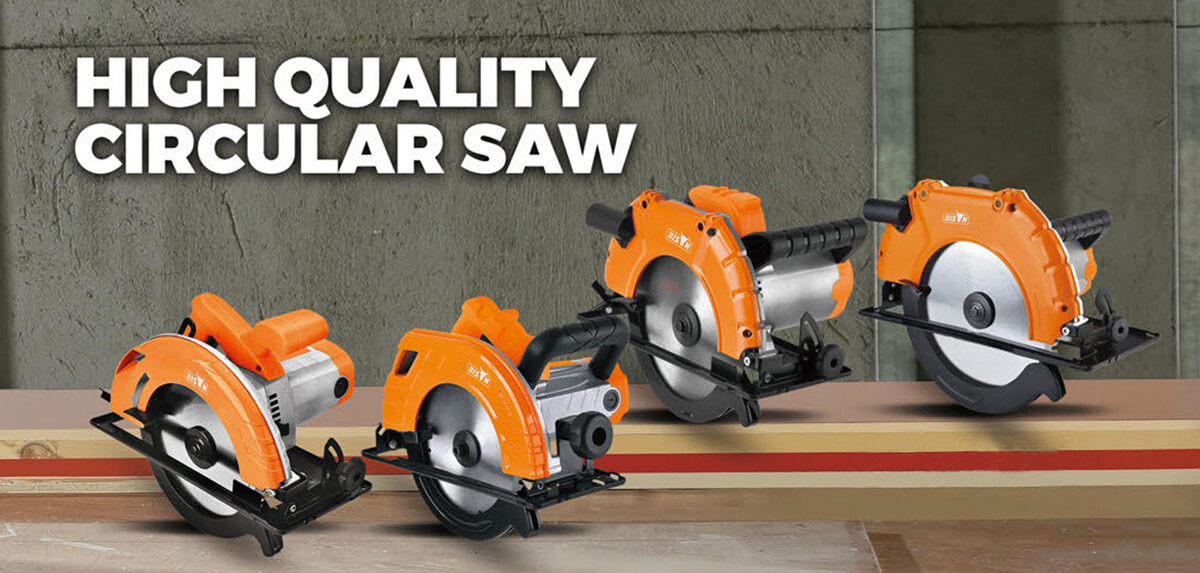
As a professional circular saw manufacturer, BISON provides high-quality, durable saws designed for both safety and performance. BISON circular saws feature ergonomic handles, precise depth adjustments, and reliable blade guards to help you maintain full control during every cut. Explore BISON’s range of circular saws today and experience the perfect balance of power, accuracy, and safety.
People also ask
Do you cut wood face up or face down with a circular saw?
Cut with the good or show face down. A circular saw's blade rotates upward at the back of the cut, which tends to cause splintering and tear-out on the top face while leaving the underside cleaner. Placing the finished side down protects it from chipping, especially important on plywood, veneered panels, or any surface where appearance matters.
Why can't I cut straight with my circular saw?
Wandering cuts are usually caused by a dull or damaged blade, the wrong blade for the material, or a warped/worn base plate that won't sit flat. Pushing the saw too fast, letting the motor bog down under load, or freehanding without a straightedge or guide rail also causes drift. Check blade sharpness and base plate condition first, then always use a guide for long or critical cuts.
Which side of the line do you cut with a circular saw?
Cut on the waste side of your marked line, keeping the blade's edge just touching the line itself rather than centered on it. This way, the layout line stays on the piece you're keeping, and the kerf removes material only from the offcut side — giving you a finished piece that matches your intended measurement.

related blog
Acquire all kinds of knowledge from professional China factory
how to use a circular saw?
Learn how to use a circular saw safely with step-by-step instructions. Covers blade adjustment, bevel gauge use, proper spacing, and essential safety checks before operating.
What are the applications of circular saws
Circular saws have diverse applications—from rough construction and fine woodworking to cutting materials far beyond wood.
related product
Quote high quality products from professional China factory