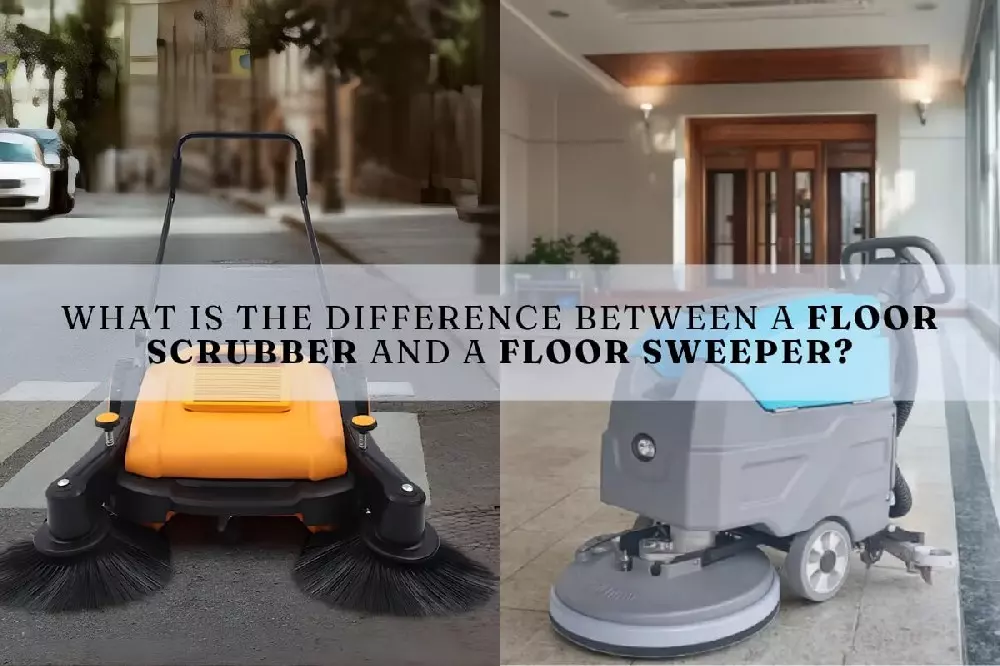
What is the difference between a floor scrubber and a floor sweeper?
2026-05-06
Table of content
Maintaining clean floors is essential for homes, offices, commercial spaces, and industrial environments. However, not all cleaning machines are the same, and floor scrubbers and floor sweepers are often confused. At first glance, they may seem similar, but their purpose, function, and cleaning methods are different.
A floor sweeper is used to remove loose debris, while a floor scrubber is designed to clean the surface and remove dirt and residue. Confusing these two can lead to poor cleaning results, such as debris left on floors, dull surfaces, or machines that do not perform well for the intended task.
Choosing the right machine can save time, reduce labor, and ensure clean, spotless floors. Understanding the difference between floor scrubbers and floor sweepers helps ensure better cleaning results and prevents wasted effort.
Understanding floor sweepers
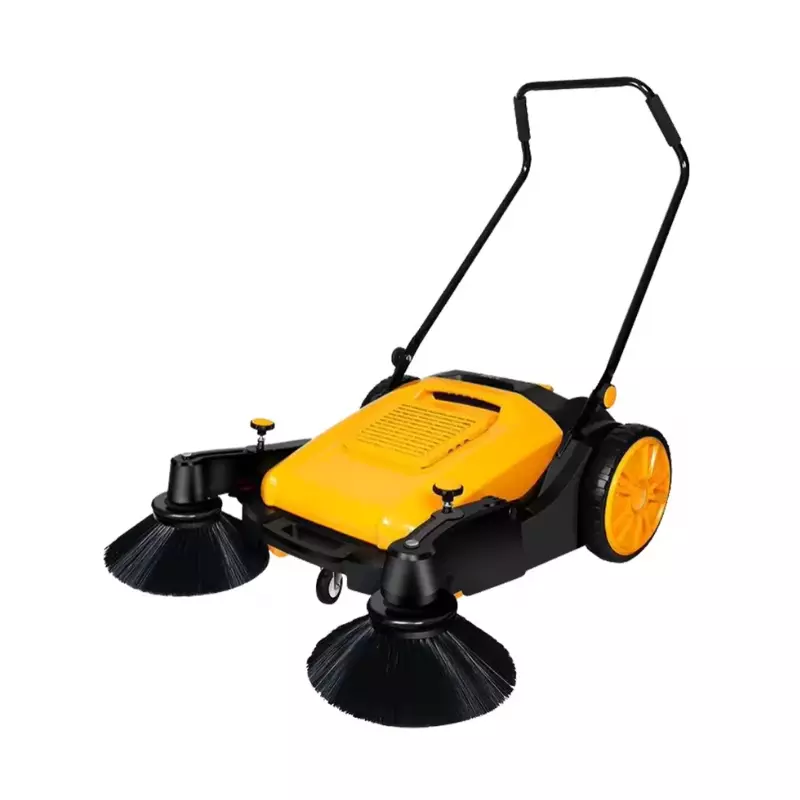
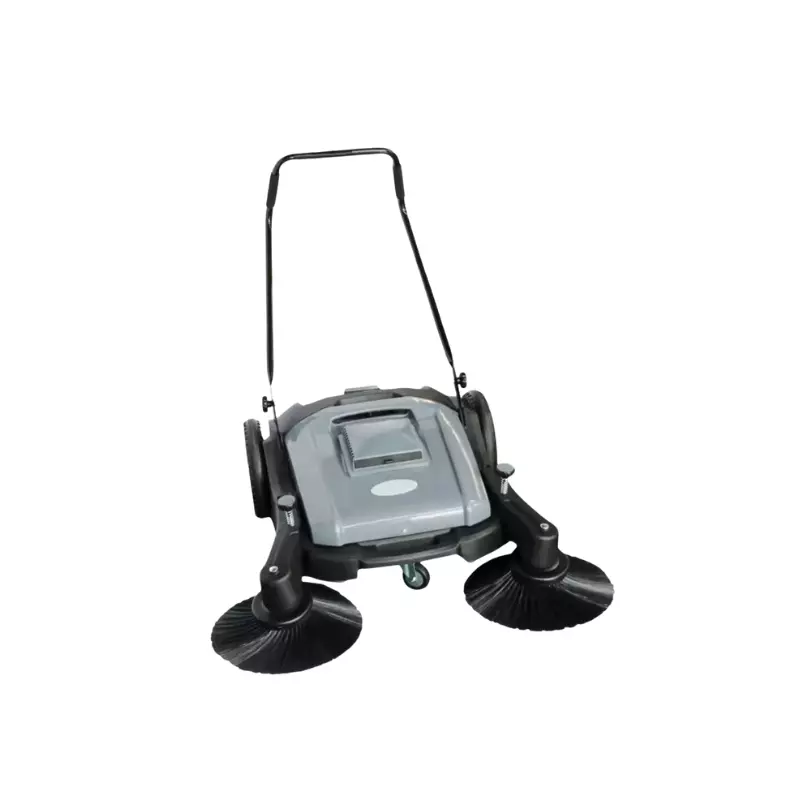
Floor sweepers are machines designed for daily floor maintenance in homes, commercial spaces, and industrial environments. They use rotating brooms and vacuum fans to collect dry debris — dust, chips, and granular waste — into an onboard hopper without adding moisture to the floor surface. This makes them ideal for high-traffic areas such as office lobbies, retail stores, warehouses, and hallways.
What is a floor sweeper?
A floor sweeper is built for dry debris pickup — dust, sand, packaging scraps — collected via rotating brooms into an onboard hopper. Side brooms pull material from edges while the main broom drives it into the hopper. Sweepers cover large areas quickly and with less effort than manual sweepers or vacuum cleaners, reducing cleaning time while keeping floors safe.
Use sweepers as routine control tools in high-traffic zones, triggering cleaning based on visible debris rather than shine.
How floor sweepers work
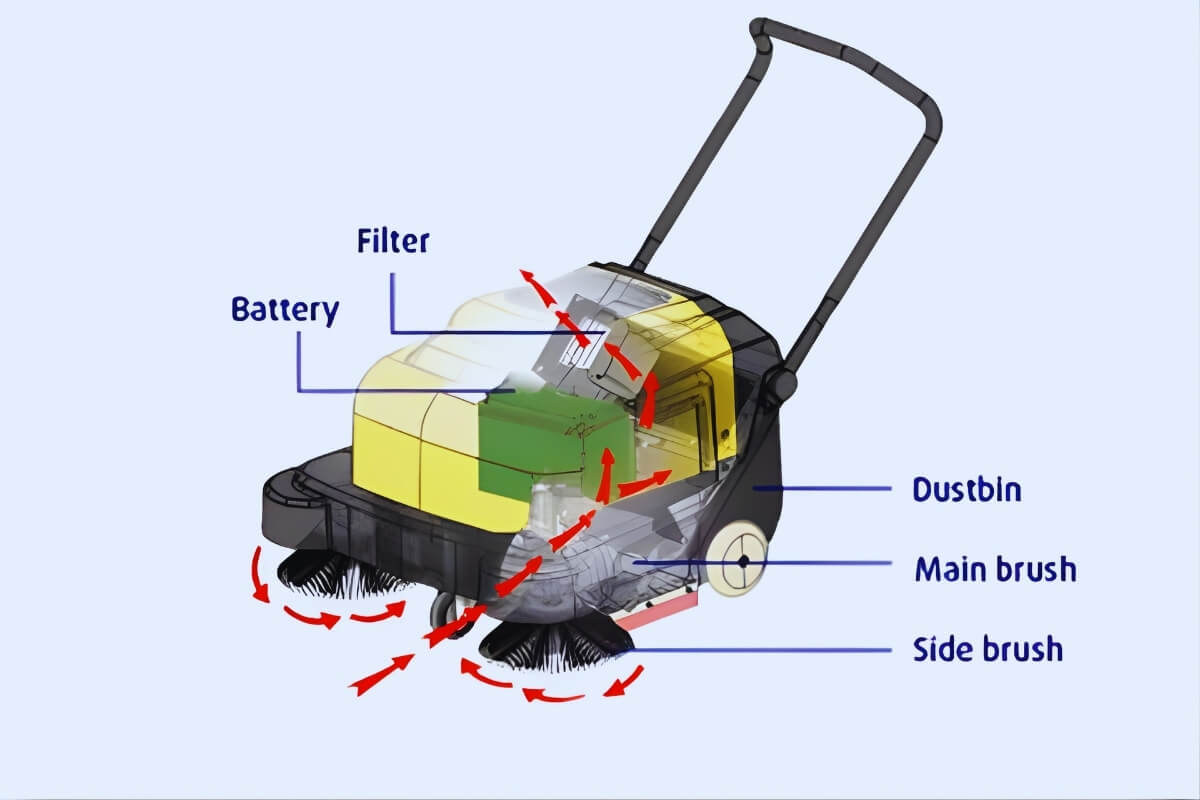
Rotating brushes or rollers lift dirt, dust, and small debris from the floor surface into a built-in collection container. Side brushes clean along walls and corners, ensuring no debris is left behind.
Vacuum fans: Maintain negative pressure to pull dusty air through filters.
Misting systems: Optional feature for reducing airborne dust on powdery floors.
Sweepers rely on mechanical motion rather than water or chemicals, making them low-maintenance and environmentally friendly.
Types of floor sweepers
Manual push sweepers: These push-powered sweepers are compact, lightweight, and ideal for tight spaces such as homes, classrooms, hallways, and small retail backrooms. They are quiet, require no electricity, and are best for light cleaning tasks.
Walk-behind sweepers: These are powered by batteries or engines and are suitable for mid-sized areas. They provide more coverage than manual sweepers while still being easy to operate.
Battery-powered sweepers: Battery-powered sweepers are commonly used in medium-sized commercial spaces such as retail stores and offices. They allow continuous cleaning with less manual effort and cover more area in less time.
Ride-on sweepers: Designed for large-scale industrial and commercial environments, ride-on sweepers let the operator sit while cleaning. They are ideal for warehouses, airports, stadiums, and large shopping centers, providing efficient coverage of wide areas.
Gas or diesel sweepers: These sweepers are suited for outdoor industrial sites with rough surfaces. They are powerful and designed for heavy-duty cleaning tasks.
Mechanical broom sweepers: These machines are used to pick up heavy debris and irregular waste such as pallet shards and larger scraps.
Regenerative air sweepers: These use high-velocity, recirculated air to lift and collect fine dust, making them suitable for smooth paved surfaces.
Overall, floor sweepers come in different types depending on the area size, cleaning frequency, and budget, allowing users to choose the most suitable option for their needs.
Advantages of using a floor sweeper
Floor sweepers replace manual cleaning and allow a single operator to cover large areas quickly.
Efficiency: They clean large spaces faster than manual methods, reducing labor time and effort.
Cost-effective: Many models, especially manual and battery-powered types, are affordable and accessible for different budgets.
Low maintenance: They use minimal consumables, require no water or chemicals, and have fewer moving parts, making upkeep simple.
Health benefits: They help reduce dust and allergens, improving indoor air quality.
Limitations of floor sweepers
Floor sweepers are not suitable for all cleaning conditions.
They struggle with wet spills, grease, oil, and sticky grime, making them less effective in heavily soiled areas. They also cannot deep clean or sanitize surfaces, which is important in places like hospitals, kitchens, or schools. Sweepers cannot remove stains or adhesives, so deeper cleaning is still required for tough dirt. In addition, they require regular filter cleaning and skirt inspections to prevent dust from escaping back into the air.
Understanding floor scrubbers
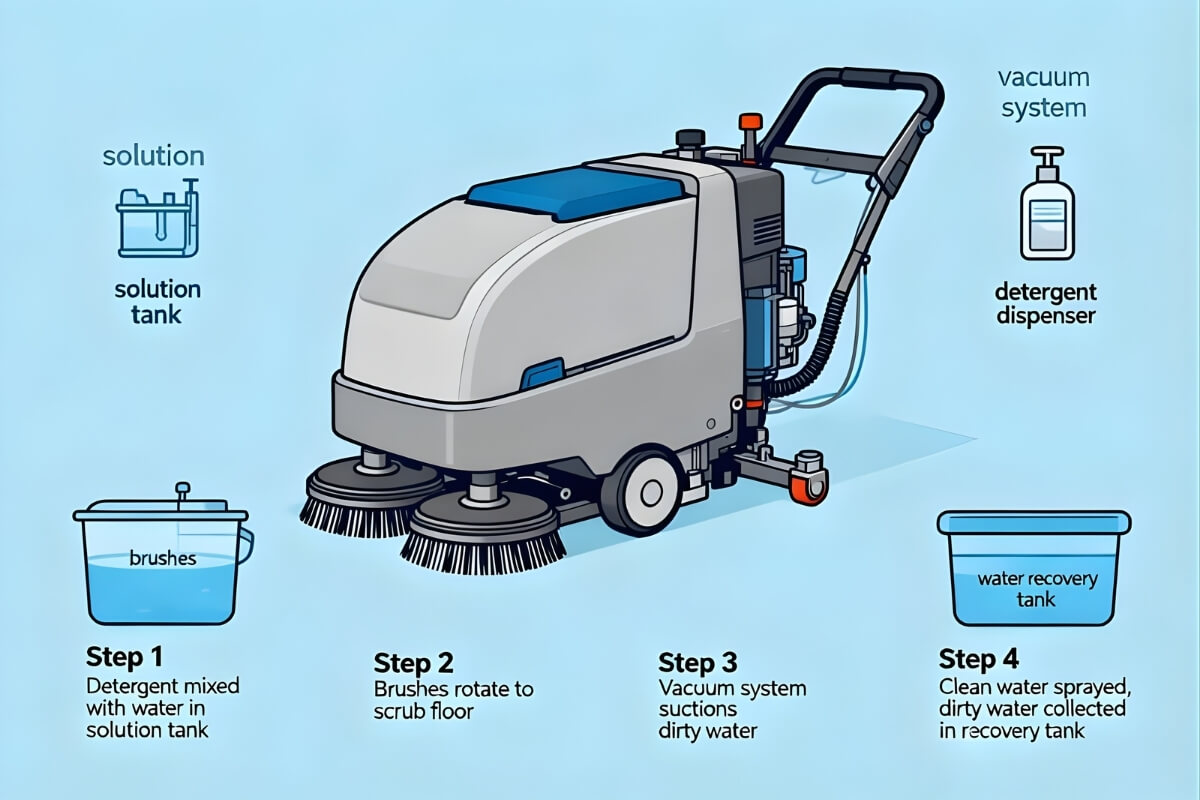
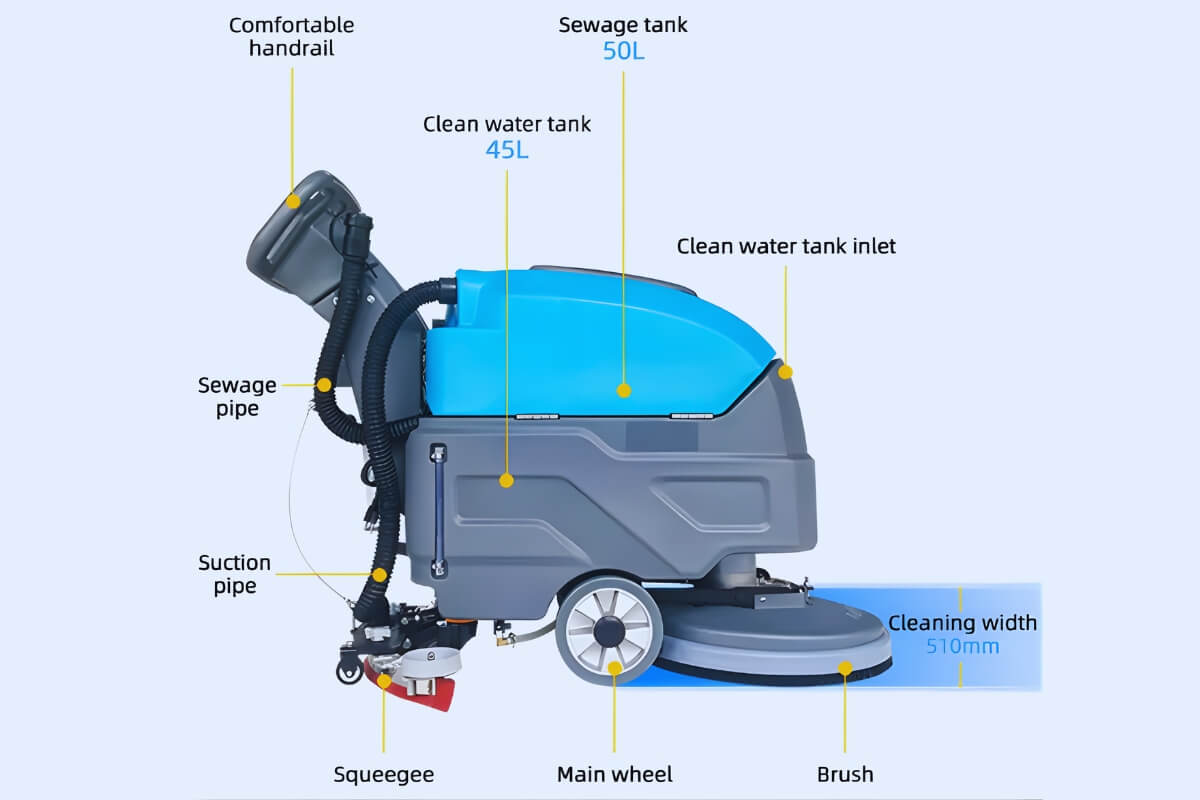
Floor scrubbers are specialized cleaning machines designed for deep floor cleaning. They apply controlled water and detergent through a scrub deck and remove the dirty solution using a trailing squeegee, leaving hard floors clean, dry, and safe to walk on.
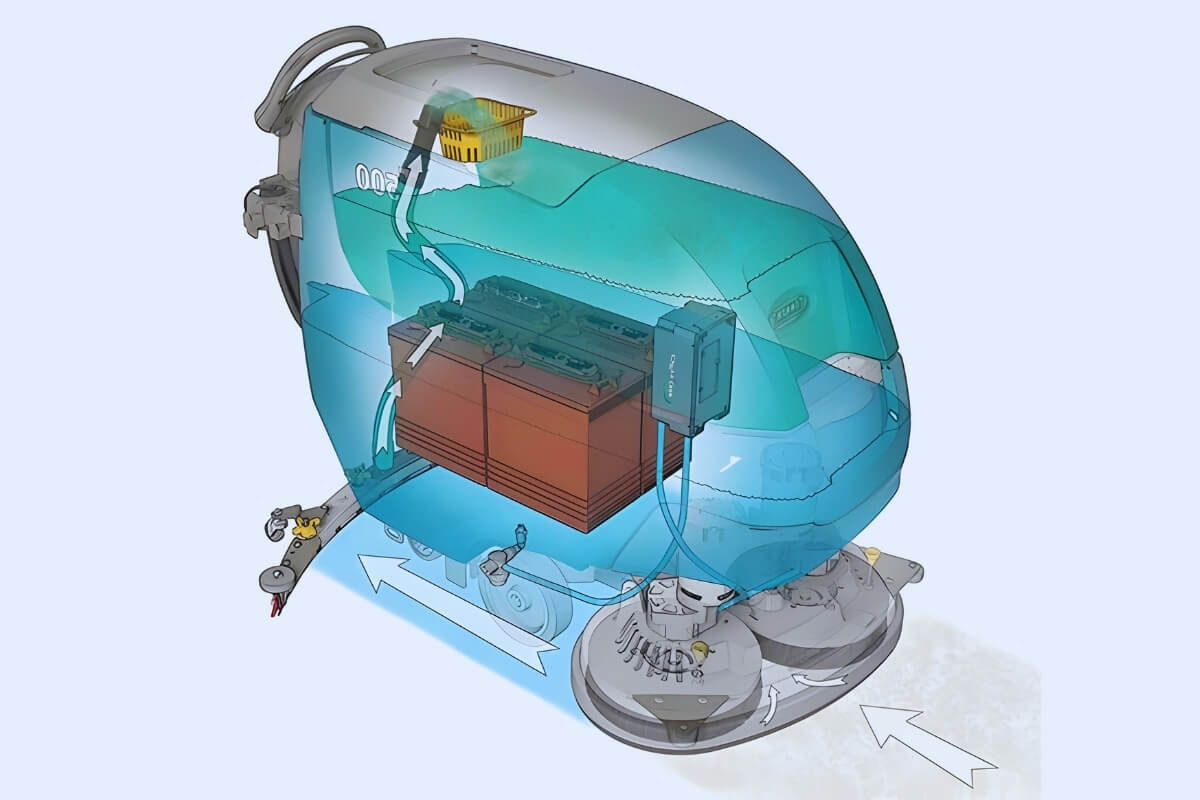
A floor scrubber washes hard floors and recovers dirty water in one pass. It dispenses cleaning solution, scrubs the surface using rotating brushes or pads, and then uses a vacuum system and squeegee to collect the wastewater into a recovery tank. Unlike floor sweepers, floor scrubbers use water and cleaning agents to remove dirt, stains, grease, and sticky residue.
They are commonly used in commercial spaces, hospitals, schools, shopping malls, and industrial facilities where hygiene and clean presentation are important. Floor scrubbers can handle light dirt as well as stubborn grime, including spills and adhesive residues, and may also help improve surface cleanliness and hygiene.
How floor scrubbers work
Floor scrubbers follow a three-step cleaning process:
Applying solution: The machine dispenses a water and detergent mixture onto the floor surface.
Scrubbing action: Rotating brushes or pads agitate the floor to loosen dirt, grease, and stains.
Recovery and drying: The dirty water is collected into a recovery tank, leaving the floor clean and often dry enough for immediate use.
Scrubber dryers are a modern type of floor scrubber that combines scrubbing and drying in one pass, reducing cleaning time and minimizing slip hazards.
Types of floor scrubbers
Upright or compact scrubbers: These machines are designed for tight spaces such as aisles and restrooms. They are small, easy to control, and ideal for areas with limited space.
Walk-behind scrubbers: Compact and maneuverable, walk-behind scrubbers are suitable for medium-sized spaces such as retail stores, offices, and schools. The operator walks behind the machine while guiding it across the floor.
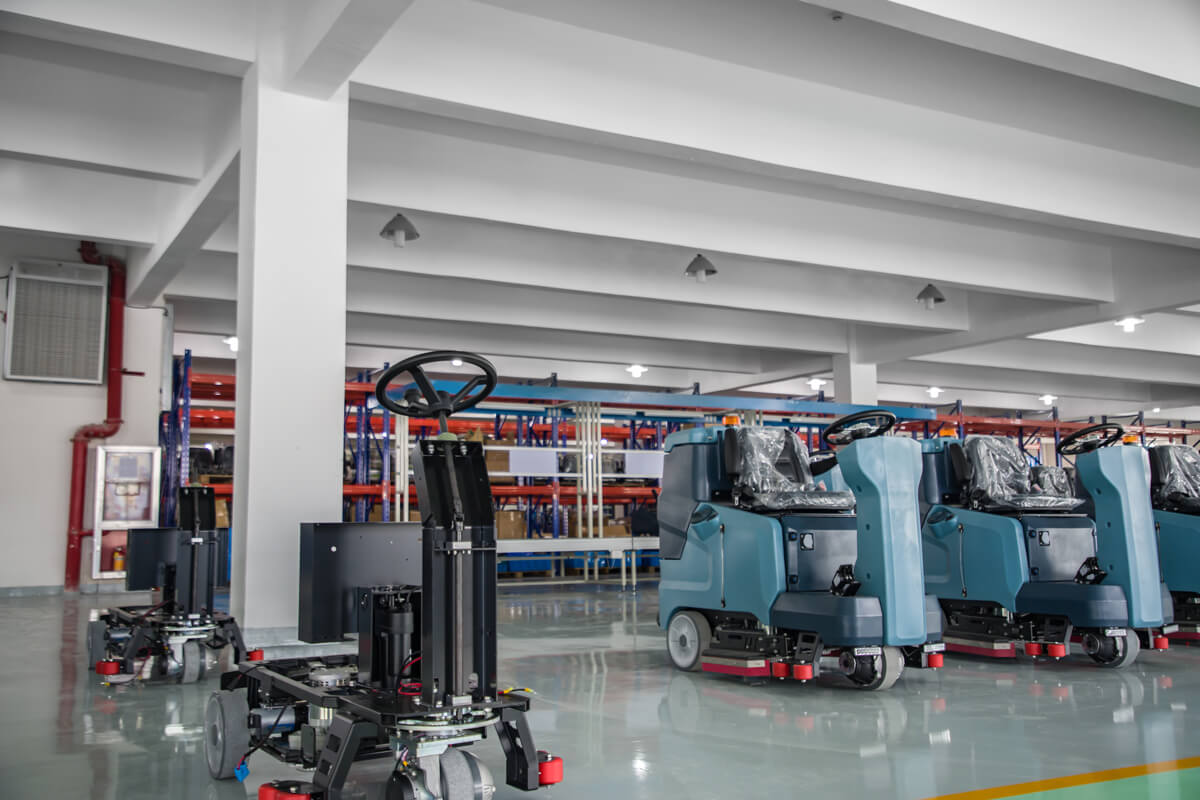
Ride-on scrubbers: These are large machines designed for industrial and commercial environments. The operator sits on the machine, allowing efficient cleaning of wide areas with less effort, making them ideal for warehouses and large facilities.
Robotic scrubbers: Robotic scrubbers are designed to follow consistent cleaning routes automatically. They help maintain regular cleaning schedules with minimal manual operation.
Automatic scrubber dryers: These machines combine scrubbing and drying in one pass, improving efficiency. They are commonly used in hospitals, airports, and large commercial spaces where fast drying and continuous cleaning are important.
Scrubbing head types
Disc: Provides strong contact for general scrubbing on pre-swept floors.
Cylindrical: Handles scattered grit and works well on textured floors.
Orbital: Uses high-frequency agitation for surface preparation and high-appearance areas.
Advantages of using a floor scrubber
Floor scrubbers automate solution flow and pressure, ensuring consistent and effective cleaning results.
Deep cleaning: They remove dirt, stains, grease, and adhesives that floor sweepers cannot handle. The mechanical scrubbing action lifts tough grime while using controlled water, improving floor appearance and reducing slip risks in busy areas.
Sanitization: The use of water and cleaning solutions helps reduce germs and bacteria, making floors more hygienic.
Polished finish: Floors are left clean, shiny, and presentable, suitable for professional and high-traffic environments.
Time-saving: Ride-on and automatic models can clean large areas quickly, reducing labor and improving efficiency.
Limitations of floor scrubbers
Higher cost: Floor scrubbers, especially ride-on and automatic types, are more expensive.
Water and chemical use: They require water and cleaning solutions, which must be properly managed and disposed of to avoid waste and environmental impact.
Maintenance requirements: Regular upkeep is needed, including cleaning and replacing pads, brushes, squeegees, and batteries.
Less portability: They are bulkier than sweepers and less suitable for tight spaces or small areas.
Pre-cleaning needed: They are not effective for loose, dry debris and usually require areas to be swept first to avoid spreading dirt.
Key differences: floor scrubber vs sweeper
Although floor sweepers and floor scrubbers may look similar at first glance, they serve very different purposes. You can select the ideal equipment for your area, cleaning requirements, and price range by understanding these variations.
| Dimension | Floor Sweeper | Floor Scrubber |
|---|---|---|
| Cleaning Method | Dry — brushes collect debris into hopper; no water or chemicals | Wet — applies solution, scrubs surface, vacuums dirty water via squeegee |
| Surface Suitability | Hard floors with light, superficial dirt | Hard floors with grease, oil, spills, tire marks, or ground-in soil |
| Cleaning Outcome | "Pickup" — removes loose debris; does not deep clean | "Wash" — lifts embedded grime; leaves floors clean, shiny, and hygienic |
| Productivity & Coverage Speed | Faster — no drying time; ideal for large-area routine cleaning | Slower — washing and water recovery required; scrubber-dryer models reduce drying time |
| Slip Resistance & Safety | Floors dry immediately after use; reduces trip hazards | Wet floors require warning signage; scrubber-dryer models mitigate this risk |
| Cost Considerations | Lower upfront and operating cost; no consumables beyond brushes | Higher upfront cost; ongoing spend on pads, blades, detergent, and wastewater handling |
| Maintenance & Care | Minimal — empty hopper, clean brushes and filters | Regular — rinse tanks daily, replace pads, blades, and brushes as needed |
Cleaning method
In any floor scrubber vs sweeper comparison, the main difference is the cleaning process. Sweepers remove dry debris through brushing and vacuuming, while scrubbers use a wet process to loosen and remove bonded dirt and grime, then vacuum the dirty water.
Floor sweepers
These work as dry cleaning machines, using brushes or rollers to collect dust, dirt, and debris from floors without using water or chemical cleaners.
Floor scrubbers
These are wet cleaning machines that apply water and cleaning solutions through rotating brushes or pads. They are effective in removing embedded dirt, stains, grease, and sticky substances.
For example, in a shopping mall, a sweeper is used to remove dust and loose dirt, while a scrubber is used to clean spills and sticky residue from the floor.
Surface suitability
Sweepers: Suitable for hard floors such as tile, concrete, vinyl, and hardwood, but only for light, superficial dirt.
Scrubbers: Effective on hard floors that require deep cleaning, including areas with loose debris, sticky residue, grease, oil, tire marks, spills, and ground-in soil. They are also better suited for textured surfaces compared to basic mopping.
Cleaning outcome: "pickup" vs. "wash"
Sweepers: Ideal for everyday maintenance. They quickly pick up loose dirt and reduce visible debris, helping keep floors clean and reducing allergens, but they do not reset or deep clean floor surfaces.
Scrubbers: Used for deep cleaning and sanitizing. They remove stubborn dirt and leave floors clean, shiny, and hygienic by lifting embedded grime and washing the surface.
For example, in a hospital, sweepers keep hallways dust-free, while scrubbers are used to clean and disinfect patient areas and operating rooms.
Productivity and coverage speed
Sweepers cover large areas faster because they only collect dry debris and do not require drying time. They are efficient for routine cleaning in wide spaces.
Scrubbers take more time because they involve washing and water recovery, but they provide a more thorough and polished result. Drying time may also be needed unless using scrubber-dryer models.
As a general benchmark: a walk-behind sweeper covers approximately 10,000–15,000 sq ft/hr; a ride-on sweeper can reach 60,000–100,000 sq ft/hr under optimal conditions — compared to 4,000–5,000 sq ft/hr for a person cleaning manually. For scrubbers, walk-behind models typically cover 8,000–12,000 sq ft/hr, while ride-on units range from 25,000–50,000 sq ft/hr depending on path width and floor condition.
Slip resistance and safety impact
Beyond cleaning performance, it is important to consider environmental impact and workplace safety.
Sweepers reduce trip hazards by removing grit and debris while leaving floors dry immediately, which helps lower slip risks. They are also eco-friendly since they do not use water or liquid cleaning agents.
Indoor air quality
Sweepers with dust control systems help reduce allergens and airborne particles, making them suitable for environments where air quality is important, such as schools and healthcare facilities.
Scrubbers improve floor traction by removing slick residues, but wet floors may still require warning signage until the surface is fully dry.
Slip hazard: Wet floors after scrubbing can be slippery unless the machine includes a drying function or scrubber-dryer system.
Water use and disposal
Floor scrubbers use water and cleaning solutions, so proper wastewater handling and disposal are necessary to prevent environmental impact.
Cost considerations
Budget is one of the most important factors, and it includes both upfront price and long-term operating costs.
Floor sweepers
Floor sweepers have a low initial investment and minimal ongoing costs, mainly for brush replacement and debris disposal. They offer strong return on investment for regular maintenance cleaning.
Upfront pricing ranges depending on size and features, with manual units being more affordable and battery-powered or ride-on models requiring higher investment due to added capacity and equipment needs.
Ongoing operating costs are low, with fewer consumables and no need for water or chemicals. Common replacement parts include main and side brooms, filters, dust skirts, seals, hopper components, and wear parts.
Floor scrubbers
Floor scrubbers have a higher upfront cost, especially ride-on and automatic models. They also require additional maintenance for pads, brushes, cleaning solutions, and wastewater handling.
They provide long-term value through time savings, improved hygiene, and reduced labor costs, particularly in large or high-traffic areas. Operating costs include pads or brushes, squeegee blades, detergents or chemicals, water supply and disposal, and vacuum filters or hoses.
Larger machines with wider cleaning paths and bigger tanks cost more initially but reduce cleaning passes and improve efficiency. Battery-powered ride-on units may also require additional investment in charging systems and batteries.
Overall, floor scrubbers are more expensive but deliver greater efficiency, while sweepers are more budget-friendly with lower ongoing costs.
Maintenance and care differences
Sweepers require regular broom, filter, and hopper maintenance, while scrubbers need additional care for squeegee blades, solution tanks, recovery tanks, and battery systems to maintain performance.
Floor sweepers
Require minimal maintenance, mainly emptying the debris container and occasional cleaning or replacement of brushes and filters.
Floor scrubbers
Require more frequent maintenance, including cleaning or replacing pads and brushes, rinsing and emptying solution and recovery tanks, and checking hoses, motors, and other moving parts. Neglecting maintenance can reduce efficiency and shorten machine lifespan.
Common wear parts and replacement cadence
From field support experience, parts such as brooms, filters, pads, and squeegee blades wear out when used beyond their limits, making timely replacement important.
| Machine type | Part / system | When to replace or service |
|---|---|---|
| Sweeper | Brooms | When cleaning patterns become uneven |
| Sweeper | Filters | When dust leakage or reduced airflow occurs |
| Sweeper | Dust skirts / broom height | Maintain and adjust for proper floor contact |
| Scrubber | Pads or brushes | When cleaning performance drops |
| Scrubber | Squeegee blades | When streaking occurs; rotate or replace |
| Scrubber | Batteries | Maintain with proper charging and care to extend lifespan |
Daily and weekly tasks for sweepers
Empty the hopper daily on level ground with the brake engaged.
Inspect and remove sharp debris while wearing gloves.
Clean or tap dust filters regularly and replace them when airflow decreases.
Check dust skirts for gaps and adjust broom height to maintain even cleaning.
Daily and weekly tasks for scrubbers
Drain and rinse solution and recovery tanks daily and leave lids open to prevent odors.
Clean the squeegee and vacuum path after each use to remove debris or buildup.
Check hoses and float systems for clogs.
Rinse pads and brushes regularly and replace squeegee blades when streaking appears.
Best use cases by environment
A. Warehouses and distribution centers
Large facilities such as warehouses, factories, distribution centers, and manufacturing floors experience heavy traffic, dust, and debris from machinery and personnel.
Floor sweepers: Serve as the first-line machine for daily cleaning, removing grit, pallet splinters, shrink-wrap, and other debris at dock doors, staging lanes, and high-traffic points. Ride-on or industrial sweepers are ideal because they cover large areas efficiently and reduce physical strain.
Floor scrubbers: Used for deep cleaning, especially for grease, oil stains, tire marks, and dirt buildup in main aisles and turning zones. They restore traction and improve floor safety in areas where forklifts frequently operate.
Using both machines keeps aisles clear and floors free from slippery residues and stubborn dirt.
B. Retail and public spaces
Commercial environments such as offices, retail stores, restaurants, and lobbies experience moderate foot traffic and require regular maintenance to keep floors presentable.
Floor sweepers: Handle quick, quiet daily cleaning during operating hours, removing dust and debris without water or drying time — ideal for entryways and sales floors.
Floor scrubbers: Used for scheduled deep cleaning, such as weekly or biweekly maintenance, in areas with scuffs, stains, or sticky residues like cafeterias and food courts, and to restore shine in high-visibility areas like reception spaces.
In a retail store, a sweeper maintains cleanliness throughout the day while a scrubber is used after hours to restore floor appearance.
C. Residential use
Homes, especially larger ones with tile or wood floors, can benefit from both machines.
Floor sweepers: Work best for quickly picking up everyday dust, pet hair, and crumbs, and when a lightweight, easy-to-use machine is preferred.
Floor scrubbers: Suited to kitchens and bathrooms with frequent spills, or when a deeper clean and polished finish is needed after guests or special occasions.
Example: A sweeper for daily maintenance, a compact scrubber for monthly deep-cleaning of kitchens and hallways.
D. Manufacturing and industrial facilities
Floor sweepers: Used for dry production debris such as metal chips and sawdust — match the machine to the waste type and filtration needs before use.
Floor scrubbers: Handle coolant, grease, and oily soil in production areas.
E. Schools, hospitals, and healthcare-adjacent spaces
Floor sweepers: Used for dust control and pre-cleaning in corridors, lobbies, and service halls.
Floor scrubbers: Maintain hygiene in patient areas and cafeterias.
F. Parking lots, sidewalks, and outdoor areas
Floor sweepers: Handle leaves, sand, and litter, especially around curbs, corners, and drain lines.
Floor scrubbers: Used only for specific stains where water recovery is possible.
Conclusion
Cleaning performance is not about choosing the "best" machine, but about choosing the right one for the job. Floor sweepers remove dry debris; floor scrubbers wash the surface and recover dirty water.
The right choice depends on soil type, floor material, and traffic flow. If you are unsure which to choose, start with your soil type: if your site generates daily loose debris, budget a sweeper pass or choose a scrubber-sweeper so the crew does not improvise.
For facilities that face both challenges, BISON offers floor scrubbers and industrial sweepers that can be specified together as a two-machine system, or sourced as a combined unit depending on your application. We offer:
OEM/ODM customization at no extra tooling cost
Factory-direct pricing from Taizhou, China
Contact us to discuss the right configuration for your floor area and shift schedule.
FAQ (high-intent questions)
Can a floor sweeper replace a floor scrubber? No. Sweepers remove loose dirt and debris, but they cannot clean deeply, remove stains, or sanitize floors like scrubbers.
How often should I use a floor scrubber? It depends on traffic. High-traffic commercial or industrial areas may require daily scrubbing, while low-traffic spaces may only need weekly cleaning.
Are ride-on machines worth the investment? Yes. For large areas, ride-on sweepers or scrubbers help save time, reduce labor, and deliver more consistent cleaning results.
What surfaces should never be scrubbed? Avoid using scrubbers on carpet, delicate wood, or soft vinyl floors, as brushes or pads may cause damage.
Can a floor sweeper and a floor scrubber be used on the same floor? Yes, and in most industrial facilities, they should be. Use the sweeper for daily debris control and the scrubber for scheduled deep cleaning. Pre-sweeping before scrubbing also extends scrubber pad and squeegee life by preventing debris from entering the water recovery system.

related blog
Acquire all kinds of knowledge from professional China factory
how to operate an industrial floor scrubber?
Learn how to operate an industrial floor scrubber safely and efficiently — from pre-shift inspection and solution setup to scrubbing technique, daily maintenance, and fleet troubleshooting.
What is the difference between a floor scrubber and a floor sweeper?
Floor scrubber vs. floor sweeper: a complete B2B guide covering cleaning method, cost, productivity benchmarks, maintenance, and how to choose the right machine for your facility.
related product
Quote high quality products from professional China factory