running generators at cold temperature
2023-04-20
Table of content
Generators will start to have problems in cold weather when temperatures drop, especially when they go below 40°F. Unprepared generators face compounding failure risks in cold weather — thickened oil strains the starter, batteries lose capacity, and fuel can gel. There are a few possible causes for this, and by being aware of the necessary procedures, these can be swiftly addressed to relieve our concerns.
Reasons of engine won’t start while running generators at cold temperature
Due to cold cylinders, gasoline cannot vaporize sufficiently for combustion. When these things happen, in addition to other things like a cold battery and thicker oil viscosity, you have a dead generator on your hands.
Check fuel level and fuel system
Your top priority should be to check your fuel. Check the fuel level in the tank, and top it off if required. As for the LPG generator, all valves and tubing connecting the LPG tank to the generator should be open.
For diesel generators, even small amounts of water in the fuel lines can freeze and stop engine operation; a water separator installed in the fuel system is a practical safeguard against this risk, and inspecting the fuel tank twice a year through the winter provides additional protection. It also helps to keep diesel fuel tanks above 75% capacity throughout the winter months, since a fuller tank limits condensation buildup and helps preserve reliable fuel flow rate.
Engine oil levels are low
Your generator's engines depend on oil. It is still crucial to check the oil levels with a dipstick even if the majority of generators feature a sensor to alert you when oil levels are low. If your oil level is low, follow the manufacturer's instructions and top it off with the proper kind of oil.
Change the engine oil's viscosity
Since the oil tends to thicken during the colder months, starting the generator by revving the engine will be very challenging. It will be more difficult to pull the recoil cord, and you might even see the "Low Oil" sensor activating. Even while the oil in your engine may not actually be low, the thickness of the oil is causing the sensor to malfunction and act as if there is no oil at all, which results in the engine shutting down on its own.
Below freezing, 5W-30 oil is recommended over 10W-30, which can cause problems once temperatures drop below 0°F; to keep the engine ready to start, generators should be run at least once every three months, or every few weeks in extreme cold, using winter-grade diesel for diesel units to prevent fuel gelling. Following a general sequence of treating the fuel and switching to a cold-rated oil suited to the season can help some models start more reliably, even though the exact steps can vary by unit.
Defective battery
Similar to your automobile, a dead battery or defective connections may be at blame if your generator won't start. Cold weather makes this risk worse: battery capacity can drop up to 20% for every 10°F decrease in temperature, sharply increasing the chance of a no-start situation during an outage.
Try using a 12-volt DC outlet to charge the battery or give it a jump start with your car's battery.
Using a battery warmer to maintain the battery at a constant 80°F (27°C), giving the generator a much better chance of starting reliably in the cold.
If the battery fails to hold a charge after jump-starting, replace it.
Clogged fuel and ignition components
When you get to this stage and the engine still won't start, the spark plug can be filthy. The carburetor may be clogged with old gasoline, making it impossible for fresh fuel to start the combustion process. Of course, the fuel valve is probably clogged. Verify that the fuel and vacuum relief valves are open above the generator's fuel tank. If you've treated the fuel with a stabilizer, running the engine for 10-15 minutes afterward helps circulate the treated fuel throughout the system, preventing degradation during storage and reducing the odds of future clogs. In colder conditions, gelling from low-temperature diesel can also mimic a clog; preventing this is best done by adding an anti-gel additive and insulating the fuel lines rather than relying on the additive alone.
Adjust the choke
The factory settings typically set the choke to work over a wide range of temperatures, but extreme cold or heat can exceed the original settings. Doing this manually will keep the choke open longer, giving the engine the fuel it needs to turn over and start.
Insulate the generator
To help protect the generator from extreme cold temperatures, consider using an insulation blanket or enclosure specifically designed for generators. This will help maintain a warmer environment for the engine and its components, making it easier to start. If possible, store your generator in a dry, sheltered location away from direct exposure to harsh weather conditions.
A weatherproof, ventilated enclosure is preferable to standard tarps, which trap condensation and moisture that can corrode electrical components and damage the engine.
Before adding insulation, check the generator housing for cracks, rust, or corroded seals, since gaps or weak spots let cold air and moisture inside, undermining insulation and risking damage to internal components.
Even when insulated, regularly check that snow or ice hasn't piled up around the generator's vents, muffler, and exhaust outlet, since blocked airflow can cause overheating or dangerous exhaust buildup. Some setups also benefit from a snow hood design or a relocated exhaust outlet, which can further reduce the chance of snow intrusion and blockage, though the right configuration depends on the specific installation.
Block heaters
Block heaters are designed to warm the coolant, which in turn warms the engine block and oil. Mechanically, block heaters are installed directly on the coolant circuit and are typically powered by an external source rather than the generator engine itself, so they need to be plugged into a power outlet to work.
It's essential equipment, keeping oil and coolant warm enough to reduce startup stress and ensure the engine has immediate lubrication the moment it turns over.
Pairing a block heater with other cold-weather equipment, such as battery heaters and fuel line heaters used in sequence during startup, further improves the odds of a clean start in freezing conditions, and some cold weather packs that combine these components have been shown to cut generator failure incidents by 50 percent or more across an operating range of 32°F to -50°F (0°C to -46°C).
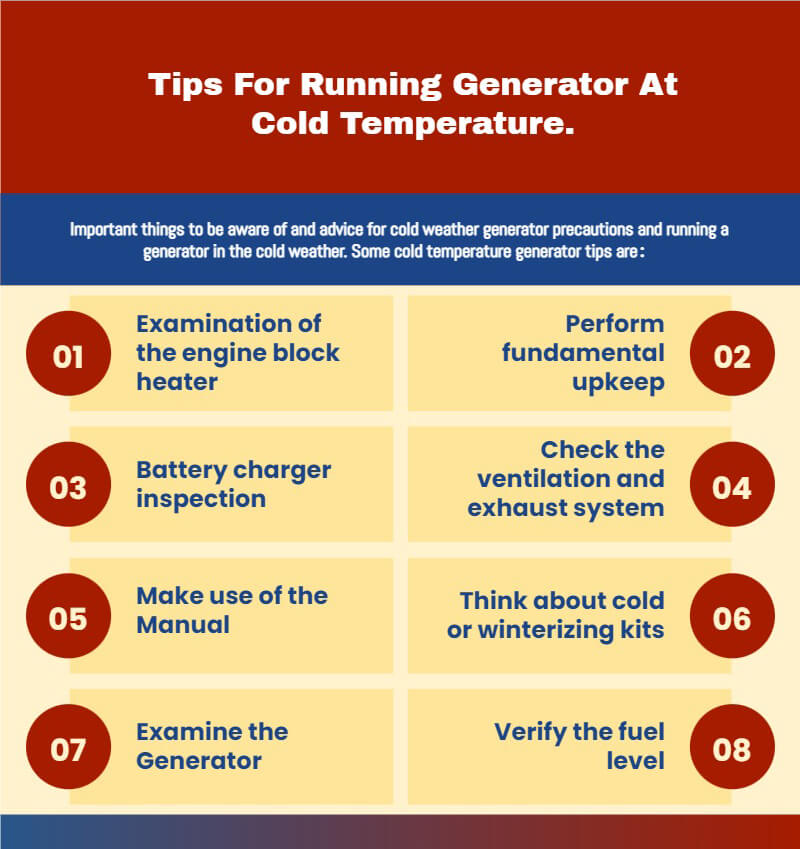
In conclusion
Cold-weather starting failures almost always come down to four things: fuel, oil, battery, and spark. Work through them in this order — check fuel level and quality first (gasoline can degrade, diesel can gel), then oil level and viscosity, then battery condition and connections, and finally the spark plug and carburetor. Address each before winter arrives rather than during an outage.
By taking these additional steps and being proactive with generator maintenance, you can increase the likelihood of your generator starting and running smoothly during cold weather conditions. BISON have put together an in-depth article on "How to Winterize a Generator" that covers all the necessary steps and precautions you need to take. By being proactive and following these winterizing guidelines, you can rest assured that your generator will be ready to face harsh winter conditions and provide a reliable power source when you need it most.
So, don't let the cold weather get the better of your generator; instead, before cold weather arrives, start the generator and run it under a realistic load for a while, checking that it starts smoothly, reaches operating temperature, and runs steadily, so you can catch battery, fuel, or heater issues while repairs are still easy to arrange. Please remember to conduct a monthly on-load test lasting 15 to 30 minutes.
Common FAQs
Can generators break in the cold?
Yes. Beyond hard starting, sustained sub-freezing temperatures can crack fuel lines, gaskets, and rubber seals as materials contract, and condensation inside the fuel tank can freeze and block lines. Batteries lose capacity and may fail permanently if drained repeatedly in the cold. Regular short run cycles, quality fuel stabilizer, and battery insulation reduce these long-term risks beyond just start-up trouble.
Can you run a generator in freezing weather?
Yes, generators can run safely below freezing as long as fuel, oil, and battery are properly conditioned beforehand. Diesel and gasoline units both need cold-rated fluids, and output may dip slightly until the engine reaches operating temperature. Avoid running a generator inside an enclosed space for warmth, since carbon monoxide buildup is more dangerous when snow blocks exhaust vents and ventilation.
What temperature is too cold for a generator?
Most generators begin struggling below 40°F (4°C). With winter-grade oil, a battery warmer, and fuel treatment, generators can start and run well below 0°F (-18°C) — the limit is more about preparation than the temperature itself.

related blog
Acquire all kinds of knowledge from professional China factory
Generator runs for a few seconds then stop (How to fix?)
Is your generator runs for a few seconds and then stop? Don’t worry, we’ve got you covered. Read this post to know the reasons and also how to fix this problem.
generator low voltage output causes and solutions
So, what causes generator low voltage? How can you identify them? We'll cover all of these causes below to help you use a properly working generator.
charging electric vehicles with generators: A comprehensive guide
BISON will delve into the feasibility of using a generator to charge an electric vehicle, discussing the advantages and disadvantages. We will also consider...
related product
Quote high quality products from professional China factory