Choosing Pressure Washer: Belt-Drive vs Direct-Drive Pump
2021-10-19
Table of content
An important factor in selecting the correct high-pressure washer is to determine whether a machine is equipped with a direct drive pump or a belt drive pump. In general, belt driven pumps produce less pressure on the engine than direct driven pumps and are more durable in industrial applications.
Compare belt drive and direct-drive pressure washers to find the right fit. Learn durability, noise, cost & performance differences for your needs.
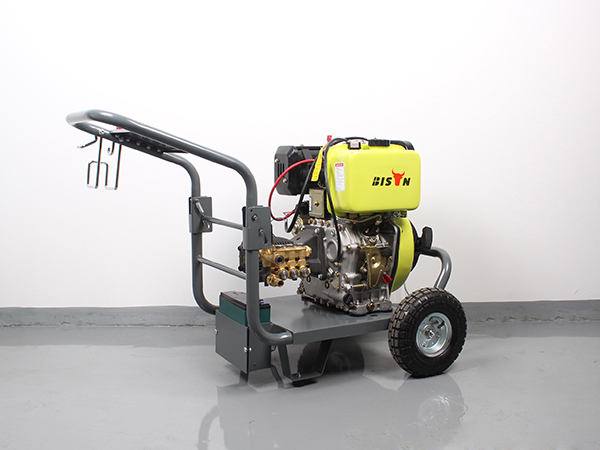
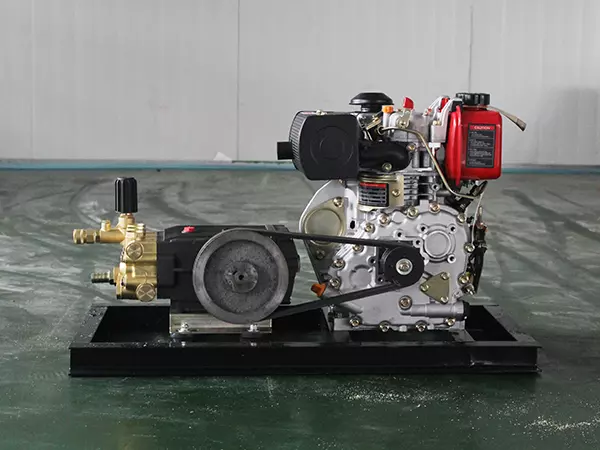
Direct-drive pressure washers
Direct drive pressure washers are more commonly used for applications where the service time does not exceed 20 hours per week. The pump is directly connected to the engine or motor so that the rotation speed of the pump is several times that of the belt driven model.
The normal gasoline engine speed is about 3600 rpm at no load (measured in revolutions per minute or similar rotational metrics). For a direct drive pressure washer, its pump is directly connected to the engine shaft, so the pump speed is the same as the engine speed, roughly 3,200 to 3,400 RPM, producing higher temperatures and vibration.
The direct drive pump allows the design of a more compact high-pressure washer. Another advantage is that the drive system is simple and has fewer moving parts, so it is cheaper. The disadvantage is that the speed of the pump is the same as that of the engine or motor, and the bearings and other parts will wear more.
The pump is bolted directly to the engine, so engine heat conducts into the pump body — often raising pump operating temperature well above that of a belt-driven unit — which accelerates seal and bearing wear. Direct drive transmits engine vibration to the pump, shortening service life. Direct drive pumps can also seize their hollow shaft to the engine shaft, potentially doubling service cost compared to belt drive systems. Because the pump and engine are directly coupled in a direct drive design, a seizure in either component transmits destructive concussion to the other, causing major machine failure.
Benefits of direct-drive pump systems:
Compact design, generally with a smaller footprint than belt drive equivalents
Reduce acquisition costs
Disadvantages of direct drive systems:
Shorter service life, as direct vibration transfer from the engine or motor to the pump accelerates bearing and component wear
Leaving the trigger engaged too long on a direct drive unit causes recirculating water to heat up rapidly and can damage the pump.
Belt-drive pump pressure washer
Belt drives are most common in industrial models, and belt driven pressure washers are ideal for weekly use twenty-plus hour cleaning applications. The belt connecting the engine or motor to the high-pressure pump can dissipate heat and vibration and minimize wear, so as to reduce the maintenance of key components and extend the service life of the pump.
The belt-driven pressure washer has a pulley on the solid shaft with a keyway and is connected to the pulley of the motor or engine through one or more belts. The pulley system allows the pumps of these pressure washers to run at much lower speeds than direct drive pumps (typically 900-1,400 RPM vs. 3,400 RPM), which roughly halves the number of pump revolutions per day and dramatically reduces bearing and plunger wear. In practice, belt-driven pressure washers typically last several times longer than direct-drive units under the same duty. When connected to a gas engine through pulleys, the pump runs at roughly half the speed of a direct drive pump, cutting bearing, crank, and plunger wear roughly in half. The pump is also isolated from the heat of the engine or motor so that the operating temperature of the pump is much lower than that of the direct drive pump, aided by a larger crankcase oil capacity combined with the lower RPM that allows the pump to run cooler. The belt and pulley can also absorb vibration and avoid the reduction of the service life of the washer pump, and because the pump is not bolted directly to the engine, this arrangement eliminates added engine strain and further isolates the pump from engine vibration.
Due to these factors, most high-pressure washers that require frequent use require belt driven pumps. There will be some efficiency loss due to friction between the belt and the pulley. Sometimes maintenance is required to adjust the belt. However, the belt drive system shall provide the longest pump life under the same other conditions.
Benefits of belt drive systems:
Vibration absorption
Reduce speed
Lower operating temperature
Longer service life
Acts as a mechanical safety fuse, snapping or slipping if the pump or motor seizes, preventing total drivetrain destruction
Runs at slower RPMs than the motor, which reduces noise at higher motor speed
Disadvantages of belt drive systems:
Efficiency loss — the belt and pulley system introduces added friction, which means some power is lost in transmission
More maintenance required — belts need periodic adjustment to keep tension correct and avoid slippage
Belt-drive vs Direct-drive pump pressure washer comparison
| Factor | Direct-drive pressure washer | Belt-drive pressure washer |
|---|---|---|
| Pump speed | ~3,400 RPM, same as engine/motor speed | 900-1,400 RPM, roughly half the engine speed |
| Operating temperature | Higher — engine heat conducts directly into the pump body | Lower — isolated from engine heat, larger oil capacity, slower RPM |
| Service life | Shorter — direct vibration and heat accelerate bearing and seal wear | Significantly longer — typically several times the life of direct-drive under the same duty |
| Maintenance | Less routine maintenance | Periodic belt tension checks and adjustment required |
| Cost | Lower initial cost, more compact | Higher initial cost |
| Portability | More compact and easier to transport | Larger footprint due to belt and pulley assembly |
| Noise | Louder at higher motor speed | Quieter — pump runs at reduced RPM |
| Safety | Shaft seizure transmits destructive force to both units | Belt acts as a mechanical fuse, slipping or snapping to protect the drivetrain |
| Best suited for | Use under 20 hours/week, portable jobs, budget buyers | Use 20+ hours/week, commercial/industrial duty |
Summary
The main difference between the two pressure washer types is durability: belt-drive pumps run cooler and last longer, while direct-drive pumps are more compact and affordable.
For rental & heavy equipment suppliers: Recommend stocking belt-driven gasoline or diesel pressure washers. They withstand harsh site conditions, yield higher rental profit margins, and lower your warranty/maintenance costs.
For retail & standard commercial distributors: Focus on direct-drive pressure washers. Their lower initial wholesale cost makes them attractive for residential users, property managers, and small contractors seeking immediate ROI.

related blog
Acquire all kinds of knowledge from professional China factory
Pressure washer is surging/pulsing: An in-depth comprehensive guide
This comprehensive guide will help you understand pressure washer surging/pulsing, including the issue, its causes, how to diagnose it, and ultimately, how to fix it.
What accessories are available for my BISON pressure washer?
The high-pressure cleaner is equipped with various tools and accessories designed to make your cleaning faster, more efficient, and most importantly, easier.
How to make gasoline pressure washer quieter?
BISON delve into the world of quieter gas pressure washers. We will explore the reasons behind the loud operation of gas pressure washers, effective methods to reduce their noise output...
related product
Quote high quality products from professional China factory