water pump terminology
2026-03-26
Table of content
Water pumps are everywhere in our daily lives, quietly working behind the scenes to keep water flowing where it’s needed most. They deliver clean water to homes, irrigate crops, power industrial processes, and maintain city plumbing and drainage systems. When you're sourcing water pumps from a Chinese manufacturer, the difference between a successful order and a costly mistake often comes down to one thing: whether you and your supplier are speaking the same technical language.
This guide is designed to help. Whether you want to choose the right pump, troubleshoot an issue, or confidently discuss your needs with professionals, it will give you the knowledge to do so.
Learn the important water pump terminology in this latest blog post and gain insight into key terms related to water pumps. Let’s get started.
Basic pump concepts and classifications
A water pump is a device designed to move water from one place to another, providing the pressure and flow needed for a wide range of applications. Its primary functions include supplying clean water to homes, irrigating crops, circulating water in industrial processes, and supporting municipal water and drainage systems. In everyday life, pumps make it possible to fill a garden sprinkler, drain a flooded basement, or power a factory cooling system.
Water pumps come in different types, each suited to specific tasks. Understanding the main categories can help you select the right pump and use it effectively.
Pumps are divided into three basic types based on how they move water: centrifugal pumps, positive displacement pumps, and axial flow pumps.
Centrifugal pumps
Centrifugal pumps use a spinning impeller to push water outward, creating a smooth and continuous flow. They are ideal for moving large volumes of water at moderate pressure, such as filling a home water tank, circulating water in a pool, or supplying water to residential and industrial systems.
Main sub-types:
Single-stage pumps: contain one impeller. Simple and easy to maintain, ideal for moderate-pressure applications like garden irrigation or home water supply.
Multi-stage pumps: contain two or more impellers in series. They generate higher pressure, suitable for high-rise buildings, industrial systems, or long-distance water transport.
Positive displacement (pd) pumps
Positive displacement pumps physically move water by trapping a fixed amount and pushing it forward. They are better for applications requiring high pressure or precise flow, such as irrigation systems, chemical dosing, or hydraulic machinery.
Pd pumps work differently from centrifugal pumps. Instead of relying on velocity, they trap a fixed amount of water and force it into the discharge pipe with each stroke or rotation. This makes them reliable for pressurizing water, chemical dosing, or transferring viscous liquids.
Main sub-types:
Reciprocating pumps: move water with a back-and-forth motion.
Piston pumps: a piston moves inside a cylinder, like a syringe, for high-pressure tasks.
Diaphragm pumps: use a flexible diaphragm to handle chemicals or slurries.
Rotary pumps: move water continuously using rotating parts.
Gear pumps: interlocking gears push water forward, often used in hydraulic systems or oil transfer.
Lobe pumps: similar to gear pumps but handle liquids gently, ideal for food processing.
Screw pumps: screws rotate to move water along the axis, good for viscous fluids.
Progressive cavity pumps: use a helical rotor inside a stator to move water in small, continuous cavities, ideal for thick liquids or liquids with solids.
Peristaltic pumps: rollers compress a flexible tube to push water, suitable for precise dosing or corrosive liquids.
Positive displacement pumps are like a piston in an engine or a hand pump at a well: each stroke delivers a specific amount of water, making them excellent for precise, high-pressure, or viscous applications.
Axial flow and mixed flow pumps
Axial flow pumps: Water flows mostly along the axis of the pump, similar to a fan blowing air straight forward. They are used for high-flow, low-head applications, such as irrigation canals.
Mixed flow pumps: These combine radial and axial flow, providing a balance between flow and pressure. They are commonly used in industrial cooling systems or for flood control.
Submersible vs. Surface pumps
Submersible pumps: Designed to operate underwater, submersible pumps are commonly used in wells, sump pits, or flooded areas. Being submerged allows them to efficiently push water to the surface without losing pressure.
Surface pumps: These sit above the water source and draw water using suction. They are often used for garden irrigation, firefighting, or supplying water from ponds or tanks to nearby areas.
Electric vs. Fuel-powered pumps
Electric pumps: Electric pumps are convenient and efficient, ideal for homes, small farms, and industrial facilities with access to electricity. They are quiet and easy to maintain.
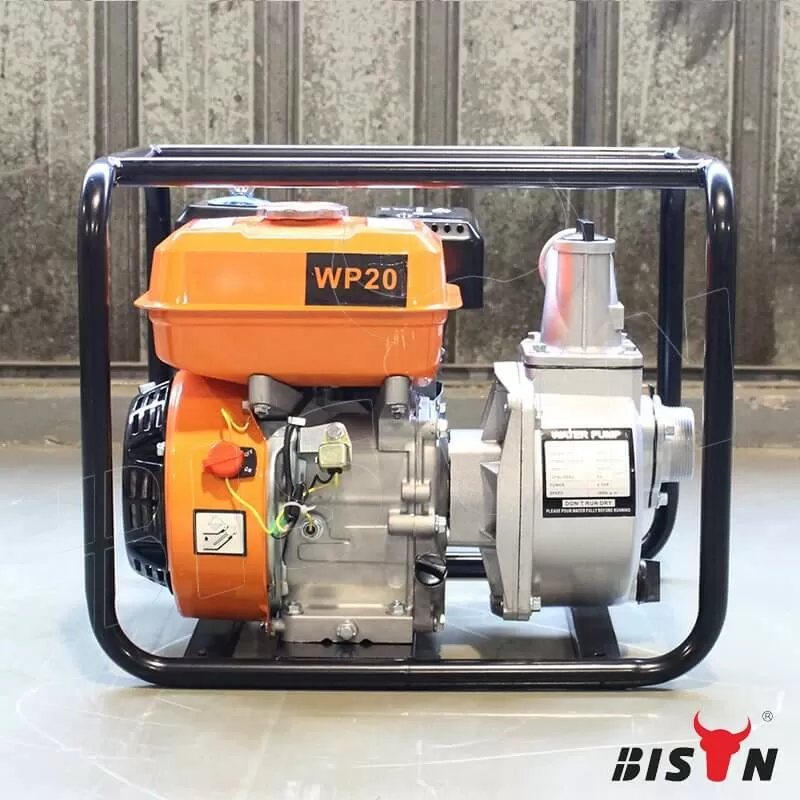
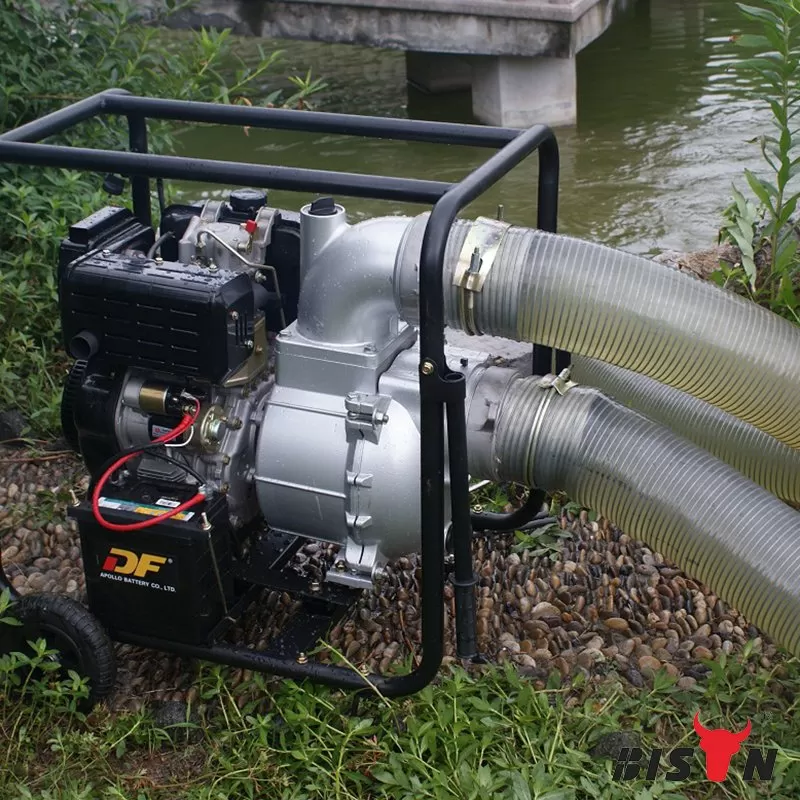
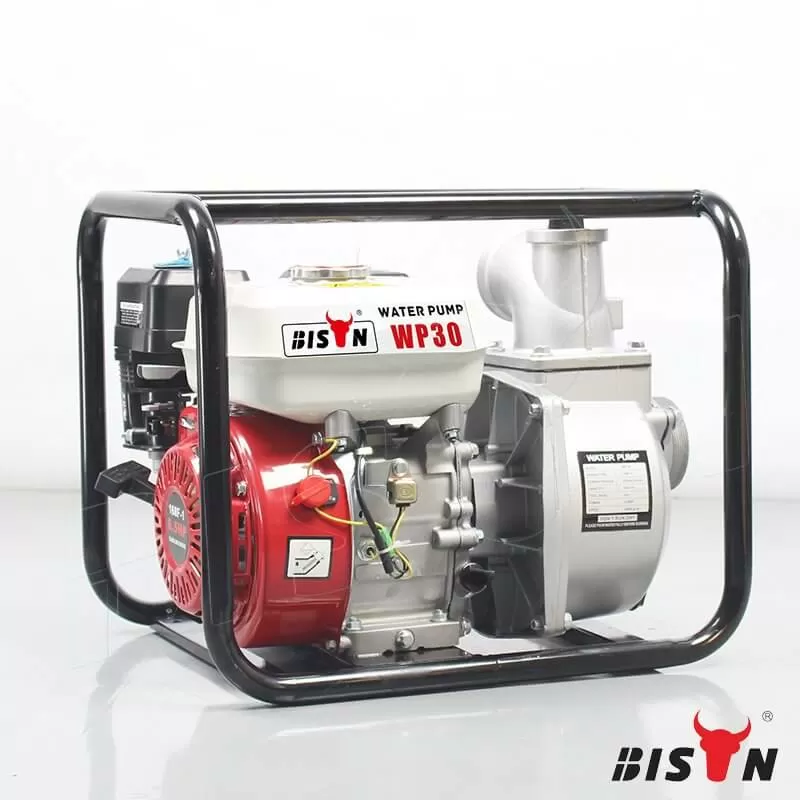
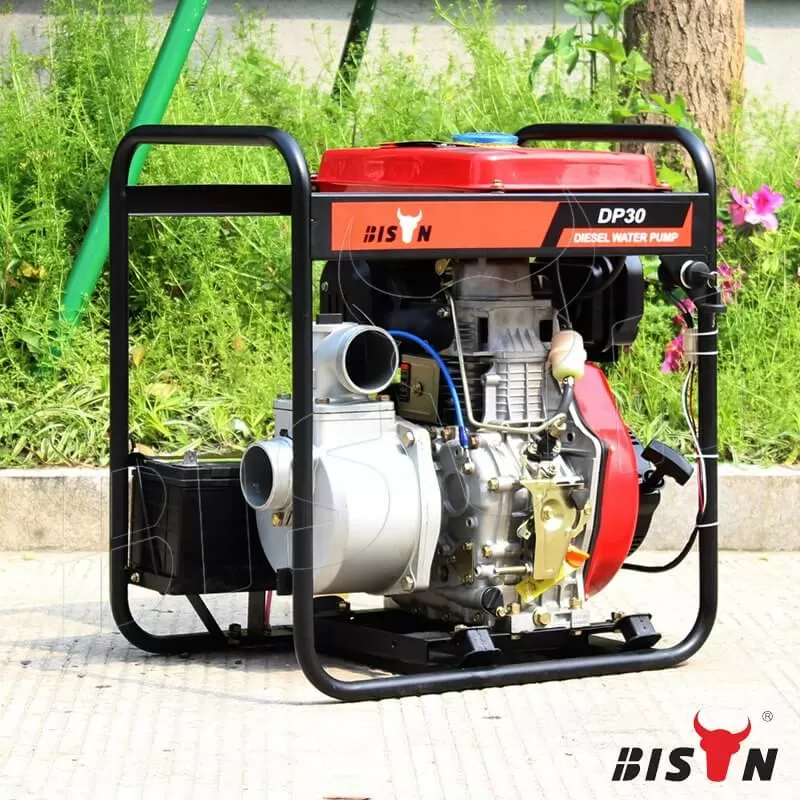
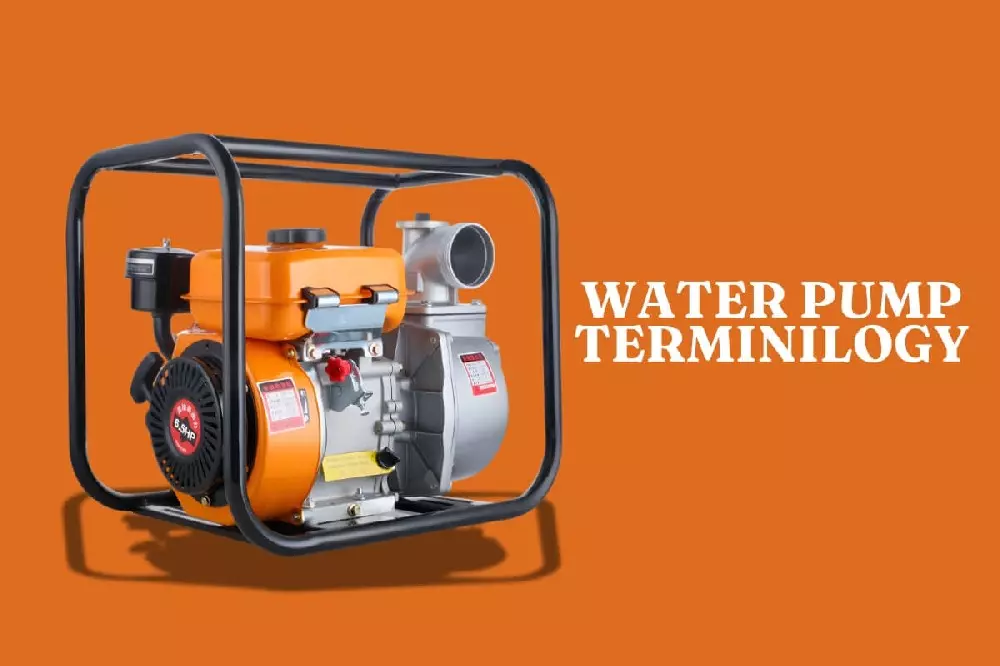
Fuel-powered pumps: Diesel or gasoline pumps are portable and do not rely on electricity. They are suitable for remote locations, construction sites, or emergency situations where power may be unavailable.
Anatomy of a pump: key components
Understanding the main parts of a water pump makes it easier to operate, maintain, and troubleshoot. Pumps can be divided into two main sections: the wet end, which handles the water, and the mechanical end, which provides motion and power.
The wet end – parts that come into contact with water
Impeller: The heart of a centrifugal pump. It moves water by converting rotational energy into kinetic energy.
Open impeller: Blades are exposed; easier to clean and ideal for liquids containing solids.
Closed impeller: Blades are enclosed by shrouds; more efficient for clean water applications.
Semi-open impeller: A combination, suitable for slightly dirty water.
Volute/casing: The outer shell surrounding the impeller. Its spiral shape guides water from the impeller to the discharge pipe, converting velocity into pressure — a funnel that turns spinning energy into steady flow.
Diffuser: Stationary vanes that surround the impeller in some pumps, smoothing water flow and converting velocity into pressure more efficiently.
Suction/inlet port: The opening where water enters the pump, like the "mouth" of the pump.
Discharge/outlet port: The opening where water exits the pump, sending water to pipes, tanks, sprinklers, or other systems.
The mechanical end – parts that support motion and power
Shaft: Connects the impeller to the motor, transmitting rotational energy to move water — like a rod linking a spinning fan to its motor.
Seals (mechanical seal or gland packing): Prevent leaks where the shaft exits the casing. A good seal is like a watertight faucet gasket, keeping water in the system and preventing damage.
Bearings: Support the shaft and reduce friction, allowing smooth rotation — like wheels or rollers helping a door hinge move easily.
Motor/driver: The engine or electric motor that powers the pump, providing energy to turn the impeller. This could be an electric motor at home or a diesel engine on a construction site.
Pump performance terminology
A water pump moves water from one location to another by adding energy, usually in the form of pressure. Pump performance is typically measured by flow rate and head (pressure). Generally, an increase in head reduces flow, and an increase in flow reduces head.
Flow rate (Q)
Flow rate is the volume of water a pump can move over a certain period of time. Common units include:
GPM (gallons per minute): Common in the U.S.
LPM (liters per minute): Used internationally
m³/h (cubic meters per hour): Often used in industrial settings
For example, a garden pump rated at 50 GPM delivers 50 gallons of water every minute to a sprinkler system.
Pressure vs. head
Pressure: The force applied by the pump to push water through a system, measured in psi or bar.
Head: Expresses the energy in terms of height, i.e., how high the pump can raise water.
The two are related by the formula: P = ρ g h
Where:
P: pressure
ρ: water density
g: acceleration due to gravity
h: head (height of water column)
Types of head
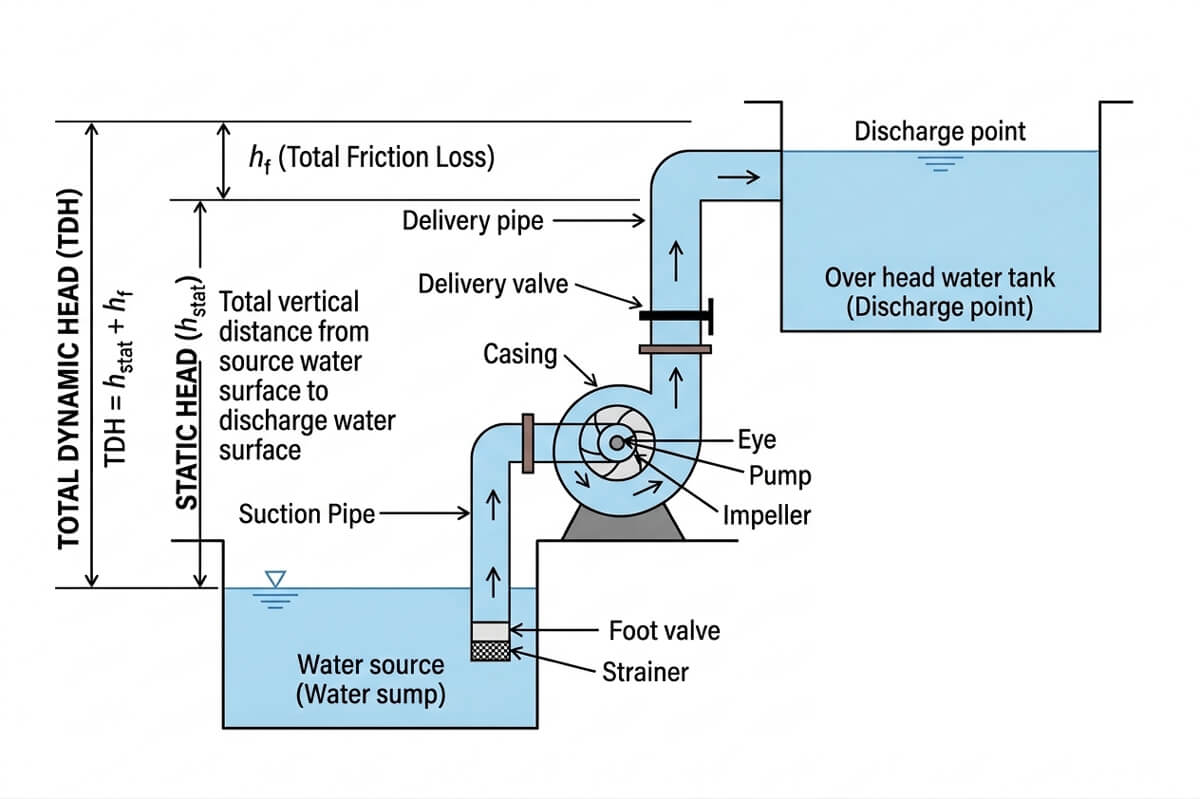
Static head: Vertical distance between the water source and discharge point (e.g., lifting water from a well to a rooftop tank).
Friction head: Energy lost due to friction as water flows through pipes, fittings, and valves; longer or narrower pipes increase losses.
Total Dynamic Head (TDH): Sum of static head and friction head; used by manufacturers to size pumps correctly.
Static vs. dynamic measurements: "Static" ignores friction losses, while "dynamic" includes them.
Efficiency
Efficiency measures how well a pump converts input energy (electricity or fuel) into moving water. Higher efficiency reduces energy costs and improves performance.
NPSH (Net positive suction head)
NPSH measures the minimum pressure needed at the pump inlet to prevent cavitation, a damaging condition where vapor bubbles form and collapse inside the pump.
NPSHa (Available): Actual pressure at the pump suction.
NPSHr (Required): Minimum pressure needed to avoid cavitation.
To prevent cavitation, ensure NPSHa > NPSHr, giving the pump enough "push" at the inlet to move water smoothly. If a supplier cannot provide an NPSH value or a pump performance curve, treat it as a red flag for quality control.
Specific speed
A dimensionless number that compares pump performance for different designs. High specific speed pumps suit high-flow, low-head applications; low specific speed pumps are ideal for low-flow, high-head tasks.
Power consumption
The energy required to operate a pump depends on flow rate, head, and efficiency. Pumping water to a high-rise tank consumes more power than moving the same volume across a short horizontal distance.
Pump curves and operating points
A pump curve is a manufacturer-provided graph showing flow rate vs. head. It helps determine:
How much water the pump delivers at a given pressure.
The operating point, where the system's requirements intersect with the pump's performance curve.
Operating near the pump's best efficiency point ensures energy efficiency, reduces wear, and prolongs pump life — similar to driving a car at optimal speed for fuel efficiency.
Pumping ratio
The pump ratio determines the multiplication factor between the air motor’s input pressure and the pump’s fluid output pressure.
Example 2:1 ratio: if the air input is 120 psi, the pump produces 240 psi of fluid output.
Example 1:1 ratio: the air input equals the fluid output; for instance, 120 psi in results in 120 psi out.
This ratio is essential for understanding how an air-driven pump translates input pressure into usable fluid pressure.
Control and monitoring terminology
Modern pumps often include systems to control operation, monitor performance, and ensure safety. Understanding these components helps maintain efficiency and prevent damage.
Variable frequency drives (VFDs)
A VFD controls the speed of an electric pump motor by adjusting the electrical frequency. Running the pump only as fast as needed saves energy, reduces wear, and maintains consistent flow — like a dimmer switch for water.
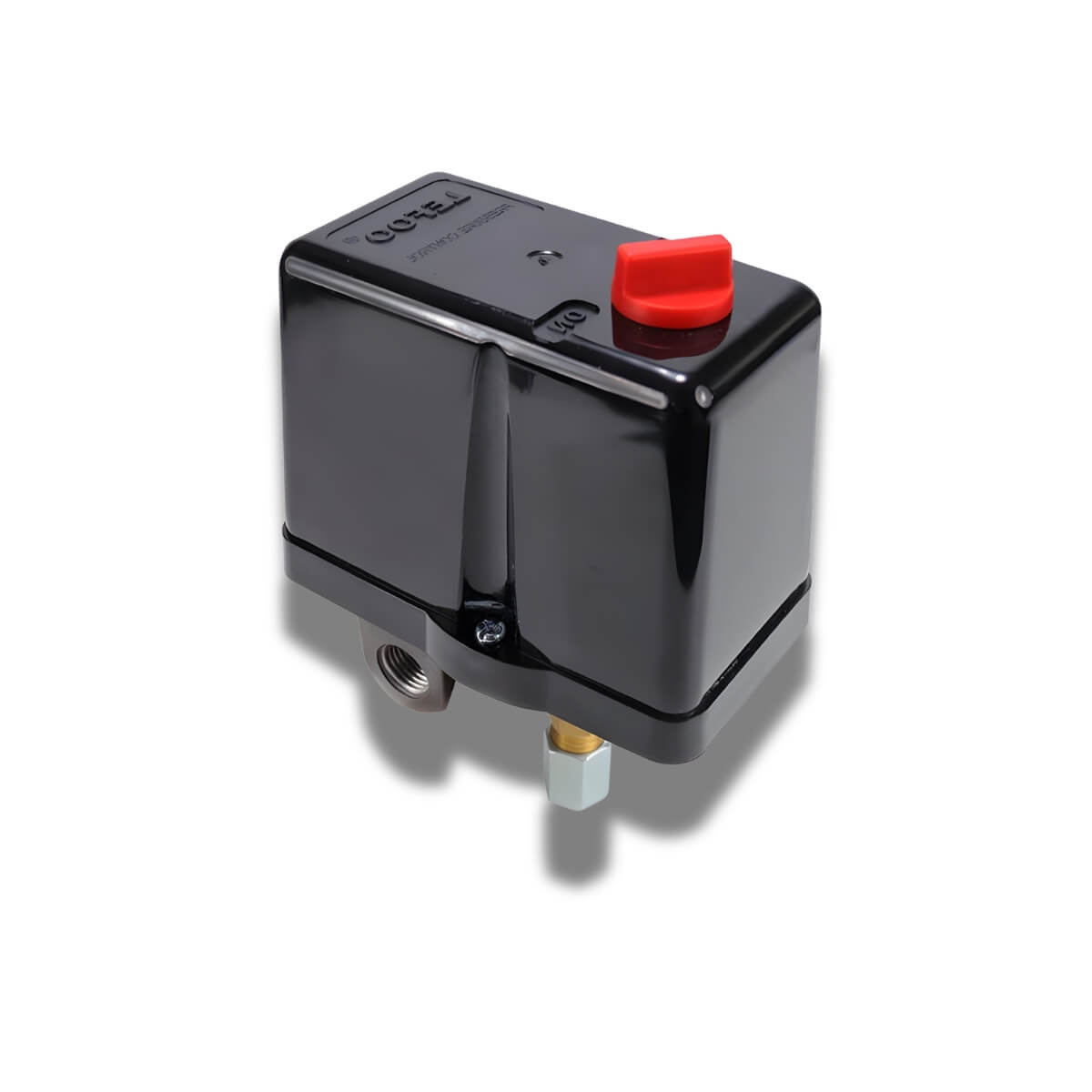
Pressure switches
Pressure switches turn pumps on or off based on system water pressure. For example, in a home system, the switch starts the pump when a tap opens and stops it when the tank is full, similar to a thermostat for water pressure.
Float switches
Float switches detect water levels in tanks or sumps and automatically start or stop the pump to prevent dry running or overflow. Imagine a floating ball triggering the pump when water is too low or high.
Control panels
The control panel houses switches, buttons, and displays, letting users start/stop pumps, set operating parameters, and view system status. Larger installations may include alarms. It's like the cockpit of the pump system.
Scada systems
Scada (supervisory control and data acquisition) systems monitor multiple pumps, collect data, and allow remote control — like a dashboard for an entire water system.
Sensors and gauges
Flow sensors: Measure the volume of water moving through the system.
Pressure gauges: Show system pressure, helping detect blockages or pump issues.
Temperature sensors: Monitor motor or pump temperature to prevent overheating.
These instruments provide real-time feedback to maintain performance, detect problems early, and protect the pump.
Wear indicators
Wear indicators show when components are worn. For example, a groove on a casing or impeller disappears after certain use. Checking wear indicators helps schedule replacements before failure — like monitoring tire tread on a car.
Operational concepts and potential problems
Understanding how pumps operate and the issues that can arise helps maintain performance, avoid damage, and extend pump life. Here are key concepts and common problems to know:
Priming
Priming is the process of filling the pump casing and suction line with water before starting. Most centrifugal pumps cannot pump air, so running them dry can cause damage. Think of it like filling a straw with water before drinking — without water, nothing moves. Proper priming ensures the pump generates flow immediately and operates safely.
Some positive displacement (PD) pumps are self-priming and can start without pre-filling, allowing suction from dry conditions like a pond or shallow well.
Cavitation
Cavitation occurs when vapor bubbles form at the pump inlet due to low pressure and collapse violently in higher-pressure areas. It can cause "gravel-like" noise, vibration, pitting, and damage to the impeller. Common causes include insufficient suction pressure, clogged lines, or operating far from the recommended point.
To prevent cavitation:
Intake: Use an intake fitting that matches the hose size.
Hose sizing: Avoid hoses smaller than the pump inlet.
Detection: Detect early by listening for noise or monitoring performance.
Slip
Even though pd pumps move a fixed amount of liquid, a small amount can leak back from the discharge to the suction side. This is called slip. It's normal and increases with pressure or fluid viscosity — like a tiny leak in a syringe.
Water hammer
Water hammer is a sudden surge or shockwave in piping caused when water stops or changes direction abruptly, such as when a valve closes quickly. This shock can damage pumps, pipes, and fittings — similar to slamming on car brakes.
Prevention methods include:
Valves: Slow-closing valves
Pressure relief: Pressure relief valves
Air chambers: Air chambers
Vibration analysis
Monitoring vibration measures how much a pump shakes during operation. Excessive vibration can indicate misalignment, bearing wear, or impeller imbalance. Early detection prevents serious damage — like noticing a wobbling fan that needs fixing.
Overheating
Overheating occurs when the pump or motor runs too hot due to friction, insufficient cooling, or overloading. It can damage seals, bearings, and the motor. Regularly checking temperature gauges or feeling for heat ensures safe operation — similar to checking if a laptop is overheating.
Rebuild terminology
Rebuilding a pump involves disassembling it, inspecting and replacing worn parts, and reassembling it.
Key terms:
Overhaul: Complete rebuild
Refurbishment: Partial rebuild or component replacement
Understanding rebuild terminology helps communicate with service technicians and ensures proper restoration of pump performance.
Conclusion
Understanding water pump terminology is essential for anyone working with water systems. Familiarity with key terms and concepts helps you make informed decisions when selecting, installing, and maintaining this critical equipment.
For optimal performance, reliability, and expert support, choose high-quality water pumps from BISON. At BISON, every pump in our lineup ships with a full technical datasheet covering TDH, flow curve, NPSH requirements, and impeller configuration. Our engineering team can walk you through parameter matching for your specific application — whether you need a 3-inch gasoline pump for agricultural irrigation or a diesel-driven unit for construction dewatering. Invest in a pump you can trust and experience the difference in efficiency and durability.

related blog
Acquire all kinds of knowledge from professional China factory
Which is better: gasoline vs. diesel water pump
In this blog post, BISON will compare gasoline and diesel water pumps so that you can choose the right one for your needs.
Choosing the Right Water Pump Size - Comprehensive Guide
BISON's comprehensive guide is designed to provide you with all the knowledge you need to choose the right pump size to safeguard your pumping business.
Water pumps vs. trash pumps
This guide is designed to help you gain insight into water pumps and waste pumps, be prepared for BISON to delve into the specifics of these pumps, unique features, benefits...
related product
Quote high quality products from professional China factory