How to use high pressure washer to clean pool tiles
2021-11-01
Table of content
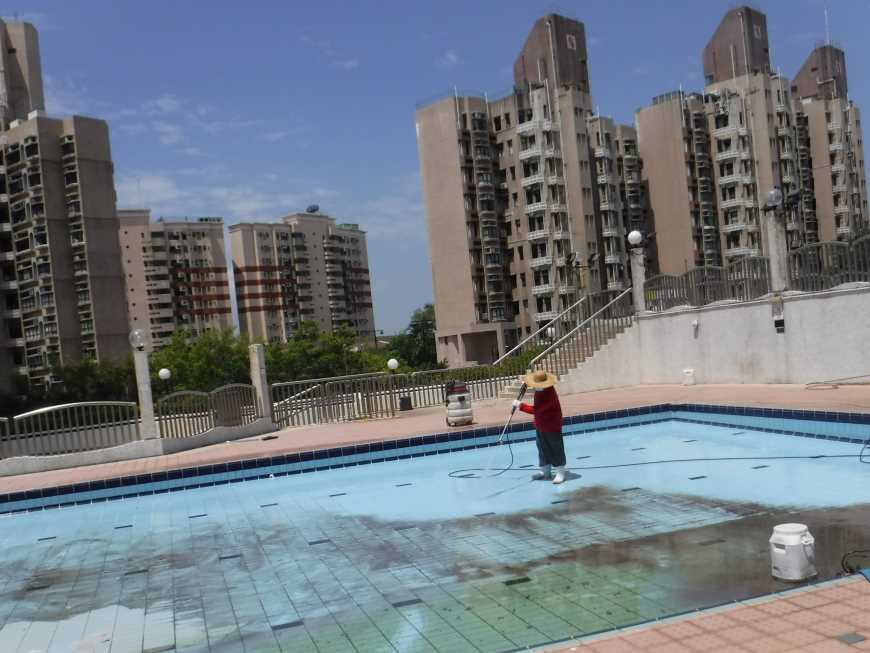
Are you throwing a pool party and want to relax in the evening, or are you just practicing swimming? They cool us down on hot days when we dive in. Think about it: When you empty your pool, you may see algae and grime on the tile surface, which usually takes hours to clear. In this case, you may need to buy a pressure washer. We'll show you how to clean pool tiles with a pressure washer.
Is it safe to clean pool tiles with a high pressure washer?
Yes, as long as you use the correct pressure for cleaning. Most pool tiles are safe with a pressure washer set between 1200 and 2600 PSI; going much higher than that may not be safe for swimming pools. The tile may survive, but it will weaken the grout. Over time, this will make pool tiles easier to crack.
How to use high pressure washer to clean pool tiles?
Pool tile buildup generally falls into two categories: calcium scale, which forms as hard, chalky deposits from mineral-rich water, and organic grime like algae or dirt, which appears as slippery film from moisture and debris. Knowing which type you're dealing with helps determine the right pressure and technique, since calcium often needs more direct force to break up while algae can be lifted with lighter passes.
what do you need?
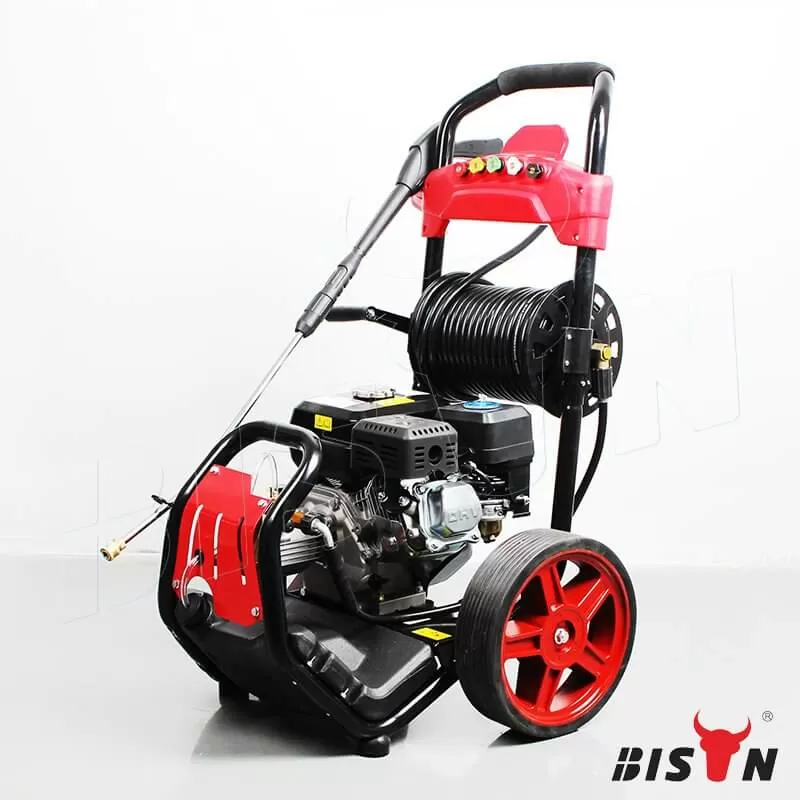
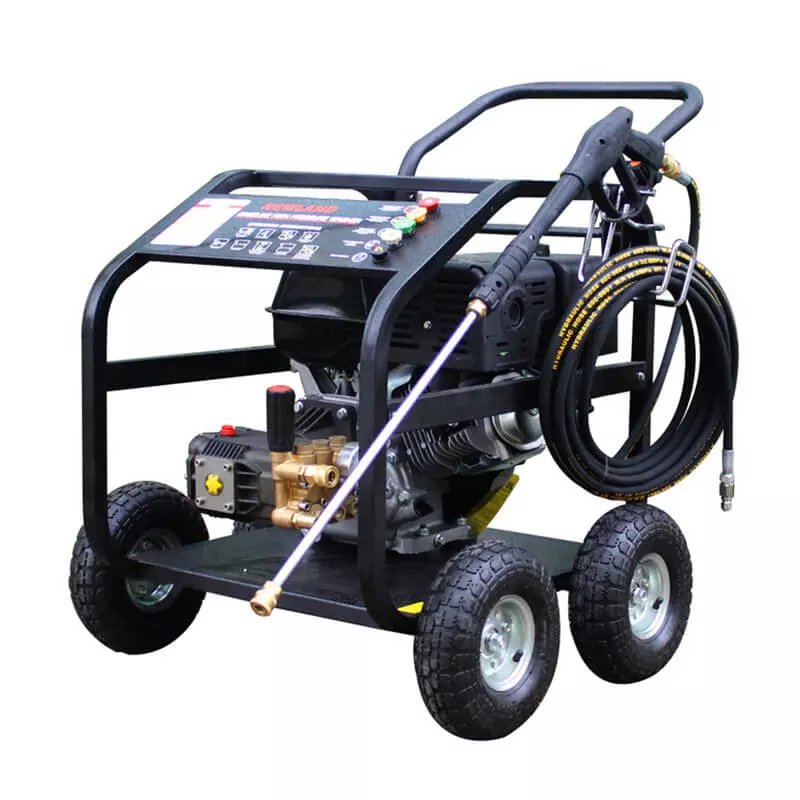
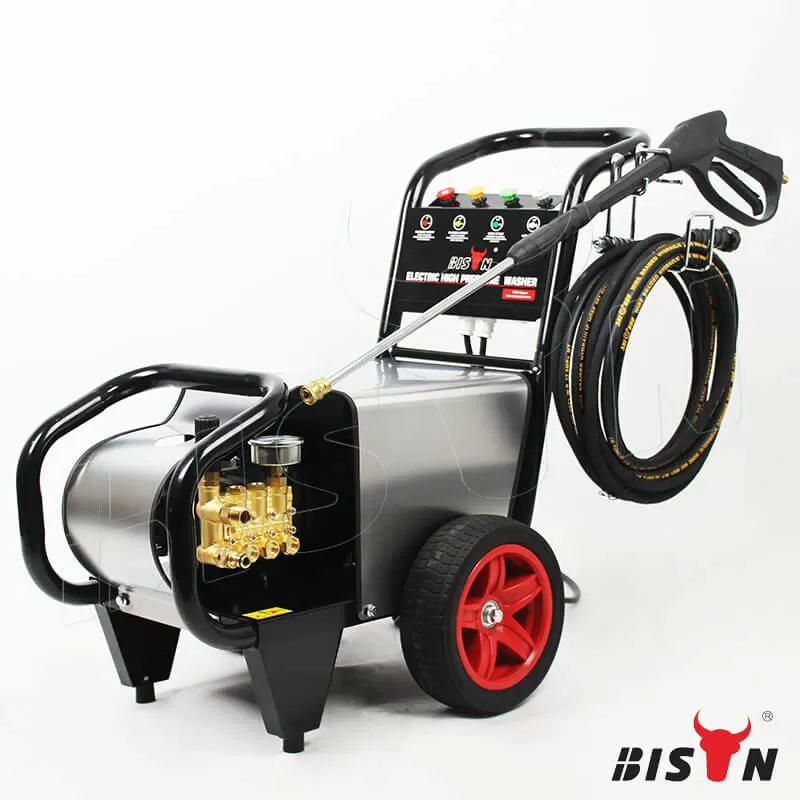
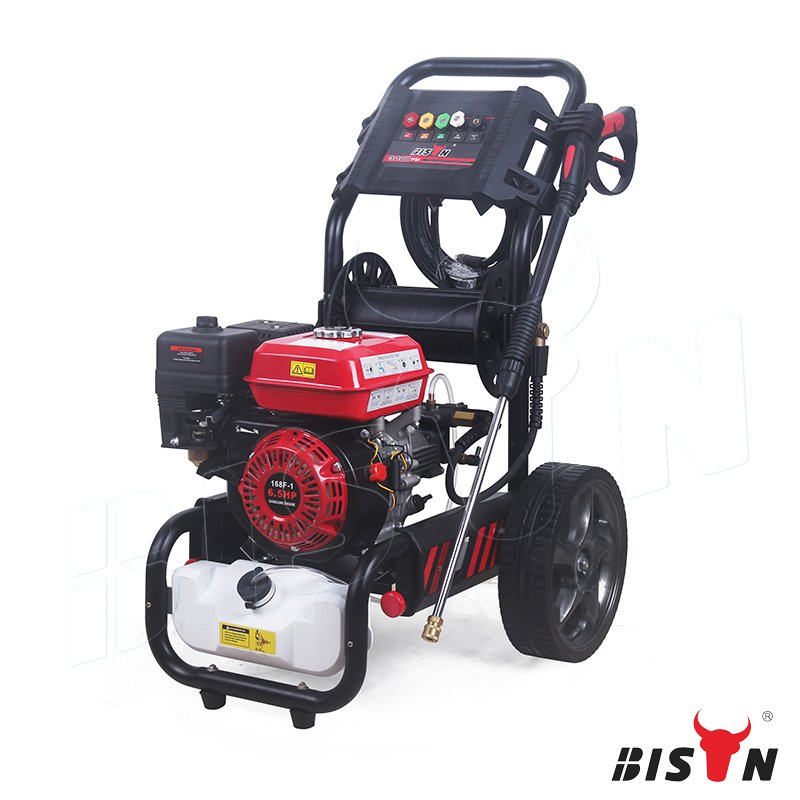
Pressure washer (preferably between 1200 and 2600 PSI). For tougher grease and mildew buildup, a commercial-grade pressure washer offering up to 3000 PSI with hot water capability is often recommended — but only with a wide (40°) nozzle and at a safe distance, since 3000 PSI exceeds the 2600 PSI limit recommended for routine pool tile cleaning.
Personal safety precautions such as protective clothing and shoes.
Various nozzles and accessories-the long spray gun is a convenient tool.
Step-by-step instructions
Put on your protective clothing.
Connect your high pressure washer and hose.
Lower the pool water level below the tile line (do not fully empty the pool — a completely empty pool can be damaged by groundwater pressure and exposes the grout to unnecessary stress). Remove all debris from the waterline tiles and clean the surrounding deck area.
Use the correct nozzle. Nozzles of 25 degrees or wider are generally ideal, with a 25-degree or 40-degree tip typically being the best choice for cleaning pool tiles and surrounding surfaces without causing damage. Avoid zero-degree nozzles.
Test the pressure setting first. We recommend starting with low pressure or using the widest nozzle to ensure that the pressure is not too high. Run the pressure washer in an inconspicuous place, spraying that test tile area from about 3 feet away for at least 30 seconds before moving on to the whole pool. If you find that it is not properly cleaned, you can increase the pressure appropriately
Move the spray gun to clean the swimming pool.
When finished, turn off the pressure washer and disconnect the equipment. Pull the trigger to release any pressure or remaining water.
If you have stubborn stains, consider using a hot water pressure washer. This will eliminate buildup and kill bacteria. But you must pay attention to the water temperature. High-end steam pressure washers can reach temperatures as high as 330°F, which helps dissolve tough grime faster, and this steam can be generated either through a boiler or via a pump system that pushes water through a heating element. However, this cleaning power can be strong enough to remove tiles entirely if used without testing on a hidden spot first, and the 330°F steam will cause severe burns on contact with skin — always wear insulated gloves, long sleeves, and eye protection, and never direct the wand at yourself or others.
important hint
When high-pressure cleaning, make sure that there are no other family members or pets nearby. The high-pressure stream can cause serious injury if it makes contact with skin.
If you see damage to the tiles, you may need to reduce the pressure.
When accessing small or tight spaces, replace the nozzle or accessories as needed. The long spray gun will help you get into hard-to-reach places.
Avoid commercial tile cleaners containing hydrofluoric, hydrochloric, or phosphoric acid unless you're wearing proper PPE, as these chemicals can seriously harm your eyes, skin, and respiratory system.
For stubborn calcium deposits or soap scum that the pressure washer alone won't lift, scrub a paste of baking soda and vinegar onto the tiles, let it fizz and sit for a few minutes, then rinse thoroughly before moving on to the pressure washing step.
You can also use your pressure washer to clean the surrounding pool deck, but switch to a wider fan tip and keep a bit more distance from the surface, since concrete or stone decking can handle stronger pressure than pool tiles without cracking or losing grout.
How often should pool tiles be cleaned?
The appropriate cleaning frequency depends on the pool's usage frequency, the surrounding environment, and the local climate. Generally, tiles should be cleaned at least twice a year: once when the pool is open and once before it closes for winter.
For frequently used pools (daily swimming, high traffic): Clean the tiles every 2-4 weeks to prevent the buildup of sunscreen residue, body oils, and algae film. During peak season, monthly cleaning is usually sufficient, but more frequent cleaning may be needed depending on usage.
For seasonal pools: Thoroughly clean the tiles at the start of the swimming season and at the end. If dirt buildup occurs mid-season, perform a simple rinse. Seasonal pools typically only need cleaning once or twice a year, while year-round pools should be cleaned every 2-3 months.
For pools surrounded by trees, gardens, or landscaping: Increase cleaning frequency, as fallen leaves, pollen, and dust accelerate the growth of dirt and algae on the tile surface—pools located in the shade or vulnerable to snowstorms are more prone to accumulating dirt and algae, thus requiring more frequent cleaning.
Pools located in warm, humid, or high-UV climates: Algae and mineral buildup occurs more rapidly in these conditions, so cleaning intervals should be shorter compared to dry or cooler areas.
Pools near open water, coastal areas, or dusty locations: Salt spray and airborne particles quickly deposit on tiles, and more frequent rinsing may be needed, even between thorough pressure cleanings, as coastal environments accelerate the buildup of dirt and algae.
In addition to a regular cleaning schedule, regardless of the schedule, pay attention to the following visual signs that indicate when cleaning is needed:
Dirty or calcium rings begin to form near the waterline
The tile surface becomes smooth or slightly sticky
Visible green, black, or pink discoloration appears (early algae growth)
The water near the tile line appears cloudy or discolored, with visible scum forming at the surface
During the swimming season, it is recommended to lightly brush waterline tiles every 1-2 weeks (10-15 minutes) and perform a deep clean monthly using a pumice stone or tile cleaner. Please note that glass mosaic tiles should never be cleaned with a pressure washer. For this type of tile, regular cleaning every 1-2 weeks is sufficient for routine maintenance. Severe calcium buildup requires professional service, not a pressure washer.
Instead of waiting until stains are severe, develop a habit of regular cleaning. This way, each pressure wash will clean the tile surface and grout more quickly and gently, as light, periodic deposits are easier to remove than deposits that have accumulated over months. Establishing a cleaning schedule and conducting regular visual inspections—especially after storms, pollen season, or heavy pool use—help maintain a consistent appearance throughout the year and reduces the risk of needing to use higher pressure or stronger scrubs to remove stubborn, long-term deposits later.

related blog
Acquire all kinds of knowledge from professional China factory
Pressure washer is surging/pulsing: An in-depth comprehensive guide
This comprehensive guide will help you understand pressure washer surging/pulsing, including the issue, its causes, how to diagnose it, and ultimately, how to fix it.
What accessories are available for my BISON pressure washer?
The high-pressure cleaner is equipped with various tools and accessories designed to make your cleaning faster, more efficient, and most importantly, easier.
How to make gasoline pressure washer quieter?
BISON delve into the world of quieter gas pressure washers. We will explore the reasons behind the loud operation of gas pressure washers, effective methods to reduce their noise output...
related product
Quote high quality products from professional China factory